Reaves Locked In: Why Lakers' $185M Max Deal Settles a Scoring Baseline
By PropBetEdge Editorial Team ·
Austin Reaves' extension eliminates contract uncertainty and validates his 23-point per-game floor as a foundational piece.
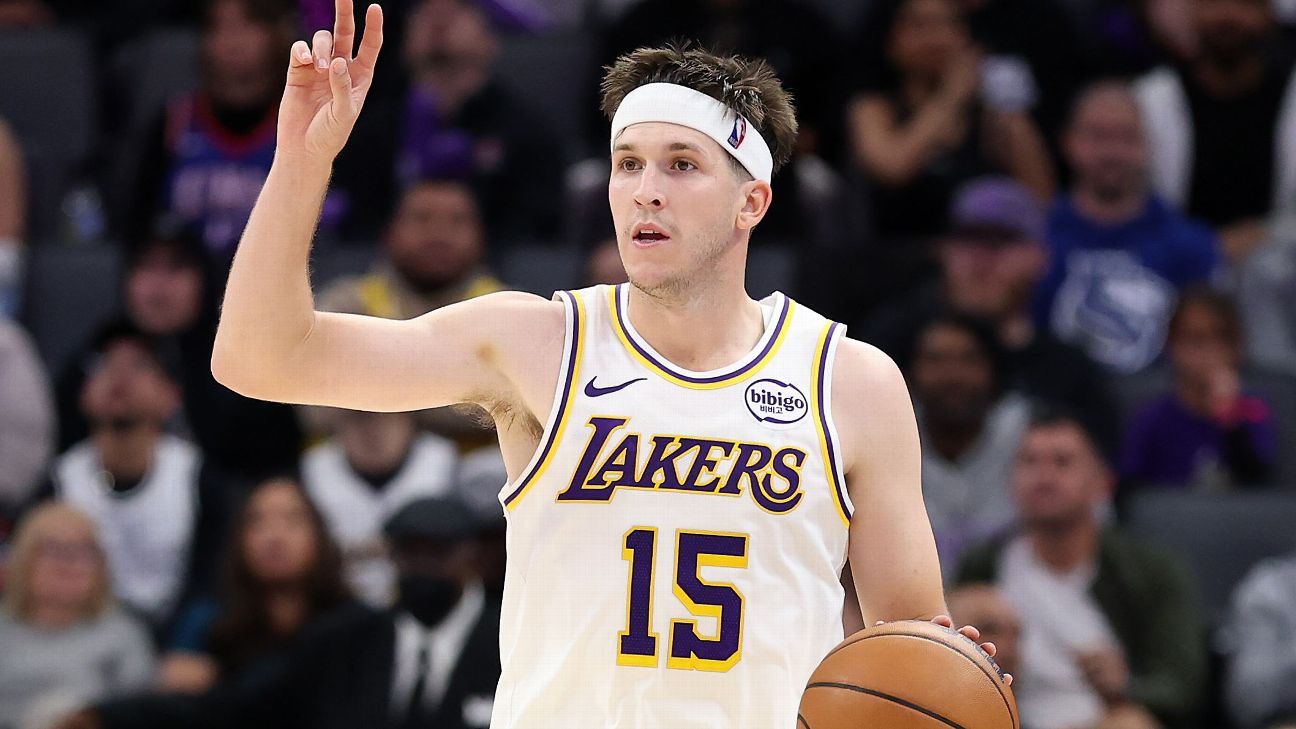
Austin Reaves will sign a four-year, $185 million maximum contract with the Lakers, ending speculation about his free-agent market value and cementing his role as the team's secondary ball handler and volume scorer. The deal includes a player option for the 2029-30 season and represents the largest contract ever signed by an undrafted player. Reaves declined his $14.9 million player option to make room for the extension, and the Lakers—who had positioned his retention as a priority during exit interviews—matched his asking price after 10 days of negotiation once the free-agent signing window opened.
The narrative here is straightforward: the Lakers paid max money to avoid a bidding war with Detroit and other suitors and to remove volatility from their roster construction. At 28 years old, Reaves carried injury risk into the offseason—calf and oblique problems limited him to 51 games last season and forced him to sit out the start of the first-round series against Houston. But his efficiency numbers remain elite for a guard of his usage rate. He shot 49% overall and 36% from three while averaging 23.3 points and 5.5 assists, production that justified the maximum salary even with the games-played discount.
What matters for prop betting is that Reaves' scoring volume and efficiency are now contractually guaranteed through the 2029-30 season—at least from the team's commitment standpoint. The Lakers have no financial escape hatch, which means load management and rest decisions will be more deliberate and less frequent than they might have been for a guard under a shorter deal. The extended runway also removes the pressure on Reaves to prove something in free agency; he can settle into a consistent role without needing a career season to validate his contract. His first-year cap hit of $41.3 million signals the team expects him to be a 22-25 point per game contributor on a nightly basis, not a bench option or secondary scorer.
For season-level prop markets, this extension has a narrowing effect on Reaves' point total variance. Teams don't extend undrafted players to $185 million and then bench them or limit their touches—the contract itself is a resource commitment that locks in playing time. Over a full 82-game season at his historical usage rate, his season PPG prop will likely center around 23-24 points, with injury absences being the primary driver of any significant miss. The injury discount already happened; the extension eliminates the free-agent uncertainty tax. If his over/under for 2026-27 season points sits at 1,900 (roughly 23.2/game over 82 games), that line reflects the extension security rather than an unknown future. Bettors chasing a spike in his per-game scoring output will need to wait for a concrete change in role—a trade, a coaching shift, or a jump in usage—not a contract signing that reinforces the status quo.