Lakers' Ayton Problem Deepens in OKC Series: Center Struggles Compound Playoff Collapse
By Ty Whitney ·
*DeAndre Ayton's invisible series against Oklahoma City exposes a roster construction flaw that no in-game adjustment can fix.*
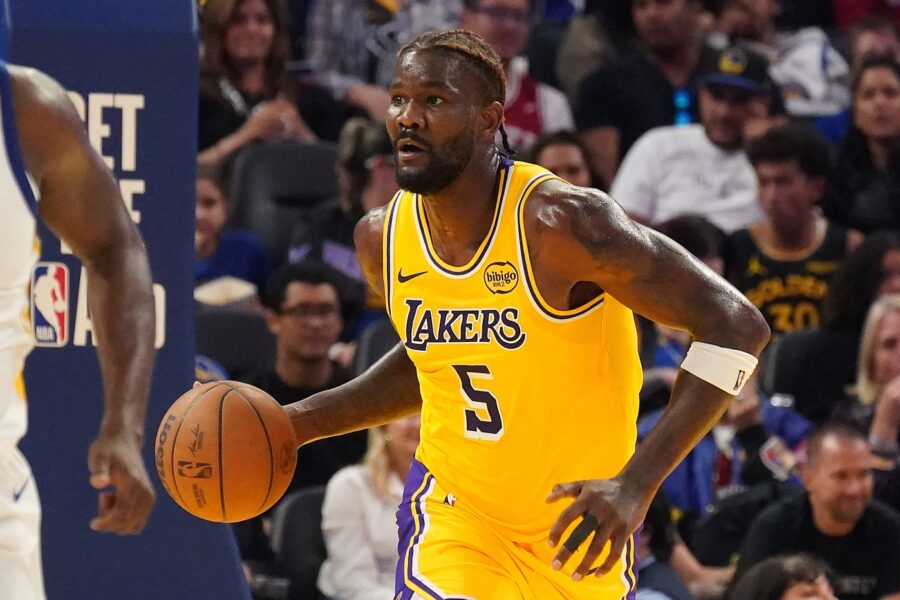
The Lakers are staring down a 3-0 series deficit to the Thunder, and it's not just the scoreline that should concern L.A. brass—it's the collapse of their frontcourt strategy. DeAndre Ayton, signed to anchor the paint and provide rim protection against OKC's relentless interior pressure, has delivered almost nothing when the team needed him most. Through three blowout losses, Ayton has failed to impose himself on either end of the floor, negating one of the few roster moves the Lakers made to address their perennial playoff vulnerability at center.
The irony cuts deep. Oklahoma City's bigs—particularly with their spacing and pick-and-roll sophistication—were supposed to be exactly the matchup where a paint-anchoring five like Ayton could prove his value. Instead, he's become a non-factor, unable to either contain OKC's offense or generate consistent offense of his own. The Thunder have exposed what many suspected entering the playoffs: Ayton's fit alongside LeBron James is problematic, and his effort level fluctuates wildly under pressure. When a team trails by 20-plus points in consecutive games, role players don't vanish accidentally—they disappear because the gameplan has already failed.
This failure compounds the broader Lakers roster rot. LeBron is playing at a high level, but he cannot single-handedly neutralize an elite defense while simultaneously carrying the offensive load. The midseason trade that brought in Ayton and surrounded him with shooters was always a bet on depth and balance. OKC is systematically dismantling that theory. Against a team that defends every possession with purpose and length, the Lakers lack the complementary two-way versatility to survive.
From a prop perspective, Ayton's production collapse has direct implications for team totals and pace-of-play considerations. If the Lakers' Game 4 deployment reduces Ayton's minutes in favor of small-ball looks—a likely adjustment given the series state—you're looking at dramatically different offensive shapes. A shrinking Ayton role means fewer pick-and-roll opportunities down low and a harder reliance on perimeter shot-making, which pushes L.A. toward faster possessions but also higher variance. Lakers team totals should be heavily discounted in Game 4; the margin of execution error has narrowed to nothing.
More immediately, Ayton's absence as a lob-threat and screener directly suppresses LeBron's assist rate and secondary creator efficiency. Watch for LeBron prop totals to tighten slightly downward if the Lakers go smaller—fewer easy dump-downs to a diving big means fewer apg. The real tell will be if Redick's volume increases as a secondary ball-handler; that's the adjustment L.A. will attempt, and it's a clear signal the center position has been functionally removed from their offensive scheme.