Lakers' Closing Execution Collapses When It Matters Most
By Ty Whitney ·
LeBron James and Austin Reaves both misfired on decisive possessions late in a must-win game, exposing a critical vulnerability in LA's ability to finish tight contests.
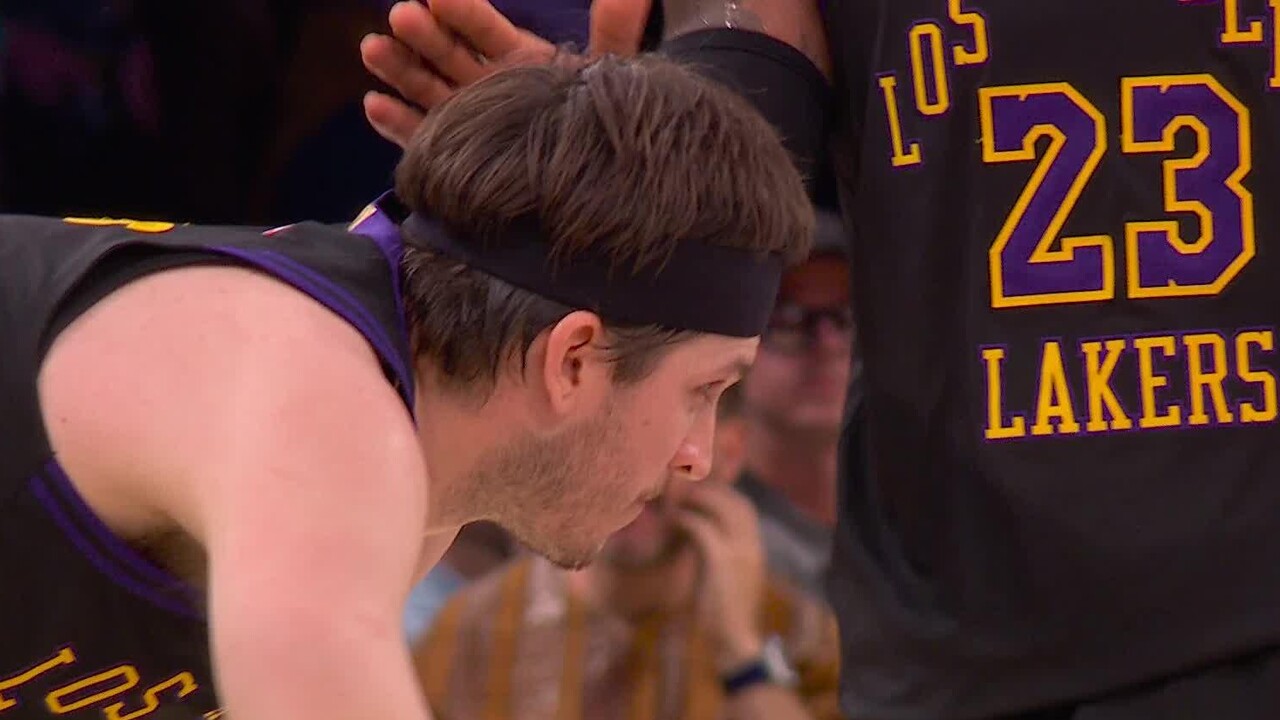
The Lakers faced a season-defining moment in the final seconds of a game with playoff implications on the line, and their two primary closers failed to deliver. LeBron James and Austin Reaves each missed crucial shots when the offense needed a bucket to stay alive—a sequence that crystallizes a recurring problem for Los Angeles this season: inability to execute when leverage is highest.
This isn't a matter of bad luck or variance. The Lakers have struggled all year with late-game shot selection and execution under pressure. When defenses tighten and possessions become isolated—the exact moments where supermax contracts and All-Star talent should dominate—the team instead defaults to contested long-range attempts or shots too far removed from the rim. James, despite his Hall of Fame pedigree, has shown inconsistency on high-difficulty shots in these spots. Reaves, whose value proposition centers on secondary playmaking and clutch availability, couldn't be the answer either.
The broader concern is depth. If neither James nor Reaves reliably converts in these scenarios, the Lakers lack a third or fourth option capable of shouldering clutch load. Role players have been inconsistent, and the bench has not provided reliable floor spacing when the game tightens. This structural vulnerability will shape how teams defend LA down the stretch—expect to see late-game schemes that deliberately force the ball to role players rather than James, knowing the supporting cast cannot consistently punish that strategy.
From a prop-betting perspective, this sequence reinforces why Lakers team totals in tight matchups deserve respect on the under side. When a team's closing offense revolves around two shot-takers who are demonstrably unreliable from difficult spots, expecting them to reach pre-game over totals in 3-point games becomes risky. Monitor James's and Reaves's individual scoring lines in similar pressure situations going forward—if this pattern repeats, expect their point props to shift lower as sharp money recognizes the execution gap. In games decided by single possessions, Lakers offensive output tends to crater rather than elevate, a counterintuitive dynamic that runs against the grain of traditional "star power" narratives.
The team will need to address closing execution—either through personnel adjustment or a deliberate pivot toward ball movement and rhythm offense in the final minute, rather than isolation-heavy looks. Until that changes, expect the market to price in a discount for Lakers clutch performance.