Reaves' Max Deal Signals Lakers All-In on Present—Not Future Flexibility
By Erik Schwartz ·
Los Angeles locked Austin Reaves into a four-year maximum contract, cementing its roster shape and removing the team's remaining cap maneuverability for the next half-decade.
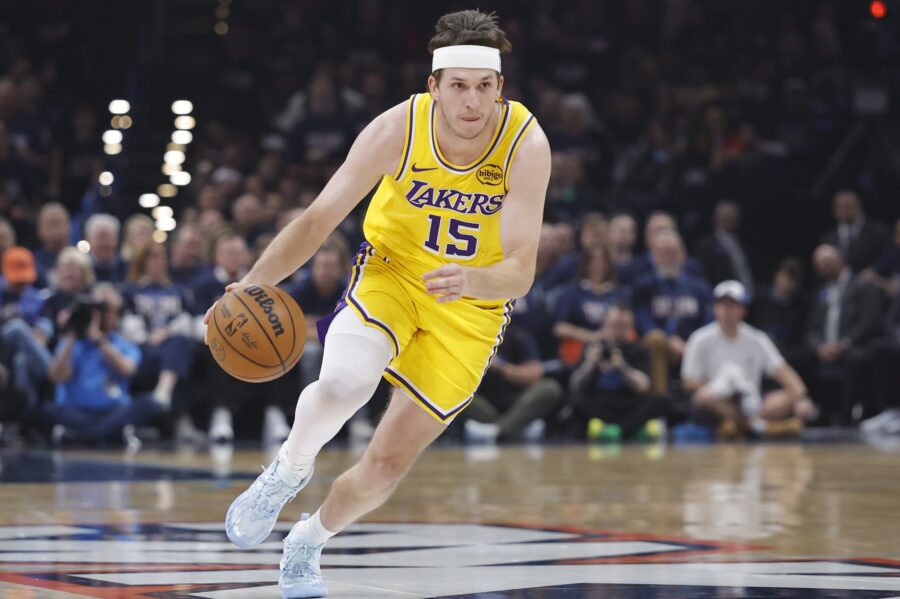
The Lakers officially signed Austin Reaves to a four-year maximum contract on July 12, closing out the franchise's offseason and exhausting remaining salary-cap flexibility. Rob Pelinka, the team's president of basketball operations, framed the move as a validation of Reaves' "relentless pursuit of improvement" and competitiveness—the language teams use when they're betting on player development rather than external acquisitions. This is the richest deal ever given to an undrafted player in NBA history, a distinction that carries both upside and risk.
Reaves has earned the payday through steady improvement. His scoring efficiency climbed last season, and he's carved out a role in the Lakers' offensive system that goes beyond spot-up shooting. He can initiate in transition, operate in pick-and-roll, and defend multiple positions—the kind of versatile perimeter player that costs real money in a modern roster. The four-year structure, however, locks the team into his salary through the 2029-30 season, when Reaves will be 31 and likely past his prime athletic window. For a franchise that has cycled through LeBron James and Anthony Davis, this commitment represents a shift in timeline: the Lakers are banking on continuity around their aging stars rather than chasing star-power upgrades.
From a roster architecture standpoint, the Reaves extension obliterates the team's mid-level exception and any meaningful trade chips built on young salary. The Lakers are now structured for the present. They cannot reload without moving a star or eating dead salary. That's a deliberate choice—a signal that ownership and front office believe the current core is close enough to contention that flexibility costs more than it's worth. Whether that belief survives the 2026-27 season will determine whether this contract looks like a foundation anchor or an anchor-weight around the franchise's neck.
For bettors, the Reaves deal has indirect implications for Lakers team totals and playoff odds. The team's cap constraints mean no mid-season pivots or buyout-market additions are coming. If the starting five underperforms, the franchise is locked into adjustment-free basketball. That static composition creates predictability—both in the regular season and, critically, for April playoff matchups where roster fluidity typically drives variance. Lakers team totals should price in the likelihood that depth and flexibility cannot be manufactured on the fly. Reaves himself will command 8-10 more field-goal attempts per night than he likely would on a prove-it deal, giving him an elevated statistical baseline. His usage rate should remain stable across the contract's four years, reducing variance in his scoring prop outcomes compared to a player in a walk year or waiting for free agency.