Spurs-Knicks Finals: Rest, Wembanyama's Paint Defense, and Why the Market's Favorites May Be Underpricing New York's Shooting
By Ty Whitney ·
The Knicks enter the 2026 Finals on an 11-game tear with elite efficiency metrics, but San Antonio's -205 moneyline assumes Victor Wembanyama's rim protection negates New York's offensive identity in ways the numbers don't yet support.
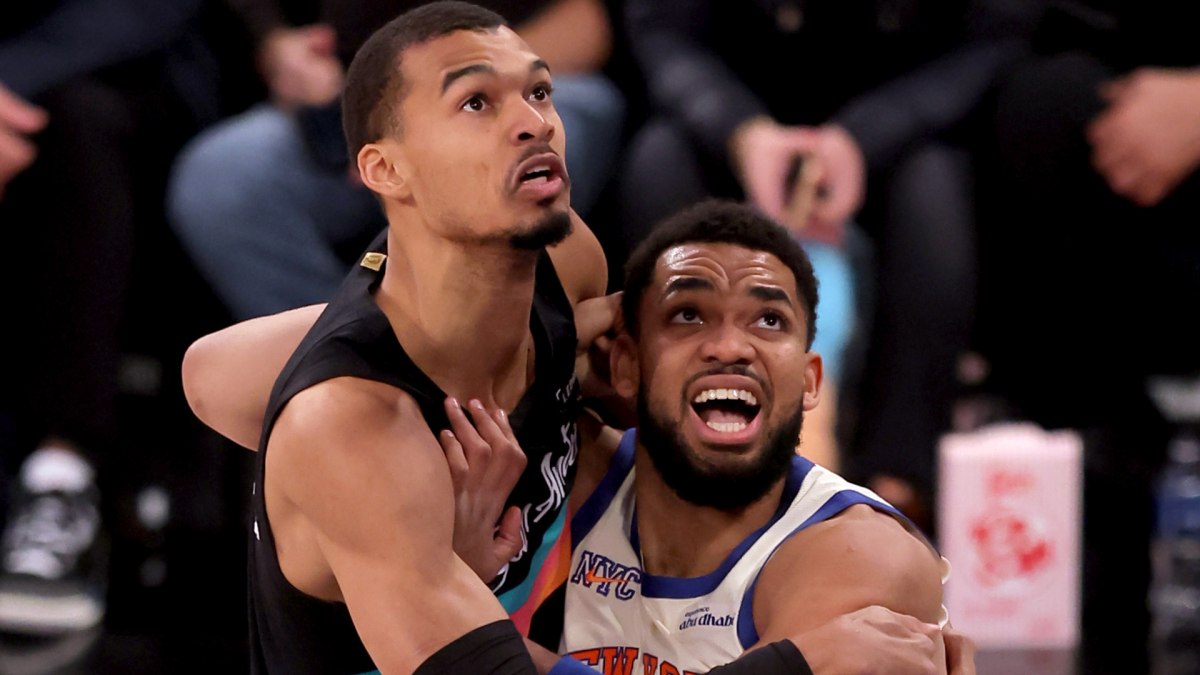
San Antonio and New York meet in the 2026 NBA Finals on Wednesday with the Spurs favored to claim their sixth title. Victor Wembanyama has engineered the Spurs' return to the championship stage for the first time since 2014, and they dispatched the defending champion Thunder in a Game 7 Western Conference Finals thriller. The Knicks, by contrast, are riding an 11-game postseason winning streak and haven't lost since April 23—a run that has produced the highest offensive rating (123.3), lowest defensive rating (103.5), and best net rating (plus-19.8) among all playoff teams this year. New York's last Finals appearance came in 1999; San Antonio won that matchup convincingly. The setup feels built for a coronation: Wembanyama as the league's most dominant two-way force, the Spurs with depth and athletic wings, the Knicks as an upstart shooting team that hasn't faced elite paint defense at this level.
But the Knicks' 11-game construction reveals a more durable edge than a hot streak. Their offensive identity doesn't hinge on isolation scoring or forcing Wembanyama into uncomfortable switches. Jalen Brunson operates as a pull-up shooter and pick-and-roll engineer; Karl-Anthony Towns works as a floor-spacer who can also attack closeouts; OG Anunoby and Josh Hart provide three-and-D depth. When Wembanyama drops to protect the rim—as he must against any competent offense—Brunson gains operational space to probe, and Towns gains airspace for corner threes. The Knicks' plus-19.8 net rating came against offenses built on penetration leverage (Hawks, Sixers, Cavaliers). The Spurs will present a different defensive architecture: athletic perimeter wings who force difficult shots at volume. Where the books may be mispricing New York is in the assumption that Wembanyama's individual dominance automatically suppresses the Knicks' execution. His rim protection matters less when the Knicks don't hunt the paint.
The rest variable tilts harder than the market currently accounts for. The Knicks have played only four games since May 11; the Spurs beat Oklahoma City Saturday and immediately host Game 1 Wednesday. San Antonio arrives fatigued from a seven-game war. New York arrives sharp, repetitive in its winning formula, and with three extra days of recovery. Expert consensus leans Spurs (four out of five picks), citing Wembanyama's gravitational advantage. But that consensus underweights the operational mismatch: the Knicks' offense is built to punish switching and generate open threes through Brunson's decision-making, not despite Wembanyama's presence. His paint defense becomes a variable, not a veto.
For prop purposes, the Knicks' shooting volume and efficiency present a concrete edge. Brunson's assist rate climbs when facing drop-coverage defenses (which Wembanyama encourages); expect his 8.5+ assists line to carry value throughout the series. Towns' three-point attempts spike in Finals matchups where his defender must choose between closing out and defending the arc—a choice the Spurs' wings face repeatedly if Wembanyama anchors the paint. The market is pricing Spurs as the obvious play because Wembanyama is the obvious story. The actual edge sits in the Knicks' systematic alignment: they don't need to beat Wembanyama; they need to execute their offense cleanly, and their recent tape suggests they will.
This is a classic spot where star power and narrative dominate the spread while the structural mechanics favor the team the public views as the challenger. The Spurs will be competitive and may well prevail—Wembanyama's two-way impact is real. But the -205 line assumes New York's elite offensive rating will crater against elite paint defense. That assumption hasn't survived contact with any defense built like San Antonio's this postseason.