Knicks' Fourth-Quarter Execution Masks Offensive Fragility; Game 2 Spread Overvalues Momentum
By PropBetEdge Editorial Team ·
New York's 44-point fourth-quarter run against a rattled Cavaliers defense obscures deeper offensive limitations that will resurface once Cleveland tightens rotations.
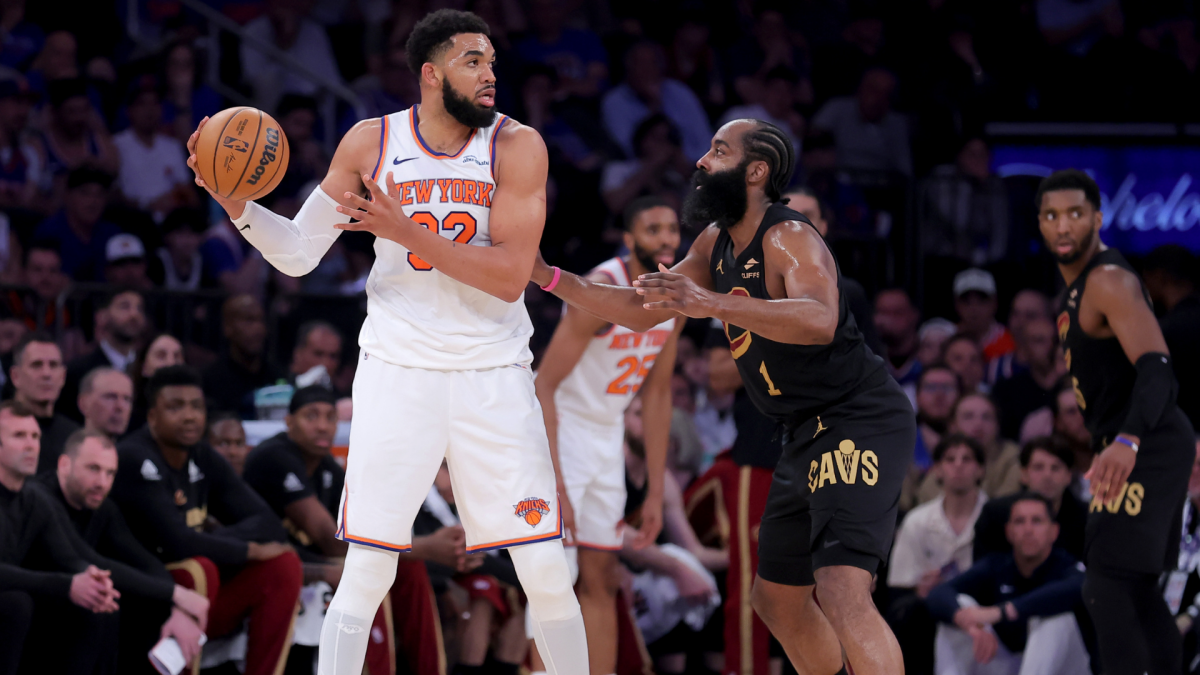
The Knicks erased a 22-point fourth-quarter deficit to steal Game 1 of the Eastern Conference Finals, with Jalen Brunson scoring 15 points in the final period to flip a game Cleveland dominated for 41 minutes. The narrative around Madison Square Garden is momentum, clutch execution, and Brunson's ability to hunt James Harden defensively. The Cavaliers, meanwhile, wasted a historically dominant performance—outplaying New York for nearly three quarters—and now head to Game 2 as heavy underdogs despite controlling most of the contest.
But the structure of that collapse matters more than the final score. Cleveland's defensive discipline evaporated not because the Knicks suddenly became unstoppable, but because Kenny Atkinson declined to call timeouts in a 7-minute window when New York went on a 44-11 run. Harden's defensive positioning deteriorated in real time, and Mike Brown explicitly stated the Knicks were hunting him off-ball. This wasn't a performance issue by the Cavaliers' role players or scheme—it was a sequencing and coaching timeout management failure that, under normal playoff protocol, doesn't happen twice in the same series. Atkinson's explanation—that he prefers to keep his timeouts for early-game situations—contradicts playoff decision-making at the highest level. A timeout with the game tied at 99 in overtime is precisely the moment you deploy them.
The Knicks' offensive foundation remains inconsistent outside the closing minutes. Through three quarters of Game 1, they struggled to generate clean offense against Cleveland's switching schemes, and Brunson's fourth-quarter scoring came against scrambled, disorganized defense. That is not a reproducible advantage. The Cavaliers have only one road win in these playoffs, which feeds the narrative that Game 2 at the Garden is a valley they can't cross—but that sample includes the seven-game Pistons series where Cleveland was the defensive stalwart, not the team defending a lead with five minutes to play. Contextualizing that road record within the specific defensive rotations the Cavaliers will employ in Game 2 (tighter rotations, fewer switching looks, more Harden rests late) changes the pressure profile entirely.
The closing line of Knicks -5.5 prices in momentum swing, fourth-quarter heroics, and home-court leverage without adjusting for Cleveland's correctable coaching decisions and defensive scheme adjustments. If Atkinson manages timeouts normally and pulls Harden for stretches in tight situations, the Cavaliers' defense stabilizes significantly. Brunson will still attack, but against a more organized perimeter defense, his assist rate should regress toward his season baseline (7.4 per game) rather than spike into the 9+ range he sustained late in Game 1. The Knicks' team total sits around 110–111; that number assumes another fourth-quarter explosion in a game where New York's baseline three-point volume and half-court efficiency won't support it. Over-relying on Brunson fourth-quarter hunting in a Game 2 scenario where Cleveland makes basic adjustments is a short-shelf-life edge. The public is overweighting a single, narrowly-sequenced collapse.
Fade the Knicks spread at -5.5 or larger. The value is on the Cavaliers to stay within single digits, or exploit the +5.5 as a contrarian lean if the line drifts closer to -6. Brunson's assists under 8.5 also offers intermediate value—his Game 1 late-game volume against disorganized defense won't repeat if Cleveland deploys normal rotation and timeout discipline.