Brunson's 34% Finals Shooting Carries Hidden Edge for Game 3 and Beyond
By PropBetEdge Editorial Team ·
The Knicks' leader is ice-cold in the series by volume, but the mechanics of his slump and the Spurs' defensive scheme suggest mean reversion is closer than the raw numbers indicate.
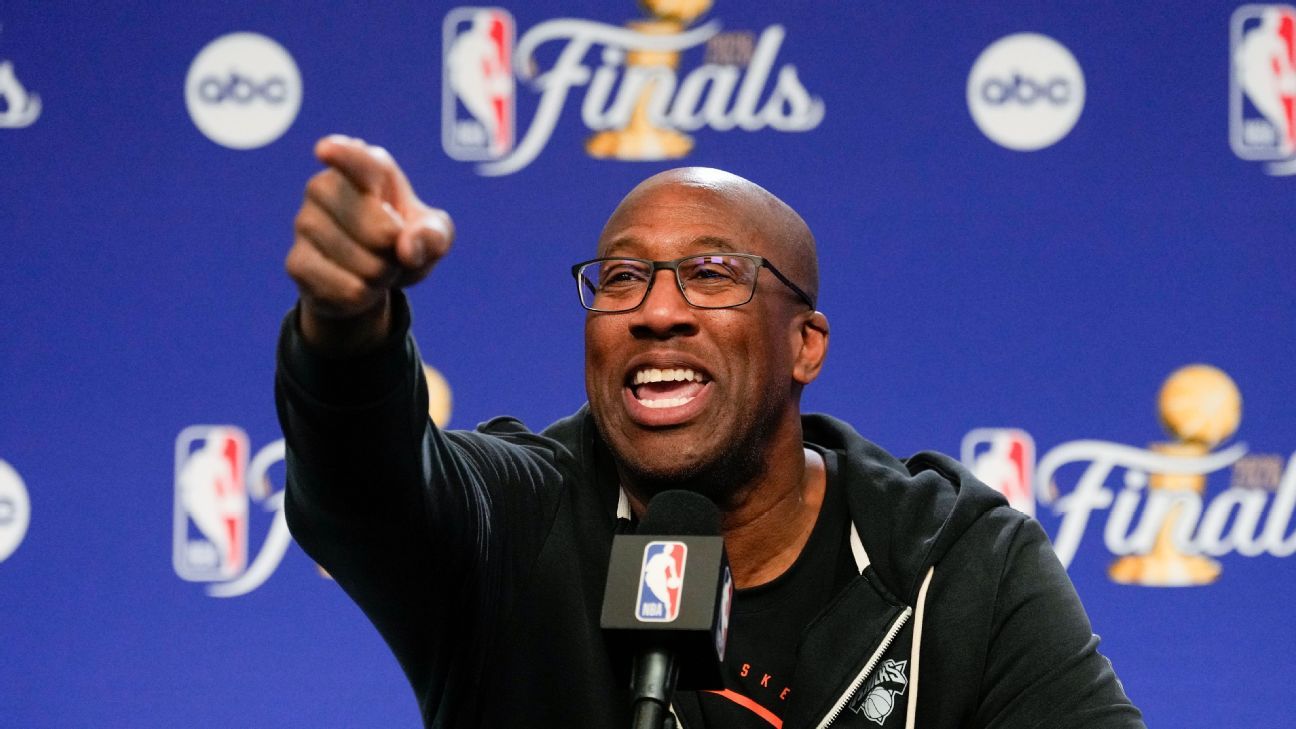
The Knicks hold a 2-0 Finals lead heading into Monday's Game 3 at Madison Square Garden—the arena's first NBA championship-round game in 27 years—but Jalen Brunson's shooting line tells a deceptive story. Through two games, the Knicks' engine is converting just 34% from the field, a mark that would represent his worst playoff performance of the postseason if it persists. But raw efficiency tells you almost nothing about what's actually happening on the court or what to expect next.
Brunson's scoring drought isn't a function of lost touch or diminished decision-making. The Spurs have physically harassed him at every level, leaning on their perimeter defenders to deny him space and forcing him into difficult looks off the catch. San Antonio's scheme has been built—somewhat desperately—around making Brunson uncomfortable before he can set up the Knicks' offensive machinery. The strategy has worked tactically. It hasn't worked strategically. Over the last two playoff rounds, Brunson shot 50% across his sweep of Philadelphia and Cleveland, a span that reveals his actual ceiling under normal offensive conditions. When defenses play him straight rather than hunting his body, his percentages normalize sharply. The Spurs can't sustain the physical intensity of Games 1 and 2 indefinitely; foul trouble alone will force adjustments, and the Knicks have shown they can run Brunson into better matchups by Monday.
What makes this relevant for Game 3 prop construction is the disparity between box-score reality and market perception. If Brunson closes at 22.5 or 23.5 points for Monday, the market is likely to price that line based on his 34% series baseline—treating it as a reliable floor rather than an outlier born of specific defensive pressure that can't be sustained at the same intensity. The Spurs also face a different burden at MSG: they're chasing a series on hostile court. Defensive game-planning tightens when you're trying to keep your season alive, but so does fatigue. Brunson's workload will increase as a primary initiator, and the Knicks' spacing should improve as San Antonio's scheme inevitably loosens. His 8+ assists line, particularly as a pick-and-roll organizer in a game the Knicks will control pace in, carries cleaner value than his points line in the immediate aftermath of Game 2.
The broader context matters: the Knicks' 2-0 road split positions them to control Game 3 flow and minutes distribution. Mike Brown's rotation has stabilized, and Brunson has explicitly framed Game 3 as a moment requiring presence and focus rather than desperation. That clarity of mind—paired with the Spurs' need to increase physical risk to stay in the series—creates a setup where Brunson's true offensive impact (not his series shooting percentage) re-emerges. It's not a bet against the market overreacting; it's an acknowledgment that the market will price a continuation of unsustainable defensive intensity.
Game 3 is where normalization begins. The Knicks have seen this defensive film before in these playoffs, and Brunson has answered every adjustment with consistent scoring and playmaking. The 34% line is the exception masquerading as a new reality—one that Vegas may carry into Monday's opener at MSG.