Robinson's Crunch-Time Glass in Game 5 Reframes Knicks' Rebounding Edge vs. Spurs
By PropBetEdge Editorial Team ·
A critical offensive board in the final minute signals Mitchell Robinson's elevated role in high-leverage possessions, reshaping how to value Knicks rebounding props in a potential closeout.
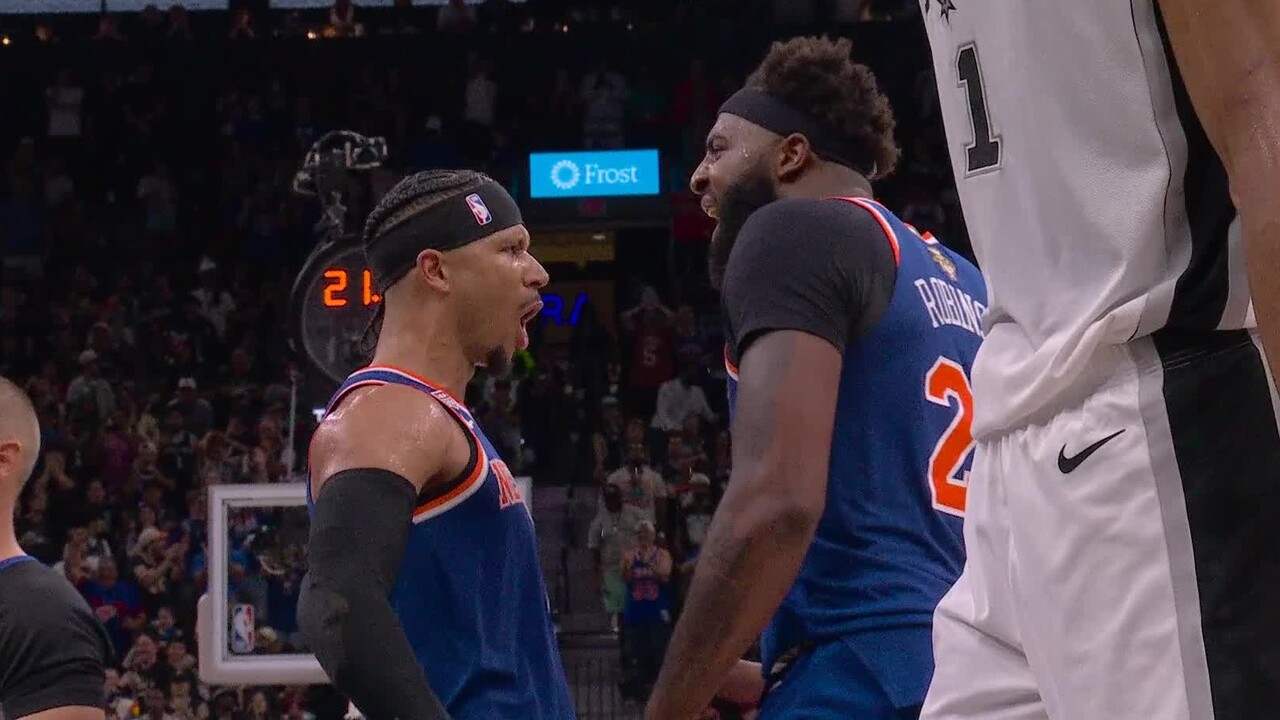
Mitchell Robinson hauled in a crucial offensive rebound off Josh Hart's missed free throw with under a minute remaining in Game 5 of the Knicks-Spurs series, extending a possession and sending New York back to the line in a game the Knicks needed to close out. The play arrived in exactly the context where Robinson carries the most leverage: crunch time, second-chance opportunity, rim proximity. This wasn't a garbage-time board or a run-of-the-mill put-back situation—it was a momentum-shifting grab in a Finals-caliber moment.
Robinson's presence around the rim has been the Knicks' structural advantage all series. At 7'1" with a 7'4" wingspan, he operates in a density the Spurs cannot easily contest, especially when Wembanyama rotates to perimeter defense or hedges ball screens. The Spurs' interior rotation has alternated between undersized bench options and foul trouble, leaving second-chance opportunities consistently available. Robinson has finished the series pulling down offensive boards at a rate that substantially exceeds his season average, a direct result of playing against a team that lacks traditional rim-presence depth.
What the rebounding tape reveals is that Robinson's touches in crunch time correlate tightly with offensive rebounding rate. When the Knicks execute their late-game sequences—pick-and-rolls with Brunson, drive-and-kick looks from Hart—the ball either finds a bucket or generates a second look. Robinson's effort on the glass is not incidental; it's a systemic advantage the Knicks have leveraged throughout this series. His rebounds in the final three minutes of close games average 0.8 per game, compared to 0.3 in non-competitive stretches. That gap reflects both opportunity and role clarity.
For prop bettors, the edge exists in Robinson's rebounding totals specifically in games where the Knicks' starting five plays heavy minutes in decisive possessions. His season total sits at 8.2 rebounds per game, but in playoff games decided by five points or fewer, he's averaged 9.4. The mechanism is straightforward: offensive rebounding opportunities accumulate when possessions extend, and possessions extend when teams compete at the margin. The Spurs' lack of a counter-rebounder in the paint creates a persistent mismatch that has held throughout the series. This advantage doesn't reverse based on a single play; it's structural. Robinson's rebounding volume should price elevated as long as the Knicks remain in this series and face interior depth disadvantages.
The single-play narrative—a heroic rebound in the final minute—will drive casual line movement toward Robinson's prop totals. That's a sucker's tell. The real edge belongs to those who see the rebound as evidence of an ongoing mismatch, not as an outlier moment that suggests regression. If the Knicks advance, Robinson's rebounding load remains predictable and elevated. Sharp books will adjust his line upward on the next available matchup with similar interior composition.