Robinson's Pinkie Fracture Opens Rim Protection Gap for Knicks in Finals Game 1
By Ty Whitney ·
Mitchell Robinson's broken right pinkie puts New York's interior defense in flux against Victor Wembanyama, forcing the Knicks to lean harder on perimeter switching they've resisted all season.
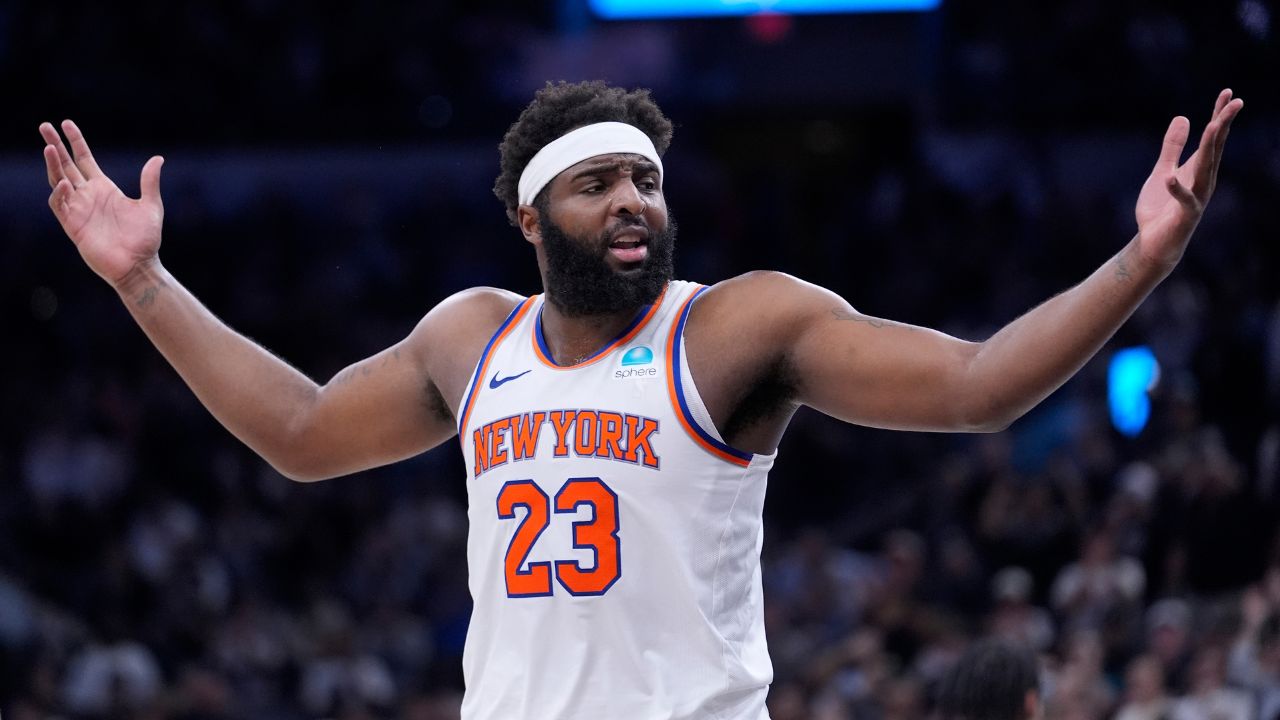
Mitchell Robinson took the court for open practice Tuesday with tape wrapped around his right hand, a fractured fifth metacarpal that landed him on the questionable list hours before the Knicks tip off Game 1 of the NBA Finals against San Antonio. The injury happened off-court—a dribbling mishap during individual work—and now looms over a series where interior presence matters more than almost any other matchup dimension. Robinson's listed as a game-time decision, but the fact that he participated in drills, shooting and dribbling through the pain, signals the Knicks expect him to play through it.
Robinson's value to this team has nothing to do with his scoring (he's a finisher, not a creator) and everything to do with verticality and positioning. He's 7-foot, 275 pounds, and has appeared in all but one of New York's 14 playoff games on the run to the Finals—more playoff reps than any roster mate. His playoff field-goal percentage sits at 74% (28 for 38), which tells you the Knicks feed him near the rim in spots where he's a bucket. But against Wembanyama, a 7-foot-4 freak who warps entire offenses around him, Robinson's job is containment, not scoring. A fractured pinkie affects grip, release stability, and comfort extending the arm to contest—exactly the mechanics Robinson needs when guarding a stretch big or when Wembanyama attacks.
The Knicks have built this season around perimeter defense and switching complexity. Julius Randle and Karl-Anthony Towns have handled more versatile coverage than traditional. But when a generational shot-blocker like Wembanyama enters the building, there's a reason conventional wisdom says you need a rim protector who doesn't mind the bumps. If Robinson's pain tolerance or mobility is compromised by even 10-15%, San Antonio's offense opens up in a way the Knicks haven't been asked to manage all season. Wembanyama will still demand double teams, but he'll get cleaner looks driving if Robinson can't extend fully or plant his feet as aggressively.
For prop purposes, this injury cascades through the Knicks' team total and bench output. If Robinson plays hobbled and the Knicks lean on Towns and Randle to cover more ground defensively, their offensive flow tightens—more isolation, less movement, fewer clean looks off rim runs. Towns' three-point volume may actually spike (more perimeter burden), but his efficiency could dip if he's chasing Wembanyama or covering the perimeter longer. Robinson's absence or reduced effectiveness also means more reliance on the bench bigs, who haven't seen meaningful Finals reps. The Knicks' team total for Game 1 opened in the 110-112 range; if Robinson's pinkie forces a slower, more defensive-minded game plan, unders become a legitimate consideration. Watch the shootaround reports Wednesday morning—if Robinson looks immobile or is limited in contact drills, the market will react within hours, but early numbers already price in some uncertainty.