Robinson Clears Finals Hurdle, but Knicks' Frontcourt Depth Remains the Real Problem
By PropBetEdge Editorial Team ·
Mitchell Robinson's availability for Game 1 masks a larger playoff reality: New York's center rotation has lost efficiency when it matters most, and Victor Wembanyama's defensive gravity will test the Knicks' ability to generate interior scoring.
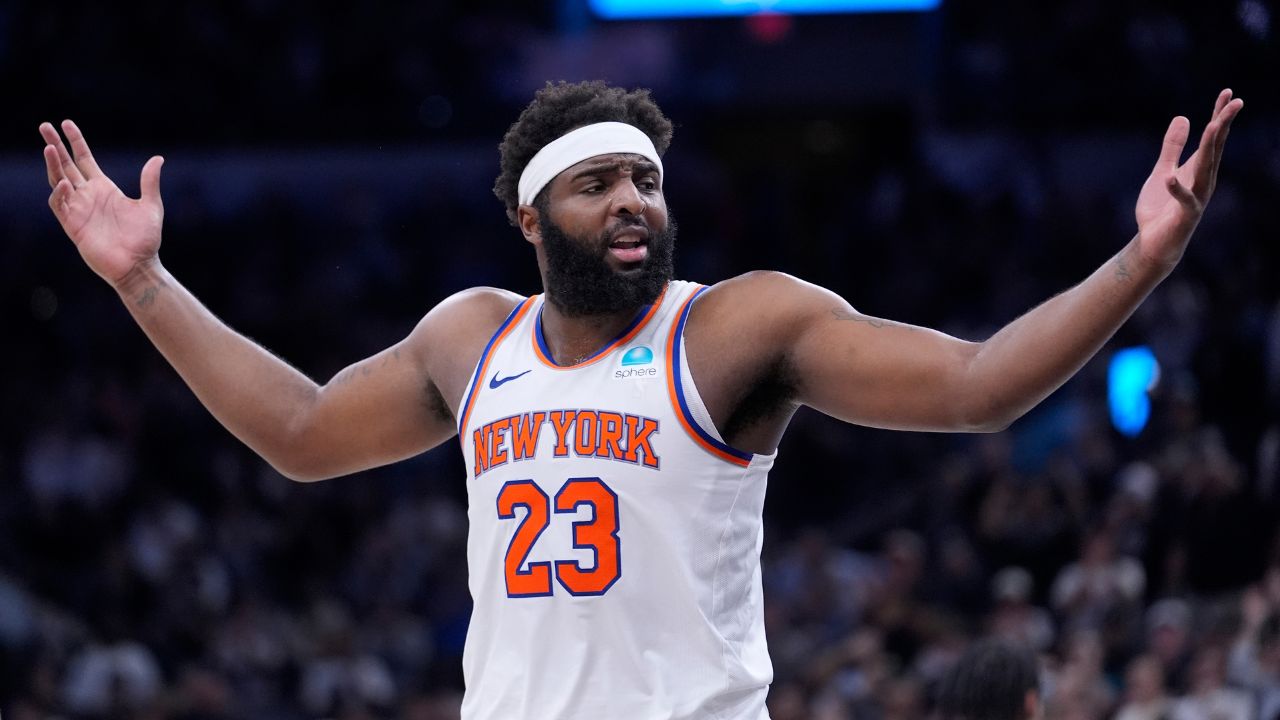
Mitchell Robinson is active for Game 1 of the NBA Finals against San Antonio, the Knicks announced Wednesday. The center fractured his pinky in circumstances the team declined to specify, but Mike Brown cleared him to play in the series opener. Robinson's presence on the floor matters less for what he brings than what the Knicks avoid—rotating a third big man into heavy playoff minutes against Wembanyama's seven-foot-four frame.
The season-long numbers tell a clean story: Robinson averaged 19.6 minutes per game, posting 8.8 rebounds and 5.7 points on 72.3% from the field. His 4.2 offensive rebounding rate ranked top-five league-wide. But the playoffs have exposed him. Across 14 postseason games, his scoring dipped to 5.3 points in 14.2 minutes, and his block rate collapsed from 1.2 per game to 0.6. The Knicks haven't asked him to do much in high-leverage moments, and his statistical decline isn't an injury story—it's a role compression story. When teams switch onto Brunson and force the Knicks to generate offense through pick-and-roll, Robinson's limited playmaking and restricted vertical space become liabilities rather than assets.
Wembanyama's defensive presence magnifies this problem. The Spurs' star defender has spent the season collapsing on ball handlers and forcing kick-outs to perimeter shooters. Against teams with weak offensive rebounding or guard-heavy lineups, this strategy works. Against the Knicks, it's designed to drain New York's ability to operate in the mid-post and attack downhill. Robinson's availability doesn't change this calculus—it just means the Knicks can deploy a full-strength roster while staying exposed to the same defensive architecture.
For prop purposes, Robinson's presence suggests the Knicks will lean into traditional center minutes rather than a guard-heavy, three-heavy lineup. This should correlate with slightly higher team rebounding totals and lower team three-point attempts, but his individual scoring remains depressed by playoff role compression. Robinson's rebounds prop (currently hovering around 6.5) holds modest value on the under side, given his 5.5-rebound playoff average and the expectation that Wembanyama will dominate offensive glass activity. More important: Brunson's assist rate becomes the true barometer for Knicks execution. If Robinson eats 18+ minutes, the Knicks are committing to inside-out basketball and funneling playmaking through the perimeter. Expect Brunson's assist line to reflect this choice—higher floor, but also higher variance depending on whether San Antonio's switches create open shooters or congestion.