Towns' Defensive Assignment in Game 1 Reshapes Knicks Finals Strategy—And Props
By Ty Whitney ·
Karl-Anthony Towns guarded Victor Wembanyama for 80% of their shared floor time and held him to 2-of-11 shooting, signaling a defensive commitment that will ripple through New York's offensive distribution and assist rates.
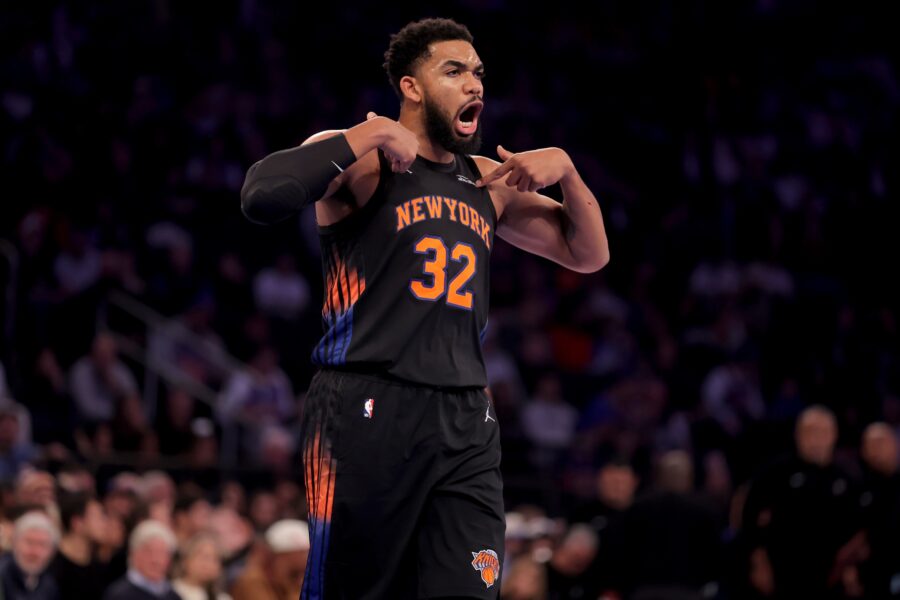
Karl-Anthony Towns was the primary architect of the Knicks' Game 1 Finals victory, but not in the way conventional box-score reading suggests. Rather than operate as New York's main scoring engine, Towns spent nearly 80% of his on-court minutes defending Victor Wembanyama, holding the Spurs' generational talent to nine points on 2-of-11 shooting with five turnovers. The assignment was unconventional—San Antonio clearly preferred Wembanyama roaming the paint to minimize perimeter pressure, and the Knicks had earlier expectations that OG Anunoby would draw that matchup. Instead, Knicks coach Tom Thibodeau placed Towns on Wembanyama, leveraging his size advantage when the Spurs star strayed from the paint and forcing isolation situations that disrupted San Antonio's flow.
The defensive choice came with an offensive cost. Towns logged 11 rebounds and contributed on both ends, but his scoring took a back seat to the primary assignment. This wasn't a one-game tactical flex—it's a statement about how the Knicks intend to structure their Finals series. By using Towns as Wembanyama's primary check rather than keeping him free to attack downhill, New York willingly compressed its spacing and forced Jalen Brunson and Mikal Bridges to shoulder more offensive creation. Brunson appeared to take minor contact late in Game 1 (Harrison Barnes fell into his knee in the first quarter, Luke Kornet stepped on his ankle in the second), but he showed no lingering effects and is healthy heading into Game 2.
The offensive redistribution matters for prop construction. With Towns chained to defensive duty against Wembanyama, Brunson's assist rate will likely inflate—he'll process more of New York's pick-and-roll offense without Towns' dive threat commanding secondary defenders. In Game 1, Brunson operated in this environment and executed. Going forward, expect his assist ceiling to expand, particularly if the Knicks commit to the same defensive framework. Similarly, Bridges and Josh Hart (the other Villanova cornerstone in the lineup) will see elevated usage, as will role players like Jose Alvarado, who logged 11 minutes—his highest playoff total since April 28—after Brunson's early-game contact. Alvarado seized the opportunity with four rebounds and composed play off the bench, signaling the Knicks are comfortable deploying depth when Brunson takes a brief breather.
For prop bettors, the assignment clarifies which Knicks will see expanded volume. Towns' 11 rebounds in 35 minutes (averaging 9.3 per 36) will be his floor going forward if he maintains this defensive posture—defensive assignment depth doesn't typically shrink as series progress. Brunson's assists will trend upward from his season average (7.4) toward the 8.5-9.2 range, as he becomes the sole ball-handler in the offense rather than sharing creation with Towns' cutters. The downside: Towns' scoring props become fades. If he's glued to Wembanyama, his scoring volume won't match regular-season efficiency. The market may not yet have adjusted for this tactical shift; early Game 2 lines may still price Towns' scoring based on his pre-Finals role.
This isn't a single-outlier adjustment that fades within 48 hours. Defensive assignments, once locked in by a head coach during a Finals series, tend to persist across games unless production severely breaks down. Towns held Wembanyama to 18% shooting; there's no reason Thibodeau abandons the assignment in Game 2. Brunson's assist uptick, by contrast, will remain durable as long as the Knicks maintain the same defensive framework. Any early-line props on Brunson assists at 7.5 or lower represent value, and any Towns scoring props marketed at his regular-season pace should be faded aggressively.