How Brunson's Family Bet on New York Paid Off—and What It Means for Finals Pricing
By PropBetEdge Editorial Team ·
The Knicks are one win away from their first title in 53 years, built on a free-agent decision driven by loyalty rather than market logic—and the market still hasn't fully adjusted for what that stability produces in high-leverage moments.
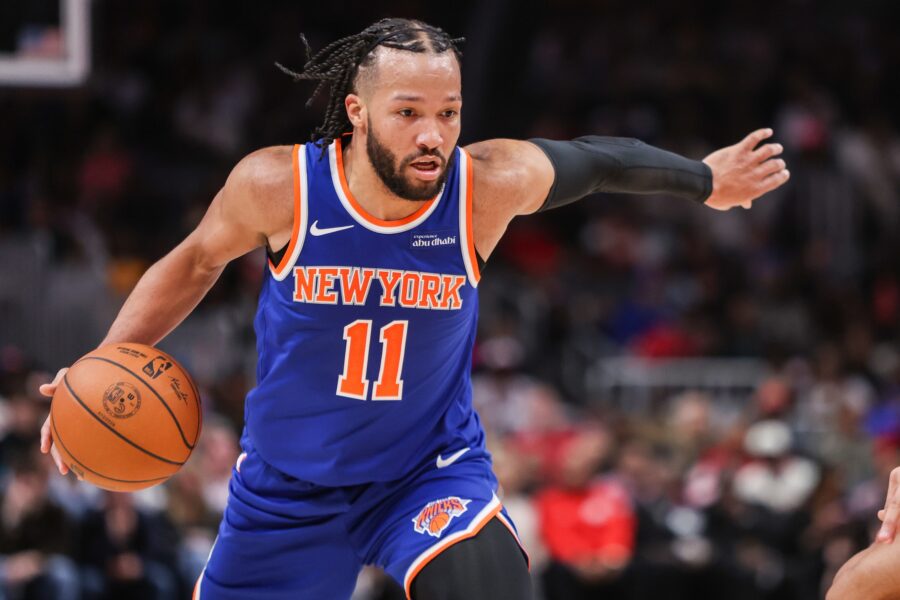
The Knicks are on the verge of winning an NBA championship, and it happened because Jalen Brunson chose family over the largest check in the room. Per ESPN's reporting, Brunson's 2022 free-agency decision hinged on his long-standing relationship with Knicks president Leon Rose, who had represented both him and his father Rick, and who arranged Rick's position as an assistant coach. Dallas, which drafted Brunson in 2018 alongside Luka Doncic, never fully grasped the depth of that pull. A Mavericks source acknowledged the miscalculation directly: "I think Jalen had a loyalty to the Mavs because they'd drafted him, but the Knicks were his actual family. I don't think we fully grasped that." The Knicks signed Brunson to a four-year, $105 million deal—a contract that drew skepticism at the time but has transformed the franchise's trajectory.
What the Mavericks missed, and what New York understood, is that Brunson's play correlates directly with organizational stability and role clarity. Former Knick Jamal Crawford framed it plainly: "With that comfortability, I think you're going to get the best of him." That comfort materializes in how Brunson has operated in the postseason. He's playing alongside Karl-Anthony Towns, a player who spent months clashing with first-year coach Mike Brown over offensive role before accepting Brown's tactical vision once the team faced elimination against Atlanta in the first round. Towns' ability to subordinate his ego and adapt within a system—and Brunson's parallel comfort in that same system—suggests a core that doesn't fracture under Finals pressure. Both players have their spatial niches locked. Both trust their coach's adjustments. Neither is negotiating his role mid-series.
The Knicks' path to the Finals wasn't built on star acquisition or blockbuster trades in the traditional sense. It was built on hiring Mike Brown after his first-choice candidates (Chicago, Houston, Dallas) refused to grant interviews, then watching Brown prove the organizational doubters wrong by immediately solving chemistry problems that had festered. Brunson's comfort was already embedded; Brown simply needed to build around it. That's a stable foundation. In high-variance settings like the Finals, stability in role and trust between star and system compounds into outsized production.
For prop bettors, this matters because Brunson's Finals performance trades less on his raw talent (already priced in) and more on the absence of late-series drama or role renegotiation that often depresses All-Star production in unfamiliar systems. His assist rate throughout the postseason has reflected that stability—he's not force-feeding to unhappy co-stars, he's orchestrating within a coherent system. When the market prices Brunson's Finals assist total or scoring props, it's still anchoring to his season averages and playoff performance, which reasonable. But the market hasn't internalized the premium that organizational stability and role acceptance provide in a Finals setting where the opposing defense is maximum-intensity and variance spikes highest. Brunson's consistency relative to that baseline—not whether he'll score 25 points, but whether he'll maintain his assist and turnover ratios in the narrowest possible margin—is where the edge lives. His dad is on the bench. His president hired him. His coach trusts his reads. All of that is priced as flavor. It's actually leverage.