Knicks' Road Closeout Mastery Sets Stage for First Title in 53 Years
By Erik Schwartz ·
New York enters Game 5 with a 3-1 Finals lead and a perfect 3-0 record in closeout scenarios—but the Spurs' desperation and Wembanyama's size threaten to disrupt the pattern.
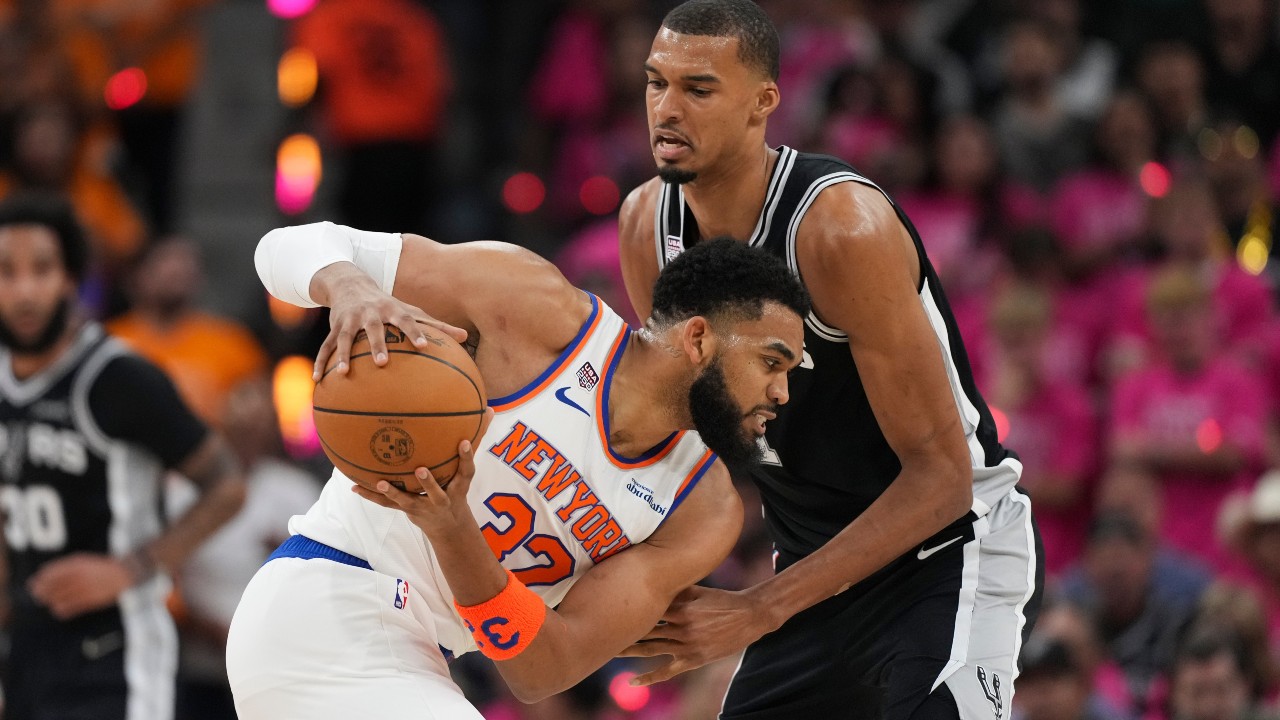
The Knicks will attempt to capture their first NBA championship since 1973 on Saturday night in San Antonio, holding a 3-1 series advantage over the Spurs in Game 5 of the Finals. New York's path to this moment has been paved with surgical execution in high-leverage situations: the team is 3-0 in closeout games this season and has won those contests by an average of 39.3 points, all away from Madison Square Garden. That track record of clinical road closes—eliminating opponents when they have nothing to lose—represents elite mental discipline and execution under maximum pressure.
The Spurs, however, arrive Saturday bloodied but unbroken. They have led in all four games of this series by double figures entering the fourth quarter, yet three of those leads evaporated into losses. Game 4 epitomized their collapse: New York mounted a 29-point comeback to win 107-106 on an OG Anunoby tip-in with 1.2 seconds remaining, the largest comeback in NBA Finals history. That magnitude of late-game failure doesn't simply reset between games. San Antonio's desperation cuts both directions—it sharpens focus, but it also invites panic and isolation offense from players pressing for individual answers.
Victor Wembanyama remains the Spurs' structural counter to everything New York executes. The 7-foot-4 guard-wing labyrinth presents coverage problems for the Knicks' pick-and-roll attack and forces Karl-Anthony Towns into pick-and-pop situations where Towns must shoot over extended length rather than operate in short-roll playmaking space. When Wembanyama stays vertical and disciplined, he eliminates the midrange continuation game the Knicks rode to Game 4's dramatic comeback. Towns' assist rate and conversion efficiency on pick plays drop measurably against elite rim protectors with lateral mobility; against Wembanyama's seven-foot-plus wingspan, that friction multiplies.
From a betting angle, the Knicks' closeout history suggests moneyline confidence is justified—teams that have closed out 3-0 on the road already absorbed the variance that kills closeout bids. But the line has already absorbed this narrative. The sharper tell lies in game totals and pace-of-play props. San Antonio enters Saturday knowing defeat ends its season; that desperation typically manifests as faster pace, more isolation possessions, and fewer disciplined half-court sets. The Spurs' assist rate and net rating against the Knicks have deteriorated in each successive game, a sign that individual shot-creation is replacing ball movement. Expect the Knicks to slow the game into a half-court grind where their size advantage and defensive versatility compound the Spurs' margin of error. Unders at the closing total carry value because San Antonio will play harder defensively—not because it will shoot better, but because it will take fewer three-pointers and rely on contested midrange looks that the Knicks' length contests. The game doesn't need high scoring to reward the Knicks' closeout history; it needs fewer possessions.
Mike Brown's coaching emphasis—"the next possession, the next possession"—is cliché until you realize it's the literal vocabulary of closeout discipline. New York has internalized the principle that beating teams with their season on the line requires not momentum swings but possession-level attentiveness. That becomes a floor for the moneyline, not a ceiling for the total.