Utah Adds Perimeter Depth With Okogie: What It Means for Jazz Rotation Props
By Ty Whitney ·
Josh Okogie's two-year, $12 million deal signals Utah's pivot toward three-and-D depth over high-variance scoring—a structural choice with real implications for bench-unit assist rates and individual scoring distribution.
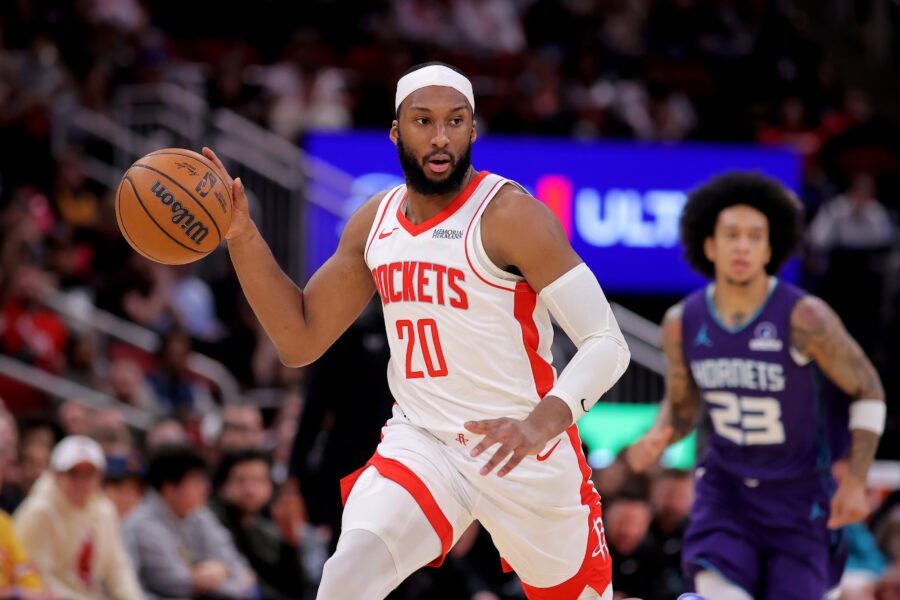
Josh Okogie is joining the Jazz on a two-year, $12 million contract featuring a team option in the second year, per ESPN's Shams Charania and HoopsHype's Michael Scotto. The veteran wing, the 20th overall pick in 2018, arrives after four seasons with Minnesota and subsequent stops across the league. For Utah, it's a low-cost addition of proven perimeter defense and floor spacing—exactly the kind of complementary talent that shapes bench rotations without reshaping salary architecture.
Okogie's calling card has never been creation or volume scoring. Over his career, he's averaged 7.2 points while maintaining a 36.1% three-point rate and solid individual defense. The Jazz are explicitly not paying for shot volume; they're paying for positional versatility and the ability to defend multiple wings without losing shooting efficiency on floor lineups. That matters because it tells you where Utah's rotation confidence lies heading into next season. If Okogie gets regular minutes—and the contract structure suggests he will—he's eating into playing time that would otherwise go to higher-usage players, which compresses the scoring distribution across the wing group.
For prop bettors, this is a marker of Utah's offseason direction. The Jazz have signaled they're not chasing a high-usage wing in free agency; they're building depth. That shapes how to approach Jazz bench-unit totals and individual wing scoring props. Okogie himself won't carry a large line—his scoring floor is low, his ceiling is 12-14 points on a night when he's hot from three. But his presence in the rotation affects the scoring opportunities available to projected starters and other bench players. Utah's second unit total will likely tighten if Okogie is in the mix, because the minutes and possessions don't expand; they're redistributed among three-and-D specialists instead of consolidating with high-volume scorers.
The betting application is precise: watch Utah's bench unit scoring props once the rotation crystallizes in October. If Okogie solidifies as a regular rotation piece (averaging 18+ minutes per game), Jazz bench-unit totals should trade slightly lower than pre-free-agency projections, even if the starting lineup remains strong. Conversely, any Jazz wing not named a starter—especially younger players competing for usage—faces reduced scoring upside in games where Okogie plays heavy minutes. This isn't a single-game spike; it's a multi-season structural choice. The team option in 2027/28 suggests Utah is comfortable with this role for the full contract, meaning the rotation compression effect is durable, not a training-camp experiment.