Jokic's Contract Delay Signals a $81.5 Million Gamble on NBA Salary Cap Growth
By Ty Whitney ·
By punting his extension talks to 2027, Denver's three-time MVP unlocks a five-year, $359.5 million deal—the largest in league history—but bets heavily that the cap will rise enough to make the math work.
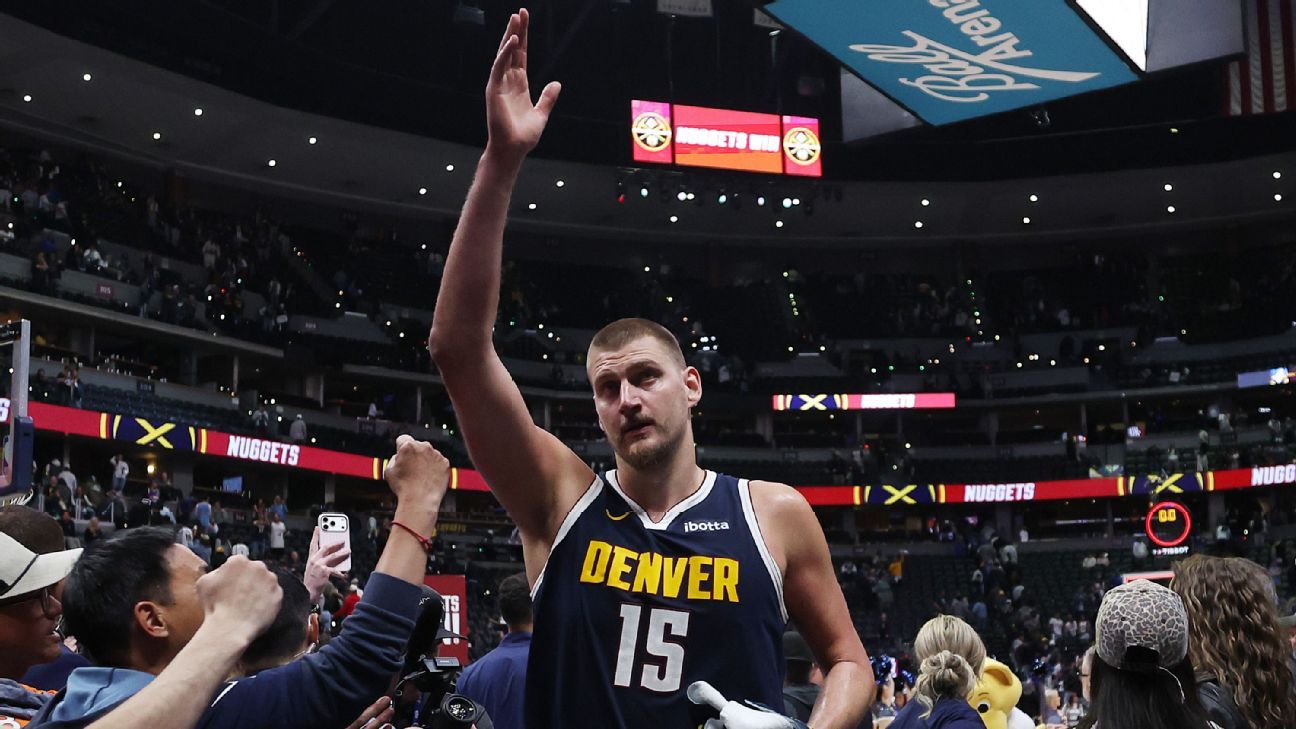
Nikola Jokic told reporters on Monday that he intends to stay in Denver long-term but will delay signing an extension until next summer, a decision that resets the financial calculus for both player and franchise. The move is purely structural: Jokic is currently eligible for a four-year, $278 million extension through June 14, but waiting until the 2027 offseason allows him to negotiate a five-year, $359.5 million free-agent deal as a soon-to-be 31-year-old—the largest contract in NBA history. His career on-court earnings would reach $724 million under that scenario. The Nuggets understood the decision in advance and, per ESPN, view it as financially motivated rather than a signal of any organizational discord.
This is the second consecutive offseason where Jokic punted the negotiation window. Last summer, he declined a three-year, $200 million extension, already telegraphing his preference to maximize future earnings. The strategy hinges on one core assumption: that the NBA's salary cap will inflate enough over the next 12–18 months to accommodate a nine-figure annual salary without destroying Denver's ability to field a competitive roster around him. Current projections show the cap climbing into the low $140 millions by 2027–28, which would make the five-year deal structurally feasible. If those projections hold, Jokic's patience becomes a masterclass in financial leverage. If the cap stalls or contracts, he's either signing a smaller deal than he could today or risking free agency in a tighter environment.
For Denver, the delay is a calculated risk with real stakes. Jokic remains under contract for two more seasons (the final year is a player option), giving the franchise a runway to maintain competitiveness around him. But the first-round exit to Minnesota this past spring signals cracks in the supporting cast. Losing Tim Hardaway Jr. to Miami and the continued uncertainty around restricted free agents Peyton Watson and Spencer Jones means the Nuggets are in a holding pattern defensively while Jokic—who averaged 27.7 points on 56.9% shooting, led the league in rebounds (12.9) and assists (10.7), and posted a triple-double average for the second time in his career—remains in his prime. Every marginal roster addition over the next 14 months will be scrutinized against the knowledge that Jokic's future cap hit could exceed $72 million per year by 2027.
From a betting lens, this contract situation creates a subtle but durable edge in Nuggets season-projection props and playoff odds for the 2026–27 and 2027–28 campaigns. Markets typically price in extension signings as completed negotiations; the uncertainty of Jokic waiting until mid-2027 introduces execution risk that's often underfactored into futures. If the Nuggets fail to surround Jokic with reliable wings or defense before he re-signs, the team's title odds for 2027 and beyond could compress sharply once the extension is formalized and the salary structure solidifies. Conversely, if Denver makes a trade deadline acquisition or summer free-agent splash that meaningfully upgrades the perimeter, the market will reprice upward after the fact. The asymmetry favors sharp bettors who treat Nuggets season wins and playoff prop lines as having embedded Jokic-extension optionality baked into their current numbers; they do not, because the deal is still pending. Monitor Nuggets roster moves and cap flexibility over the next 12 months—your edge window closes the moment Jokic signs in summer 2027.
Jokic's MVP-caliber production (runner-up to Shai Gilgeous-Alexander for the second straight year) means his individual scoring, assist, and triple-double props will remain among the league's most liquid and efficiently priced. The contract situation does not move the needle on his nightly performance lines. It does, however, create a structural opportunity in team-level props: if Denver's win total for 2026–27 is priced as a 48–50 win range and the market has not fully adjusted for the likelihood of modest roster erosion while Jokic money remains committed but unallocated, unders on that total carry an edge until the extension clarifies the spending picture.