Butler's ACL Timeline Clouds Warriors' 2026-27 Window
By Erik Schwartz ·
Four months post-surgery with a cautious medical staff, Jimmy Butler faces an extended rehab that could delay his return until deep into next season—threatening Golden State's immediate championship viability.
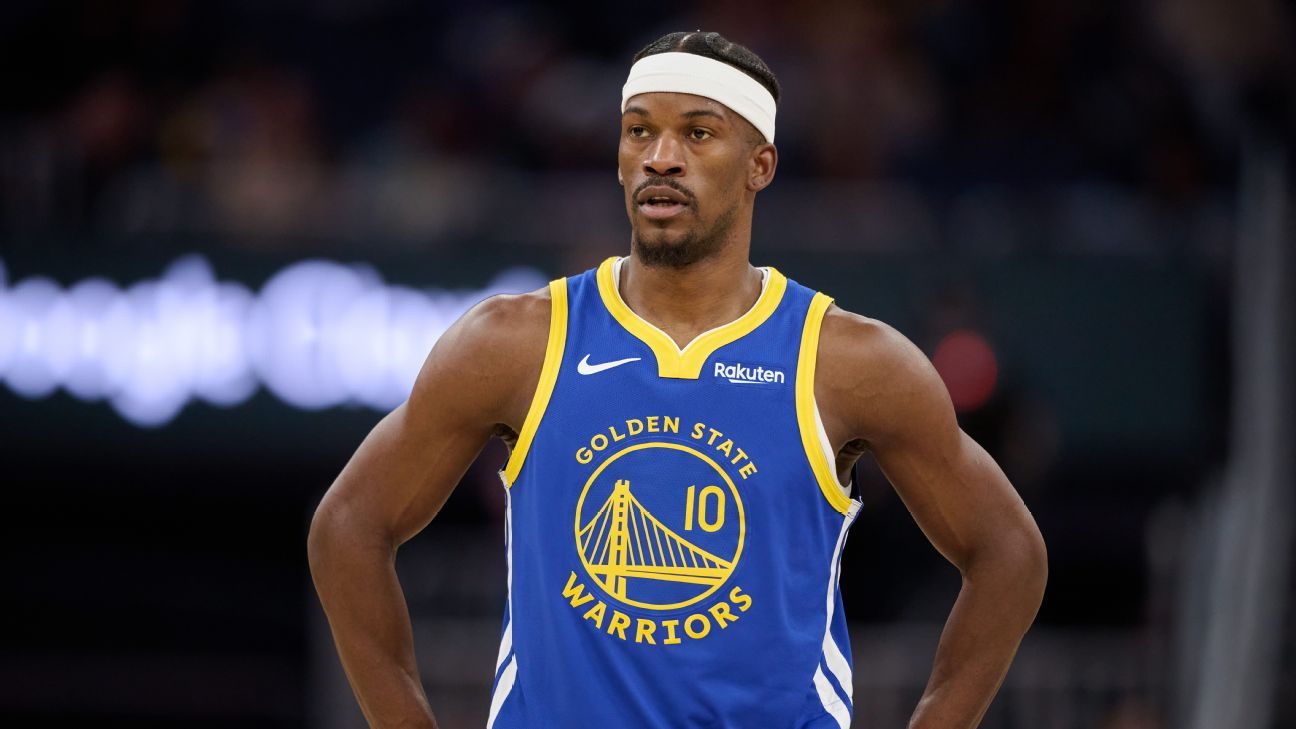
Jimmy Butler underwent ACL surgery on February 9 after tearing his right ACL on January 19 during a win over Miami. As of late June, he sits roughly four months into recovery, with team medical director Rick Celebrini—known for conservative veteran protocols—overseeing his return-to-play timeline. Butler spoke publicly this week with measured optimism, telling ESPN he expects to be "a top player whenever I get back" and expressed a desire to retire in a Warriors uniform. The confidence is warranted: his 12-4 stretch before injury, averaging over 20 points on premium efficiency, proved he could mesh with Steph Curry and anchor Golden State's championship push. But the path back is murkier than his words suggest.
The Warriors' medical staff does not rush veterans through ACL rehab, a philosophy underscored by Rick Celebrini's track record with aging rosters. Butler will be 37 in September, and the team is already preparing for the possibility that he will miss substantial time into the 2026-27 season. Without him, the Warriors collapsed to 37-45 last season and were eliminated in the play-in—a jarring fall from contention that wiped away the gains his trade deadline acquisition had provided. The injury also exposed the fragility of their core: Curry dealt with a hamstring issue that derailed their second-round series against Minnesota, and the roster's age (Curry, Klay Thompson, Draymond Green all in their mid-30s) leaves little margin for error. Every month Butler remains sidelined is a month the Warriors' championship window narrows further.
Butler's public statements about returning to form carry weight—his two-way game and closing ability remain elite—but they do not override the arithmetic of ACL recovery timelines at age 36-37. Standard return-to-play protocols for athletes at his age typically span 9-12 months from surgery date, placing a realistic return sometime between November 2026 and February 2027, depending on psychological clearance and on-court conditioning. Celebrini's measured approach could extend that window. The Warriors have no choice but to build their 2026-27 season plan around his absence, treating any mid-season contribution as a bonus rather than a linchpin.
From a betting perspective, this timeline creates distinct angles. Golden State's team totals and win projections for 2026-27 should reflect a season without Butler for the first quarter or more—a scenario that compounds Curry's injury history and the age-related decline already priced into the roster's floor. Oddsmakers will likely underestimate the depth of the Warriors' short-handed run because Butler's public optimism and star power create narrative gravity. The sharper play is fading Golden State's over on season-long win totals if they're priced above 48 wins, a threshold that assumes Butler returns in time to stabilize playoff positioning. His absence during the crucial November-December stretch—when teams build playoff seeding stakes—could cost the franchise 4-6 additional losses compared to consensus projections.
Butler's individual scoring prop lines will be worth monitoring when odds surface for his eventual return game, but bettors should view the Warriors as a faded season bet for now. The team's over/under is the truest edge: the market will price in a healthy, mid-season Butler contribution, but Celebrini's conservatism and Butler's age suggest the Warriors are more likely to limp into the playoffs without him than to capitalize on his return mid-season. Position accordingly.