Brown's Trade Limbo Creates Short-Term Celtics Chaos and Longer-Term Roster Uncertainty
By Ty Whitney ·
Boston's failed Giannis pursuit left Jaylen Brown publicly simmering and his future with the team genuinely unsettled, with the extension decision on July 26 functioning as a hard deadline for front-office commitment.
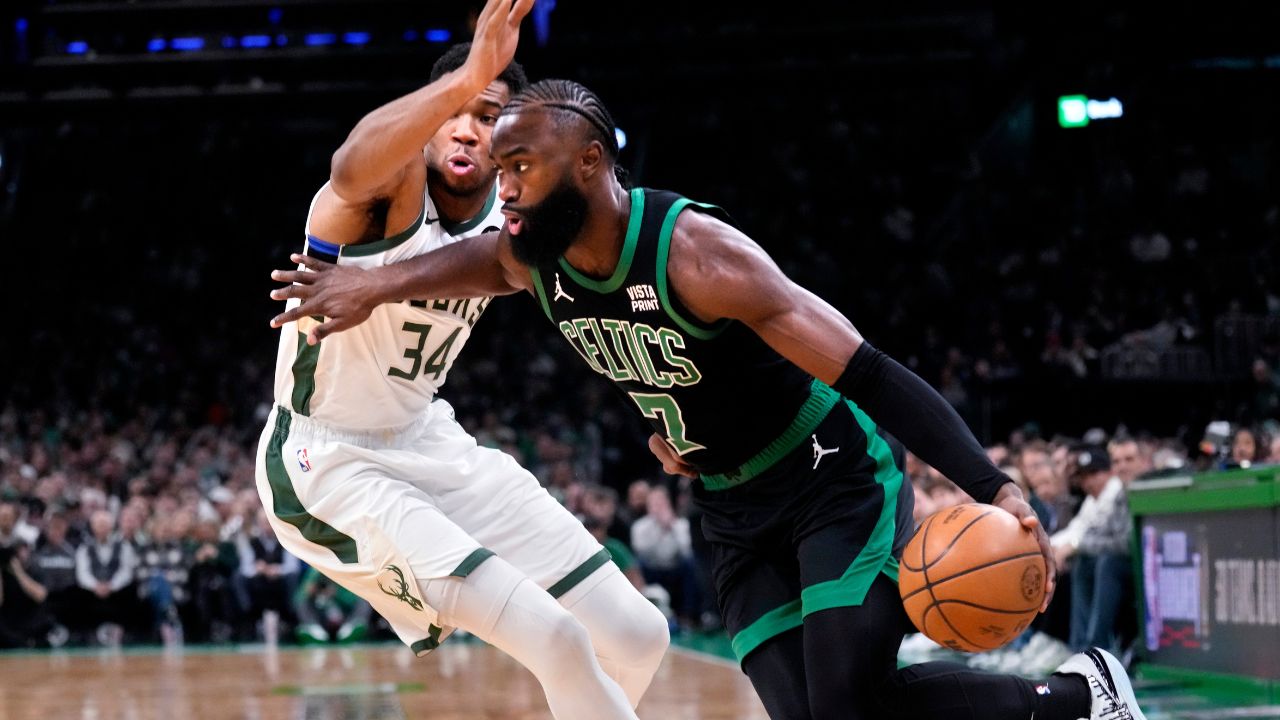
Jaylen Brown remains a Boston Celtic on paper. Whether that holds through the offseason is no longer a certainty. Per the Athletic reporting, Brown was offered to Milwaukee as the centerpiece of a Giannis Antetokounmpo trade—Brown plus two first-rounders against Miami's four firsts, a second, and Tyler Herro—and the rejection stings visibly. Brown posted a Twitch stream Monday describing himself as a "monster" being forged by doubters, a public temperature reading that signals genuine organizational discord rather than the typical posturing of a disgruntled star.
The framing matters because Brown has legitimate grievances beyond this moment. He averaged 28.7 points, 6.9 rebounds, and 5.1 assists this past season while Jayson Tatum rehabbed from his ruptured Achilles—career highs across the board—and finished sixth in MVP voting. He earned Eastern Conference Finals and NBA Finals MVP honors during Boston's 18th championship two years ago, yet was cut from Team USA's 2024 Olympics roster. The league's perception of Brown has lagged his actual production for years, a gap he's made clear he resents. Being offered in a trade, then watching the team lose the bidding war, lands differently in that context. It reads as: we were willing to move you, and we weren't even the preferred package.
The Celtics' next institutional signal arrives July 26, when Brown becomes eligible to sign a two-year, $140 million extension to his existing supermax deal. Brad Stevens faces a binary choice: commit to extending a 30-year-old (by next season) who will have $182 million remaining on his current five-year, $304 million deal, or signal that the door is open for a trade. Stevens has been operating under the assumption that a contingency plan existed if the Antetokounmpo pursuit failed—the NBA Draft Tuesday night traditionally marks the start of accelerated offseason movement. If Brown doesn't get the extension offer, or if it comes with reduced guarantees, the market will price in a mid-season trade possibility. If he does get extended on full value, the organization has declared its hand: this core stays intact, at least for another two years.
For prop bettors, this uncertainty compresses Brown's near-term value and elevates variance across both his individual lines and Celtics team totals. If Boston trades him in July or August, any preseason props priced on a full-season assumption become unreliable hedges. His scoring volume, assist rate, and usage percentage are all contextualized by whether Tatum returns healthy and plays a full slate—an assumption that now carries additional weight given the offseason organizational tension. Teams in flux often start slow as front-office clarity emerges. The Celtics' Oct. 22 season opener should not be played at the same confidence level as a stable roster. Fade overconfident pregame Celtics team totals in the 112–116 range for the first two weeks; wait for the extension announcement and any resulting trades to settle before committing capital to either Brown's individual props or Boston's seasonal trajectory.
The extension decision is the edge here. Market prices don't typically move on what a team might do on July 26; they move when the decision is made and confirmed. If Stevens extends Brown, the cloud lifts and both their individual lines and Celtics totals reset higher. If he doesn't, expect a 4–6 week lag before a trade materializes, during which Boston operates as a lame-duck contender with internal friction. That timing gap—the gap between decision and market repricing—is where the prop angle lives.