Brunson's Wrist Surgery Clouds Knicks' Championship Repeat Window
By PropBetEdge Editorial Team ·
The NBA Finals MVP underwent a procedure on his left wrist today, forcing a six-to-eight-week recovery that could reshape New York's early-season rotation and backcourt prop economics.
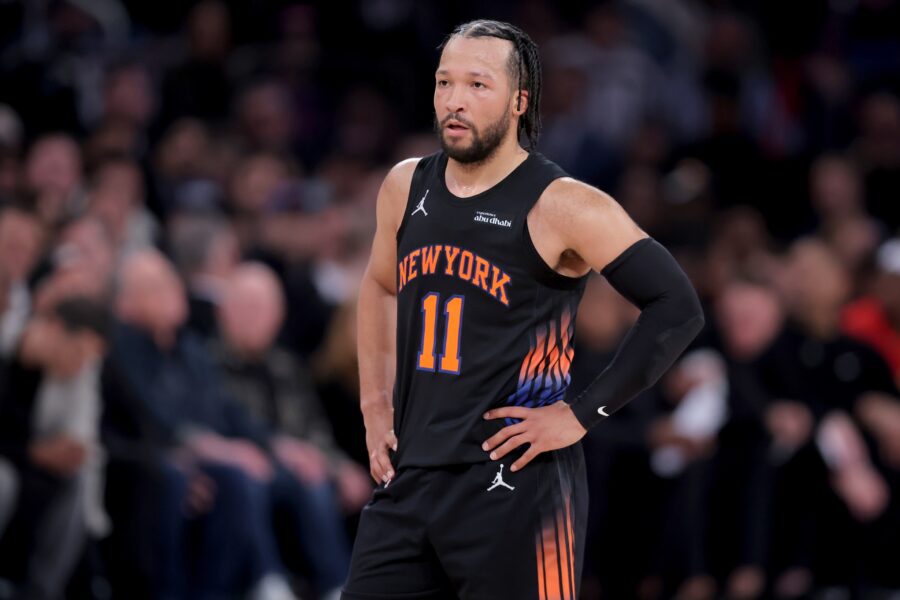
Jalen Brunson had surgery on his left wrist today, addressing an injury he played through during the Knicks' championship run. Recovery will stretch six to eight weeks—possibly longer, depending on medical protocol—meaning the earliest realistic return sits around mid-to-late August. The team has signaled that opening night availability remains the baseline expectation, but that timeline is contingent on a clean healing window and clearance from the medical staff. Any setback compresses that window further and forces decisions about minutes management in October.
Brunson averaged 28.4 points and 6.8 assists per game during New York's postseason march to the 2026 title, his 45-point Finals-clinching performance cementing him as the tournament's fulcrum and MVP. The injury occurred well before today's procedure—he managed it through the playoffs—but enough structural work remained that waiting until July made sense. The Knicks have depth at guard (Miles McBride, Jose Alvarado, Tyler Kolek), but none of those names operates the offense the way Brunson does. McBride's role expands materially if Brunson misses time or plays restricted minutes, and Alvarado becomes a genuine backup floor general rather than a reserve wing defender.
For prop bettors, the immediate calculus hinges on when Brunson actually plays competitive minutes. The team's public posture is cautiously optimistic—"no concern about opening night," according to team communication—but that messaging often softens in real time. If he suits up in October but on a 28-32 minute restriction, his scoring floor drops sharply. His assist volume follows usage. The assists line (currently sitting around 6.5-7.0 in preseason odds) becomes vulnerable to downside if early-season minutes are managed; the points line (26-27 range) faces similar pressure. Conversely, if Brunson returns to full availability by late September or early October, his counting stats snap back to championship-run averages and the lines should hold.
The wrist injury also matters contextually: ball-handling precision and shooting touch both depend on wrist stability, two skills that don't recover in a linear fashion. Brunson's 40% three-point rate during the playoffs was elite; even a 2-3 percentage-point dip from reduced confidence or mechanical adjustment would ripple through both his scoring volume and his on-court efficiency. Teams will test him early. The Knicks' schedule-building advantage (defending champs get some early-October runway) helps, but the first 10 games will function as a live test of his structural readiness.
The prop strategy bifurcates on timing. For games in the first two weeks of the season (October 19–November 2), apply a 10-15% discount to Brunson's preseason assist and point lines; account for load management and cautious usage. By November, if he's played 8-10 games without re-injury, revert to championship-run pricing—his elite tier doesn't change in three weeks, only his opportunity does. McBride's assist and scoring props rise in inverse proportion during the uncertainty window; he becomes a contrarian value play if Brunson's minutes cratering or if the team shifts him to a ball-handling role earlier than expected.