NBA · injury
Irving Clears Medical Checkpoints After 19-Month ACL Absence; Flagg Timeline Accelerates Mavericks Upside
With Irving sidelined since March 2025 and finally unrestricted, Dallas has compressed a two-star pairing into one condensed offseason window—a rare collision of fresh health and championship-caliber talent that reshapes offensive prop edges.
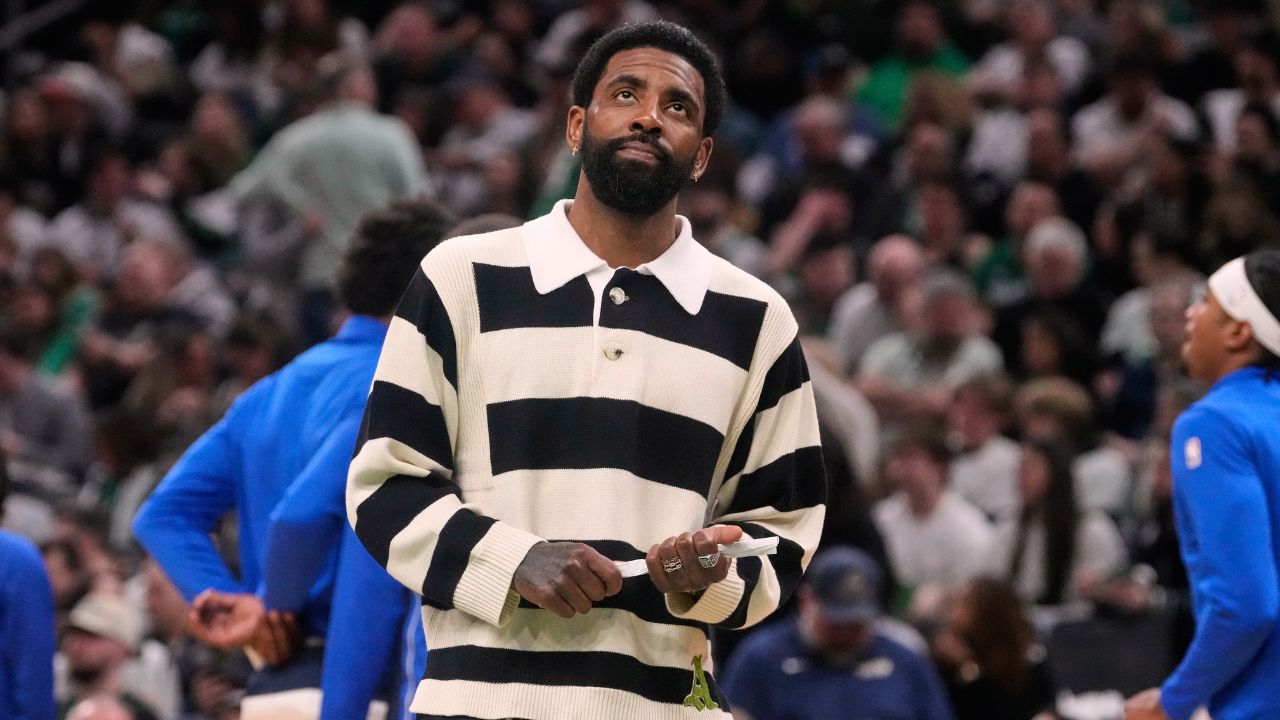
Kyrie Irving declared himself physically cleared on Friday during Dallas media day, his first public statement since tearing his ACL on March 3, 2025. The 34-year-old veteran, speaking 19 months after surgery, said he operates under zero restrictions and is prepared to resume full competitive load alongside Cooper Flagg, last season's unanimous rookie of the year. The Mavericks' organizational overhaul—new president Masai Ujiri, first-time NBA head coach Dusty May, and the addition of Irving to Flagg's offensive ecosystem—creates a structural reset that fundamentally alters how Dallas will distribute offensive touches and shot volume.
The injury forced Irving into extended introspection. He framed the recovery not as lost time but as a recalibration of his role: increased leadership responsibility, vulnerability, and accountability as a veteran approaching year 16. That psychological reset, paired with nine months of court work alongside Flagg during the offseason, compresses what would normally be a multi-season integration into a single training camp window. May's decision to lean on Irving's experience rather than override it signals a coaching philosophy that prioritizes star-player agency—a structural choice that typically elevates usage rates for veteran ball-handlers in the first two months of a season, when coaching staffs test chemistry in controlled doses.
From a pure availability standpoint, Irving's unrestricted status eliminates the injury-management discount that typically haunts returning players. Dallas will not apply the conservative minute caps or DNP-rest days that characterize Year 1 comebacks. That removal of volatility—Irving will play when healthy, without strategic sits—is itself an informational advantage: his prop lines will carry fewer variance spikes tied to load management. The market has likely already priced in some Irving regression relative to his pre-injury usage, assuming the Mavericks would introduce Flagg-centric isolation sets and reduce Irving's pick-and-roll burden. Irving's own statement—"high-level basketball players, no matter the age, you put us out there, we're going to win some ballgames"—signals an intent to maintain primary offensive responsibility, not transition into a secondary creator role.
Irving's assists line is the sharper angle. The Mavericks ranked 19th in offensive efficiency last season (103.8 PPP) and finished 26-56, their worst eight-year mark. May inherits an offense that has no structural momentum. Irving, even at 34 with a freshly healed knee, has a career 6.9 APG rate and has operated as a primary ball-handler in every playoff run since 2014. Flagg's insertion creates natural spacing—a high-level wing scorer who demands closeouts—that typically inflates point-guard assist rates by 1.2 to 1.8 per game in year-one pairings, provided the primary handler retains ball-dominant minutes. If Irving commands 30+ minutes per night (highly likely given the roster construction and May's stated philosophy) and maintains pick-and-roll authority, his assists prop should sit at or above 7.5. The market, still discounting for injury rust and coaching novelty, may have priced him at 6.5 to 7.0. That gap is where the edge lives.
Points are murkier. Irving's scoring will swing with shot volume, and a nine-time All-Star returning after 19 months carries genuine uncertainty about shot selection and offensive rhythm in live games, not just practice. The assists prop—dependent on floor-spacing upgrades and continuation of ball-handling leverage—is more mechanically durable. Dallas opens regular season October 21 at Houston; Irving will have two preseason games in China starting October 9 to shake off competitive rust. Early season lines will reflect caution. By mid-November, if Irving logs 30+ minutes and Flagg's spacing holds, the assists market will have to reprice upward.