Sacramento's Rebuild Gamble: Acuff's Leap Collides With Sabonis and LaVine's Reprieve
By PropBetEdge Editorial Team ·
The Kings are accelerating a teenager's development while two expensive veterans jockey for touches and relevance—a structural tension that will define offensive efficiency and individual prop volatility for months.
The Sacramento Kings' late-season surge cost them dearly. After sitting 14-50 in early March, they won eight of their final 18 games—enough to claw within two wins of Utah, but not enough to land the lottery pick they needed. The Jazz edged Sacramento in a tiebreaker for the fourth slot, then jumped to No. 2 overall and selected Kansas guard Darryn Peterson. Sacramento, despite the revival, settled at No. 7 and used it on Arkansas point guard Darius Acuff Jr., a high-usage, score-first floor general with playmaking upside who turns 20 in November.
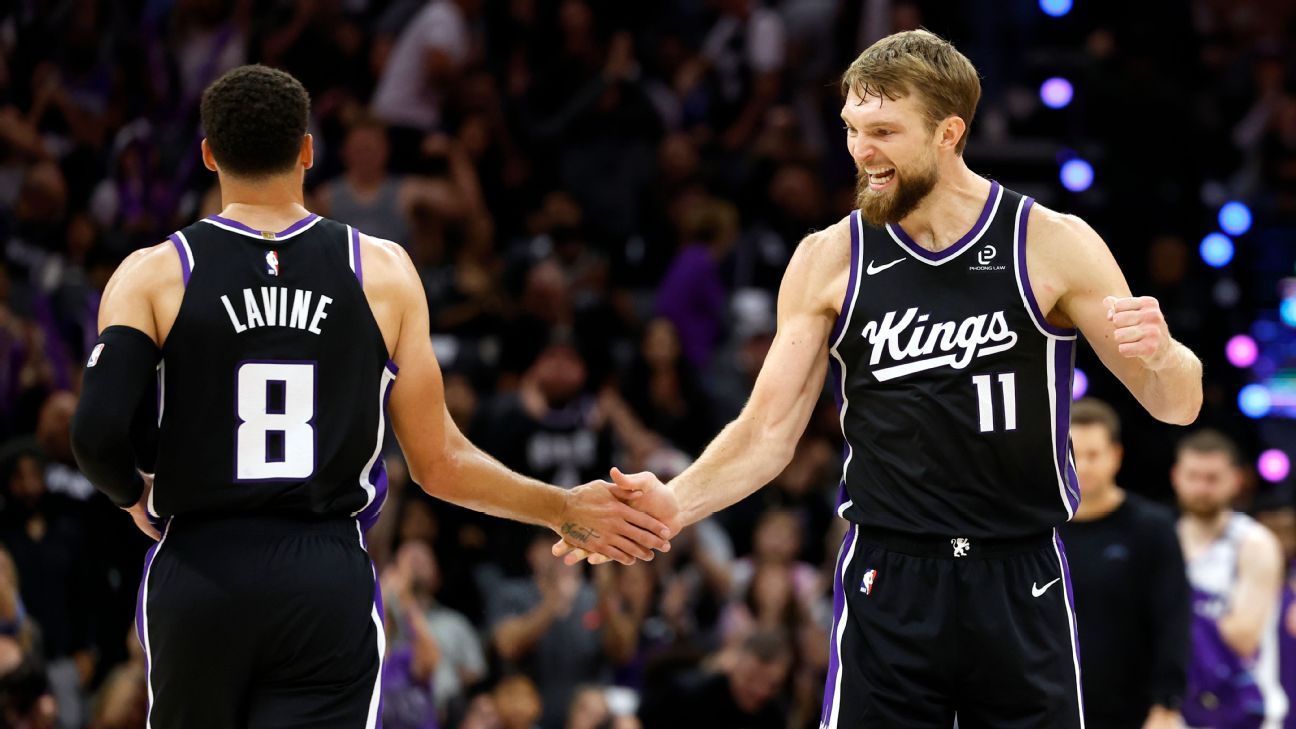
That late-season push was precisely what made the Kings' situation more complicated. A full tank—which Washington, Brooklyn, Indiana, and Utah embraced—would have netted Sacramento a lottery position in the final year before the NBA's lottery reforms take effect in 2027. Instead, the team's competitive impulses left them with a prospect who, by the organization's own admission, was ranked higher on their board than the seventh spot suggested. The tension is real: Sacramento now owns a franchise cornerstone who must be given the offensive keys while two expensive veterans—Domantas Sabonis and Zach LaVine, the team's highest-paid players—are simultaneously trying to reestablish their market value and recharge their brands. The Kings explored trades for both before deciding the market wasn't worth it. They didn't move either.
This creates a specific structural problem. Point guards in the modern NBA are de facto offensive quarterbacks, especially high-usage rookies tasked with controlling pace, managing ball movement, and building chemistry with veteran role players. Acuff will shoulder that responsibility on a roster where two veterans in their primes are still hunting for touches, efficiency, and proof that they belong in winning environments. Sabonis averaged 19.9 PPG and 9.4 APG last season; LaVine is a 20-plus-point scorer when healthy. Neither man is content playing off-ball utility. Neither is a natural fit alongside a rookie point guard who needs volume to develop.
From a betting perspective, this dynamic ripples through Sacramento's offensive ecosystem in ways that traditional box-score projections won't capture until the season begins. Acuff's assist line will likely sit around 6.5–7.5 APG as a rookie, but the variance will be enormous: games where Sabonis and LaVine hunt shots early will compress his involvement; games where one or both are cold or rested will spike it. LaVine's scoring volume is now contingent on Acuff's playmaking comfort—a moving target against NBA defenses. Sabonis's touches are similarly unpredictable. The Kings' team total offense will likely hover in the 110–113 range, but nightly fluctuations will be sharper than a standard mid-tier offense because the pecking order is still being negotiated in real time. Early-season unders on Sacramento's team totals should be favored simply because the three-headed offensive structure hasn't been stress-tested. Lean against the over until November, when the hierarchy clarifies.
Acuff's individual scoring line—likely 12–15 PPG as a high-usage rookie—will also be more volatile than a comparable pick-and-roll guard because his volume is directly proportional to Sabonis and LaVine's offensive efficiency. If both shoot well early, Acuff's scoring dips. If both struggle, he gets hunted. This is not a buy-low-on-volume angle; it's a fade-the-noise angle. Sacramento's offense will not stabilize until the front office definitively resolves whether Sabonis and LaVine are future fits or trade candidates mid-season.