NBA · transaction
Duren's Standoff Leaves Detroit in Limbo—and Bettors Without a Center
The Pistons have raised their offer to $200 million, but Jalen Duren's refusal to sign threatens to destabilize one of the NBA's surprise contenders heading into the 2026-27 season.
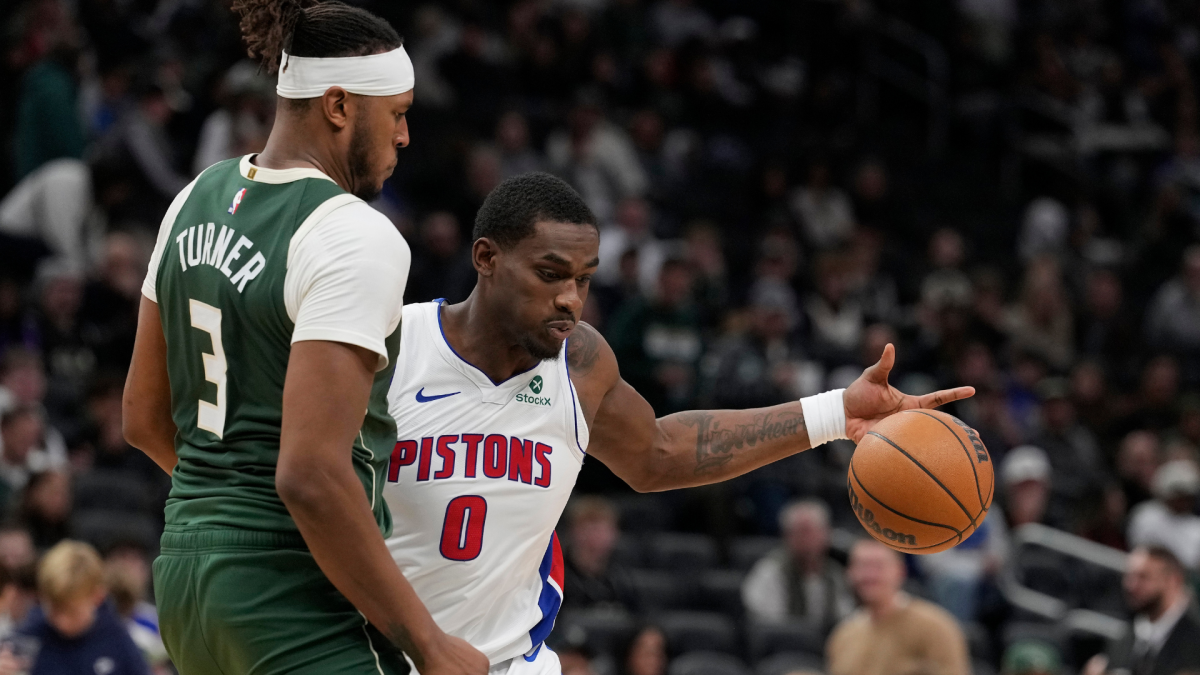
The Detroit Pistons crossed a threshold Monday that should have closed their contract negotiation with Jalen Duren: they raised their five-year offer to $200 million, a figure that exceeds what Duren could realistically earn as an unrestricted free agent next summer. By design, this should be a no-brainer. A $9.6 million qualifying offer followed by free agency in 2027-28 would net him a four-year max of $189.2 million against the projected $176 million salary cap—leaving him roughly $198.8 million richer over five years. The math says take the Pistons' deal. Duren isn't taking it, which tells you everything about the psychology poisoning these talks.
The friction traces back to last offseason's underwhelming extension offer, which Duren apparently interpreted as disrespect. The qualifying-offer gambit isn't really about money; it's about leverage and principle. By threatening to walk next summer, Duren forces Detroit to either capitulate on long-term terms or face the prospect of losing an All-NBA center for nothing. The Pistons know this. They also know the center market is brutally constrained—Indiana just surrendered a top-five pick to replace Myles Turner with Ivica Zubac. Losing Duren would cost Detroit two or more firsts plus nearly equivalent salary. But overpaying a 23-year-old with rim-protection limitations in an apron environment is equally dangerous. The deadline is October 1st, and there's no indication either side will blink before then.
What makes this standoff consequential for betting is that it introduces uncertainty into the composition of a 60-win team. Duren is a 23-year-old All-NBA center averaging 20.1 points and 13.5 rebounds last season—production that directly impacts team pace, half-court spacing, and offensive efficiency. If the Pistons lose him and scramble for a replacement mid-season, their defensive rating and rebounding profiles shift materially. More immediately, if the tension remains unresolved into training camp, it creates a roster morale problem heading into opening night. The Kings and Bucks are reportedly interested in acquiring him, a fact that won't escape Duren or the locker room.
From a wagering standpoint, the Pistons' win total and playoff-probability handles are vulnerable to three outcomes. First, Duren signs the deal and everything stabilizes—a low-variance scenario that supports pre-standoff pricing. Second, Duren takes the qualifying offer and plays the 2026-27 season in Detroit, but resentment festers, creating suboptimal team chemistry that manifests as inconsistency in conference play. Third, the Pistons explore trades before October 1st, selling low on a player they can't afford to lose for nothing. A trade that nets them picks plus salary relief might shore up the roster, but it also signals organizational dysfunction to the market, a factor that compounds risk on Detroit team totals and spread exposure. The Oct. 1st deadline is the inflection point. Until then, every pre-game report about the status of negotiations should inform your position sizing on Pistons paper.
The near-term play is situational: avoid overloading Detroit props or team totals until Duren's status is formally resolved. If he signs before opening night, the Pistons revert to their 60-win baseline. If the standoff extends into camp, monitor their preseason performance for evidence of locker-room friction—turnovers per game, bench-unit efficiency, and fourth-quarter execution are the canaries. The contract dispute itself is a red flag for team-level volatility, even if it ultimately resolves in the Pistons' favor.