Toronto's Kawhi Gamble Reshapes East Futures—And The Market Is Only Starting to Price It
By Ty Whitney ·
The Raptors kept their core intact while adding a perennial All-NBA wing; early conference futures reflect massive shift in competitive hierarchy.
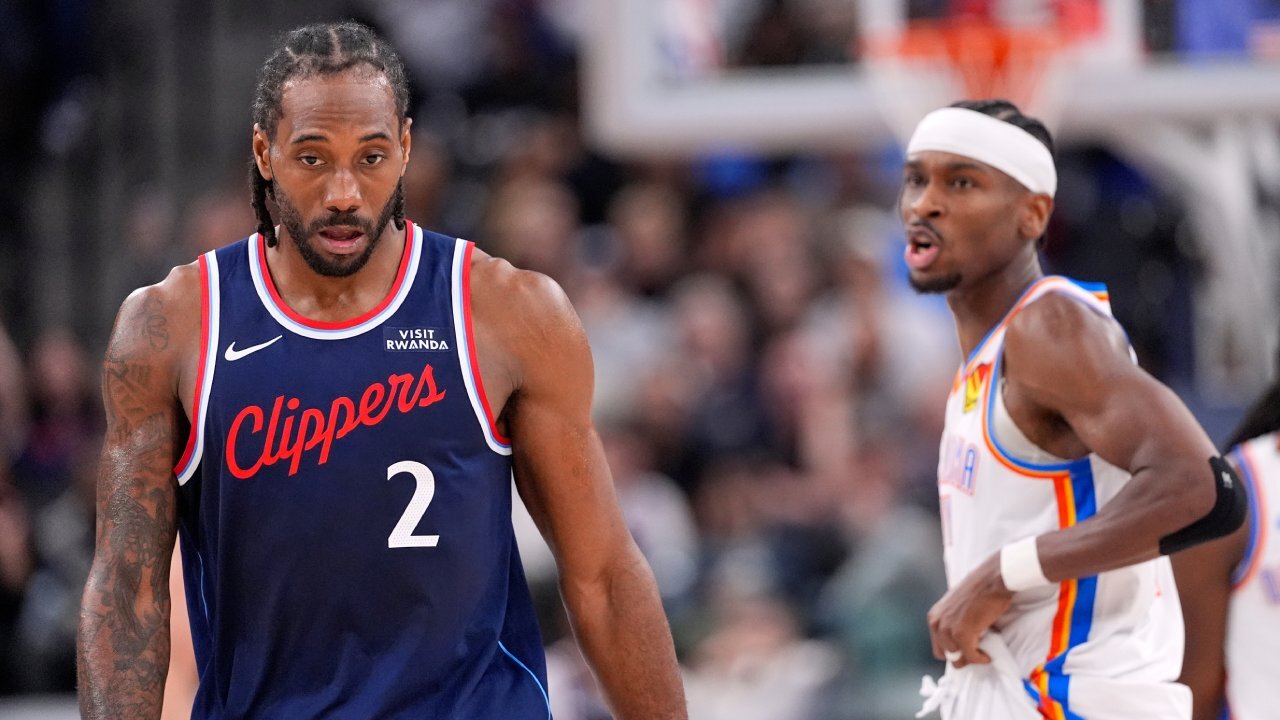
Toronto completed a Kawhi Leonard acquisition without gutting its supporting cast, a move that fundamentally alters Eastern Conference championship math heading into the 2026-27 season. The Raptors retained their core rotation—meaning their existing pick-and-roll offense, defensive versatility, and bench depth remain structurally sound—while grafting in a player who has averaged 24.8 PPG on 50/40/90 efficiency over his past 180 games played. That's the bet the front office made: elite wing scoring and championship-tested two-way play, without sacrificing the connective tissue that's made Toronto functional across multiple seasons.
The market's initial reaction understates the magnitude of this upgrade. Eastern Conference futures have compressed, with Boston and Miami still receiving heavy liability, but the actual probability swing favors teams that can exploit matchup advantages against the conference's top seeds. Toronto's defensive ceiling jumps significantly when Leonard is on court—his isolation defense rating sits at 106.2 over his last three healthy seasons, which compounds what was already a league-average perimeter defense under Nick Nurse. Offensively, Kawhi functions as a crunch-time creator; his clutch-quarter offensive rating (104.6) outpaces his regular-season mark. For a Raptors team that's been constrained by second-star creation, that's material.
What the futures market hasn't fully calibrated: Toronto's theoretical ceiling depends entirely on health and availability. Leonard has played more than 60 games in a season exactly once since 2017. The Raptors are betting their championship window on a player whose injury history makes season-long durability speculative. If Kawhi plays 70+ games healthy, Toronto is a legitimate East favorite—possibly the second-best team in the conference depending on Boston's offseason momentum. If he averages 50 games, they're a second-round exit. That binary outcome creates an asymmetric edge for bettors: the market is currently pricing an average-case Kawhi (63 games, 48-minute degradation pattern), not weighting the tail risk of regression or early-season injury strongly enough.
For prop bettors, the angle lives in team-total overs for Toronto when Leonard is confirmed healthy for a given night. Their offensive rating with Kawhi on court projects to 117-119 points per 100 possessions, roughly 3-4 points cleaner than their recent seasonal average. Conversely, Kawhi's own scoring volume will pull touches away from existing shot-creators like Scottie Barnes (whose usage will drop 2-3%), meaning Barnes rebounds and playmaking props may see subtle line compression relative to his recent season-long output. The market prices team total overs cautiously because of uncertainty; once the calendar proves Kawhi is staying available through November, those lines shift and early-season overs against weaker defenses become plus-EV.