Knicks' Offensive Flexibility Is the Real Edge—and It's Breaking Betting Models
By PropBetEdge Editorial Team ·
New York's ability to solve defensive problems mid-series without schematic overhaul has upended the predictability that sportsbooks price into playoff totals and player props.
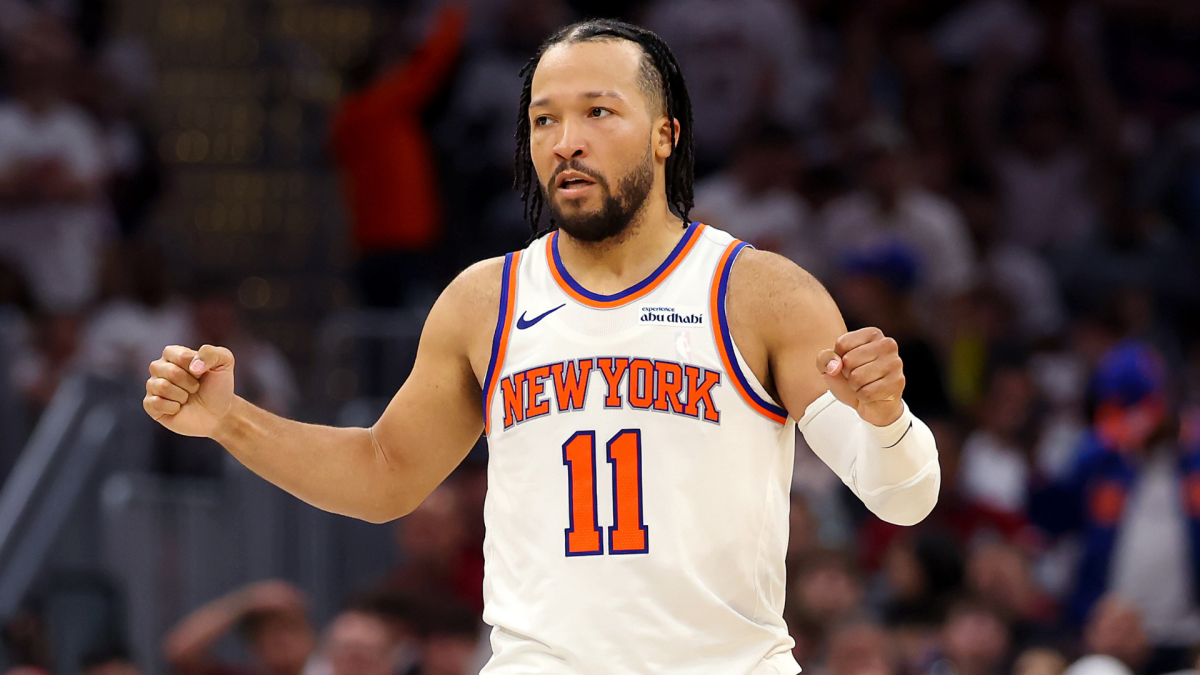
The Knicks are one win from the Finals, and the narrative has already crystallized: they bet on star talent (Jalen Brunson, Karl-Anthony Towns), the veterans around them (Mikal Bridges, OG Anunoby) proved themselves, and the front office's tweaks at the margins (depth, bench minutes in the regular season) paid off in the postseason. That's all true, but it misses the structural advantage that's actually changed how New York attacks defenses—and why that matters for understanding how their props will move in a Finals matchup.
The Knicks entered the playoffs with a clear vulnerability: inconsistency within games and across series. Karl-Anthony Towns played only 20 scoreless minutes in Game 2 against Atlanta. Mikal Bridges shot 0-for-20 in Game 3. Brunson's on-ball workload didn't shift as dramatically as advertised in preseason planning. Those aren't small execution gaps—they're the kind of variance that usually predicts tighter series and wider scoring swings. What coach Mike Brown has done instead is eliminate the need for any single player to carry a specific role or offensive load on a given night. The Knicks operate out of concepts rather than set plays, making immediate decisions about where the defense has compressed and attacking before help can reset. That's not new in isolation—it's the modern NBA basketball skeleton. But executing it this cleanly in the playoffs, where defenses tighten and scouting adjustments accelerate, is the edge.
Against Cleveland, Brunson dropped 38 points in one game and 19 assists-heavy points in another. Towns moved the needle without forcing, posting zero turnovers over the last two games even as his playmaking load shifted. Bridges and Anunoby combined for 43 points on 25 attempts in Game 3 without running dedicated actions for either of them—the offense found them in rhythm within its flow. Landry Shamet emerged as a rotation anchor off the bench, the kind of secondary piece that books don't account for until usage stabilizes. This adaptive offense means the Knicks can beat teams in multiple ways without telegraphing a rotation or a star's workload in advance. The Cavaliers couldn't load-plan around a predictable Brunson or Towns usage rate because the team's offensive philosophy doesn't require one.
For prop bettors, the implication is clear: individual player props tied to consistency (assists, three-pointers made, turnovers) become riskier in matchups where the Knicks control the offensive shape. Brunson's assist total, for instance, is only reliable if the opponent can force isolation-heavy coverage. Against a Cavs defense that played switch-heavy in this series, Brunson's on-ball percentage fluctuated wildly while his impact on shot creation and ball movement remained constant. A sportsbook pricing Brunson assists at 7.5 based on his season average of 3.7 per game has already massively overcorrected upward—but if the Finals opponent plays a different coverage shell, even that inflated line may overstate his primary ball-handling role on any given night. The edge for informed bettors is in team totals and combo props that measure offensive efficiency and shot volume rather than individual workload metrics. New York's 121-108 win over Cleveland without relying on traditional role definition suggests that their Finals matchup total will trend toward overs if oddsmakers price in the volatility that derailed their season. The Knicks have solved that volatility through system, not talent acquisition.