Harden's Closing Act Sends Cavaliers to Series Brink; Mitchell's Durability Clouds Game 6
By Erik Schwartz ·
Cleveland's fourth-quarter execution in overtime exposes Detroit's late-game fatigue, but Mitchell's ankle injury and the Pistons' offensive firepower in spurts suggest the series remains volatile.
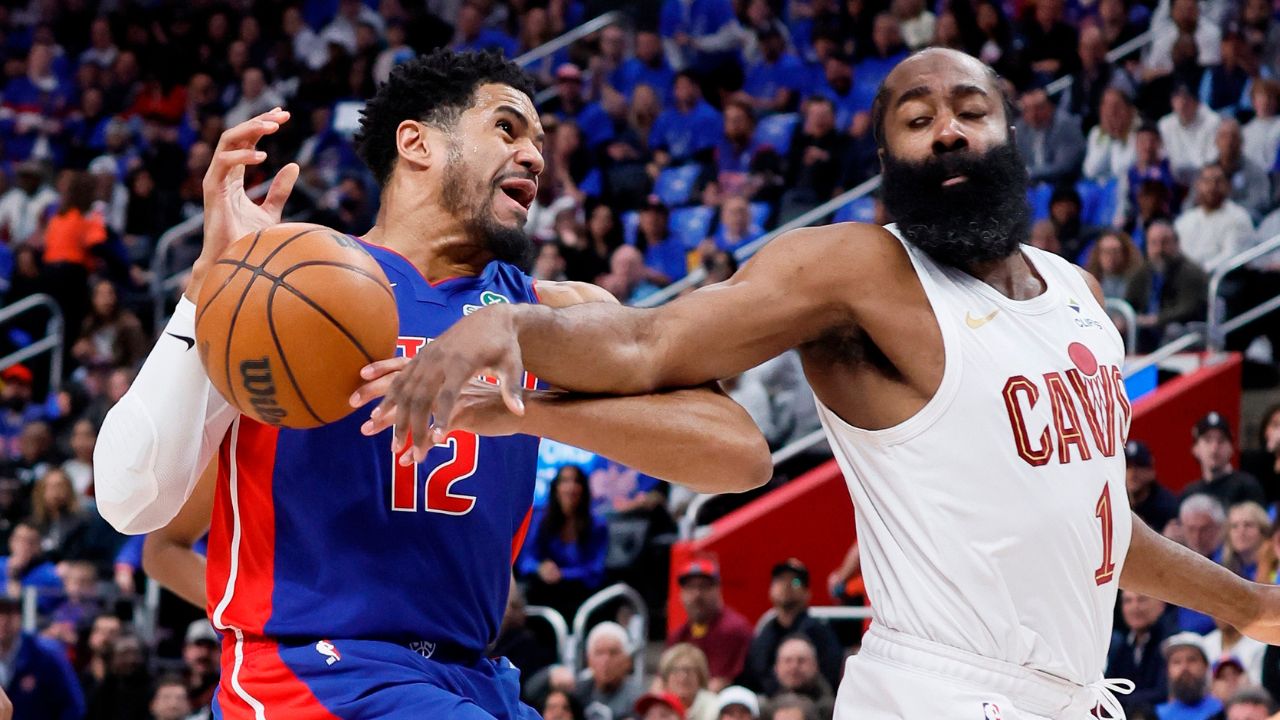
James Harden authored his highest-volume playoff performance to date—30 points on a near-efficient line—to lift the Cavaliers past Detroit 117-113 in overtime Wednesday, securing a 3-2 series advantage with two elimination games ahead. The win hinged on Cleveland's ability to manufacture a 13-0 run across the fourth quarter and overtime while holding the Pistons scoreless for five straight minutes, a defensive suffocation that turned a nine-point deficit into breathing room. Harden's role in that closing sequence—free-throw execution, a critical rebound on his own miss, and playmaking balance (six assists, eight rebounds)—positioned him as the closer the Cavaliers needed when Donovan Mitchell's effectiveness diminished.
But the underlying mechanics reveal fragility beneath Cleveland's comeback narrative. Mitchell, nursing a right ankle injury sustained in the first half, contributed only 21 points and was held to single digits through two quarters—a sharp deviation from his Game 4 fireworks (43 points, including a 39-point second half that tied an NBA playoff record). Detroit's Cade Cunningham, by contrast, poured in 39 points and nine assists, a performance that exposed Cleveland's perimeter defense and suggested the Pistons' offensive generation remains potent even in defeat. Max Strus's six 3-pointers (20 points) and Evan Mobley's 19-point, nine-rebound effort kept Cleveland's spacing intact, but the Cavs were outshot from deep in a game that could have easily pivoted on one or two possessions in regulation. Tobias Harris's inefficiency (13-of-32 from the field, 13 points) and Jalen Duren's containment (nine points, five rebounds) were the primary factors that allowed Cleveland to weather Cunningham's volume.
For prop bettors, Game 6 in Cleveland presents a critical test of durability assumptions. Harden's 30-point outburst came on the road in overtime—high-leverage, high-variance territory where star closers often spike but rarely sustain output across a series. His true season-long scoring average sits in the 18-22 range depending on playoff phase; a 30-point night in one elimination game does not reset his baseline. More consequential is Mitchell's ankle status. His pain management and minutes availability will directly compress Cavaliers assist and scoring distribution, meaning Harden will likely face heavier defensive load-shedding in Game 6. If Mitchell plays limited minutes or hobbled, expect Harden's touches to surge but his efficiency to decline—defenders can pack the lane when the secondary scorer is compromised. Detroit's willingness to generate 39 points from Cunningham despite the loss also signals that their half-court offense, when engaged, can match Cleveland's closing execution; Game 6 unders should be viewed with caution if both teams remain healthy.
The Pistons' Game 5 loss was not a collapse but a failure to finish, a distinction that carries forward-looking weight. Cunningham's 39-point, nine-assist line on solid efficiency, combined with Jenkins's 19-point off-bench contribution, means Detroit's rotation is intact and motivated. The team's seven-game history at home (4-3 in recent playoff games at this venue) offers no edge; Cleveland's road execution here was genuine, not a beneficiary of arena fatigue. For Game 6, fade any narrative suggesting the Pistons are deflated or that Harden's 30-point outing presages a Cavaliers blowout. The series remains a coin flip with home-court leverage favoring Cleveland, but the margin is one Mitchell ankle sprain or one Cunningham 40-point eruption away from a Game 7.