Spurs' Game 1 Double-Overtime Win Over Thunder Reshapes Series Leverage—And Prop Markets
By PropBetEdge Editorial Team ·
San Antonio's 122–115 victory in a rare playoff overtime stretched Oklahoma City's loss streak and inverted the expected home-court edge in this Western Conference finals.
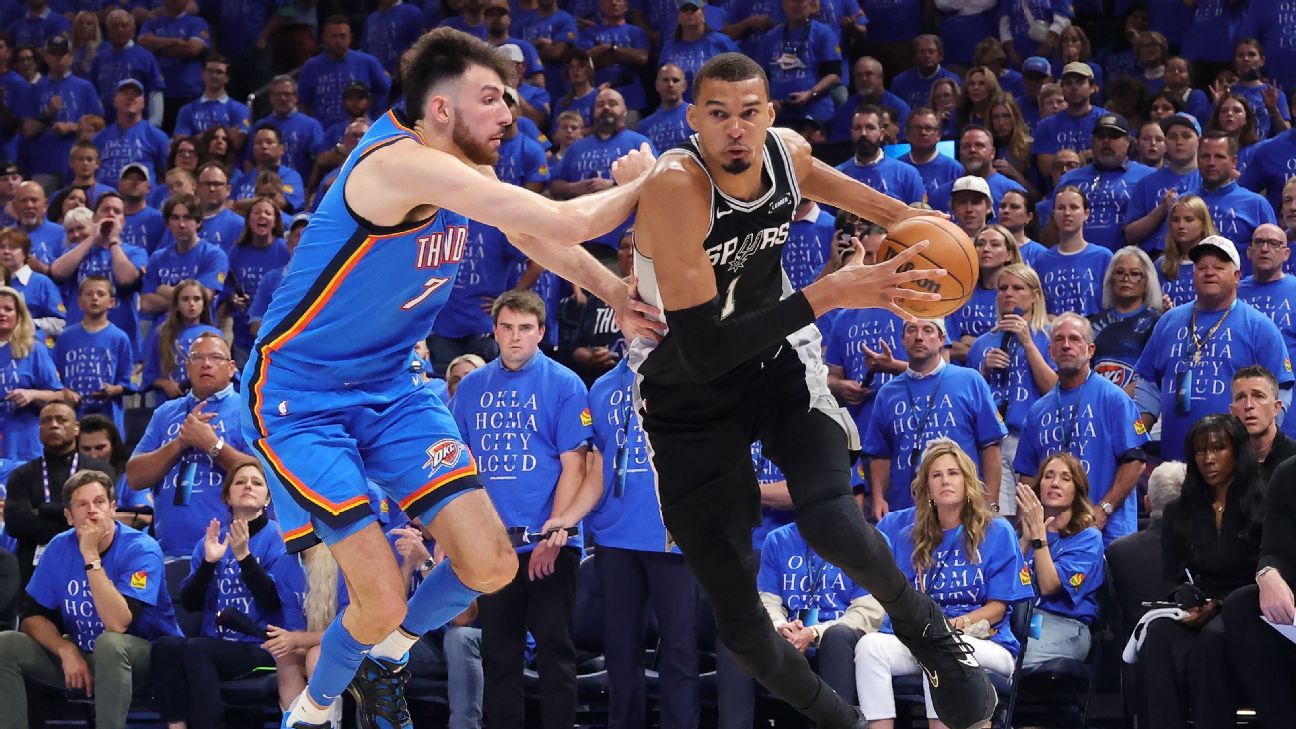
The San Antonio Spurs outlasted the Oklahoma City Thunder 122–115 in double overtime in Game 1 of the Western Conference finals, a result that carries immediate strategic weight for Game 2 and the series trajectory. The contest marked only the third Game 1 to reach multiple overtimes in the past 40 seasons—a rare, grinding affair that favored the team with deeper reserves and cleaner execution down the stretch. San Antonio's poise in that environment now reverses the conventional playoff script: the Thunder enter Game 2 as the ostensible favorite—the league's best regular-season team—yet they're chasing after a loss, while the Spurs own the psychological momentum of a high-leverage win.
The magnitude of this Game 1 outcome extends beyond morale. San Antonio has now won five of its first six matchups against Oklahoma City this season, including the playoffs. Only four teams in NBA history have managed that feat against a league-leading regular-season record holder—and all four won their subsequent playoff series. The Spurs are executing at a caliber that suggests this isn't noise; it's a stylistic mismatch the Thunder haven't solved. Oklahoma City hasn't dropped consecutive playoff games since the 2024 Western Conference semifinals, when that loss ended their season entirely. Game 2 becomes a referendum on whether last year's exit haunts them or whether they've built insulation against such collapses.
For prop bettors, the overlay sits in the series-construction angles rather than single-game player props. Spurs scoring distribution tightened in overtime—a sign their isolation touches compressed and their role players shouldered late-game load. San Antonio's offensive repertoire in Game 1 leaned on secondary creators when the primary playmakers (read: their lead ball-handler and wing initiator) faced defensive pressure. That pattern holds tactical information: if Game 2 mirrors Game 1's pace and length, role-player assist and scoring lines may see compressed volume. Conversely, the Thunder's bench contributors who logged heavy minutes in the double-overtime marathon are now on a compressed recovery window. Fatigue compounds in a best-of-seven; any Thunder reserve who eclipsed 35 minutes in Game 1 becomes a fade candidate for scoring and efficiency props in Game 2.
The Spurs' five-of-six season record against Oklahoma City also signals a defensive scheme or personnel alignment that disrupts the Thunder's offensive rhythm. If that scheme persists Game 2, monitor Thunder role-player scoring lines—not as directional bets, but as potential unders, since San Antonio's defense has already proven it can blunt secondary scoring channels. The book likely repriced Thunder team total downward post-Game 1; the real edge emerges if that adjustment overcorrected. Spurs' defensive execution in overtime didn't collapse—it tightened. Game 2 models similarly if San Antonio holds serve.
Oklahoma City's mandate is clear: break the Spurs' offensive rhythm early and prevent the perimeter shots that accumulated in Game 1. If the Thunder can dictate pace and force San Antonio into a halfcourt grind, their superior depth and execution in a 40-minute game should resurface. Game 2 team totals and spread movement hinge on whether the book respects the Spurs' Game 1 method or assumes the Thunder's regular-season dominance reasserts itself. Early action typically favors recency; sharp money will probe whether Game 1 was an outlier or a sustainable skill mismatch.