Orlando's Coaching Search Pivots to Spurs: Why Sweeney's Mobility Signals Larger Roster Uncertainty
By PropBetEdge Editorial Team ·
The Magic's pursuit of an associate head coach suggests front-office instability that could ripple through roster construction and player value.
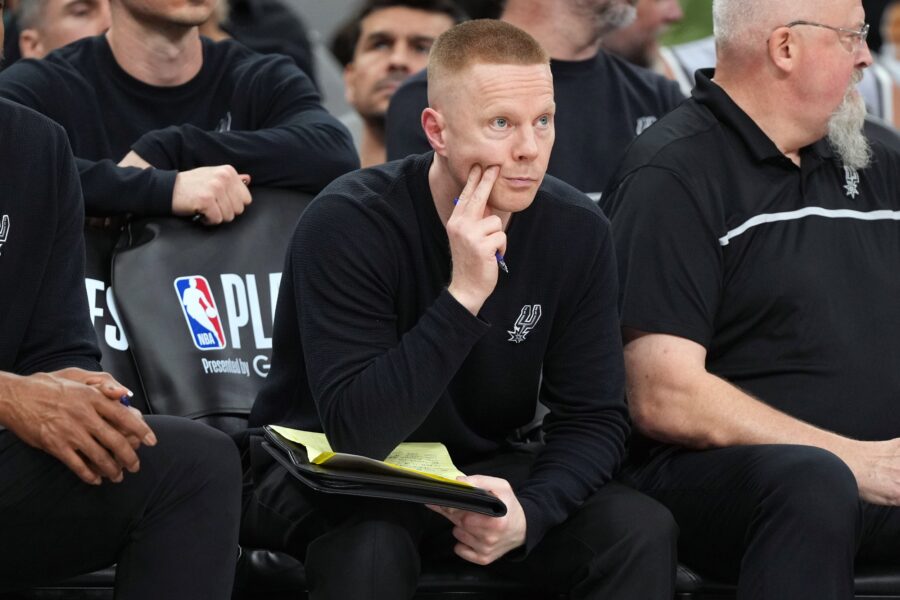
The Magic are pursuing Sean Sweeney, the Spurs' associate head coach, to fill their head coaching vacancy, with Orlando officials planning to interview him during San Antonio's Western Conference Finals run, per Jake Fischer and Marc Stein. The move signals a shift in the Magic's search strategy after earlier connections to other candidates appear to have stalled or redirected.
Sweeney's profile matters because his role in San Antonio's system—built on ball movement, spacing, and defensive structure—would represent continuity with principles that resonate in the modern NBA. A Spurs assistant carries credibility in a league that respects the organization's coaching pipeline. But the broader story here is Orlando's urgency and the front office's willingness to pivot mid-search, which reflects internal disagreement or external candidate rejection. When a coaching hire drags into late spring with multiple false starts, it typically means either the organization's vision is fractured or the compensation/roster situation is unappealing to top-tier targets.
That uncertainty matters to bettors because coaching instability correlates with roster churn. Orlando has already made moves to shift its core this offseason, and a new coach arriving mid-search—rather than a coherent hire locked in earlier—often signals reactive decision-making rather than strategic planning. A placeholder coach or an external hire forced to build a system on the fly tends to underleverage existing talent in Year 1. If Sweeney does land the job, his first season operating his own system (rather than Popovich's) introduces execution risk that Vegas won't fully price until training camp.
For bettors, this means Orlando's team totals and individual player props should remain cautious through the offseason until a coach is formally named and the on-court scheme becomes clear. Transition years in coaching frequently drag offensive efficiency down 3-5 percentage points in the early stretch. Expect the market to price Orlando's regular-season win total conservatively, but depth props (backup guards' assist rates, bench scoring) become unreliable until the rotation gels under new leadership. Any early-season Magic game should be treated as a coaching-execution bet, not a pure talent matchup.