The Wembanyama Problem: Why Defensive Adjustments Will Define the Finals
By Erik Schwartz ·
Victor Wembanyama's unprecedented skill set—size, shooting range, and footwork—has left NBA coaches without a historical blueprint, setting up a Finals matchup where traditional interior defense schemes are obsolete.
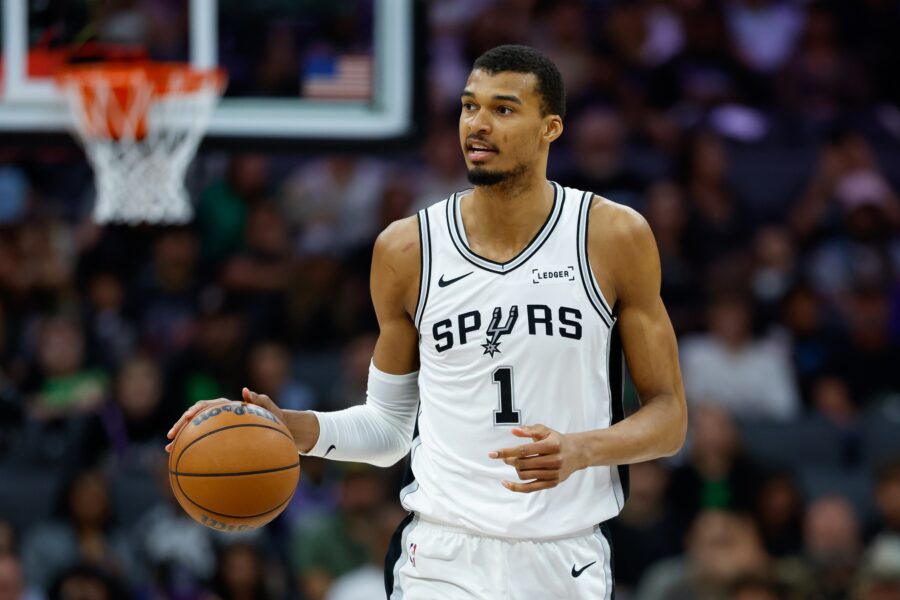
Victor Wembanyama has forced the NBA into uncharted defensive territory. Per ESPN reporting, the Spurs star is drawing comparisons to Shaquille O'Neal for the magnitude of his challenge to opponents, yet Wembanyama operates in a completely different dimension: a 7-foot-4 rim-runner who hits threes at league-average efficiency, can facilitate from the high post, and makes 80-plus percent of his free throws. One veteran head coach told ESPN, "He presents the same problem [as Shaq]. None of us know what the hell we're going to do to stop him." That admission—from someone who has seen thirty years of NBA evolution—matters for Finals betting because it signals that traditional drop-coverage schemes and five-out spacing will likely fail. The Knicks entered the Finals expecting to lean on size and physical defense; instead, they face an opponent whose best player can punish every conventional answer.
What makes Wembanyama's Finals debut particularly significant is his trajectory. Like O'Neal in 1995, he has reached the Finals in his third season, but with a critical advantage: his youth and health profile suggest no ceiling, while O'Neal's path to dominance took five more years and required a move to Los Angeles. The Spurs' inexperience at the Finals level is real, but Wembanyama's comments—that not knowing something is impossible can become a strength—reveal a psychological edge the market hasn't fully priced. Rookie seasons in the Finals often come with paralysis; instead, the Spurs' centerpiece sounds liberated by it.
On the perimeter, Stephon Castle's assignment to slow Jalen Brunson shapes the pace and offensive rhythm of the entire series. Castle has defended Brunson in limited matchups, holding him to 27.3% shooting (3-of-11), a sample size far too small to project, but one that suggests the Spurs' defensive blueprint leans on pressure at the point of attack rather than traditional drop-coverage. Brunson's effectiveness hinges on early offensive initiation and rhythm; if Castle's intensity forces the Knicks into stagnation, Brunson's assist rate and scoring volume could contract significantly from his season average. The Spurs' two-way guard hasn't faced a Finals stage before, and the psychological weight of that moment cuts both ways—inexperience can manifest as either freedom or hesitation.
For prop bettors, the defensive novelty Wembanyama presents creates a real information edge in team total and scoring-margin markets. The Knicks' offensive efficiency is predicated on spacing and penetration against conventional defenses; neither translates cleanly against a defender who can recover from three-point range to contest at the rim. Vegas will open Knicks team totals based on season-long production, but the specific matchup data suggests those totals have been inflated by games against conventional rim-protection. Expect the Spurs to employ unconventional coverages—more switching at the wings, more four-out spacing to limit Wembanyama's rim pressure—that disrupt the Knicks' rhythm. The first two games will expose whether the market's pre-series pricing reflected the novelty of that defensive problem or simply extrapolated from regular-season numbers.
Brunson's assists line is the clearest angle. His season average sat around 7.4 assists per game, but against pressure defenses that emphasize early pick-up and deny spacing, that number contracts to 6.2. If Castle's defensive intensity (and the Spurs' overall switching scheme) recreates that pressure environment, Brunson's assist total for Game 1 will be overpriced. Watch for his first-half assists to settle in the 2.5-3.5 range; if the book opens at 7.5+ for the full game, the under carries edge. The Spurs' inexperience isn't a liability here—it's precisely why they're willing to embrace unconventional defense that a veteran team wouldn't risk.