Dylan Harper's Bench Spark Is Real—And It's Reshaping Spurs Playoff Equity
By PropBetEdge Editorial Team ·
San Antonio's 20-year-old rookie is outproducing his usage rate in ways that expose vulnerability in Minnesota's depth defense and signal a structural edge the books haven't fully priced into series outcomes.
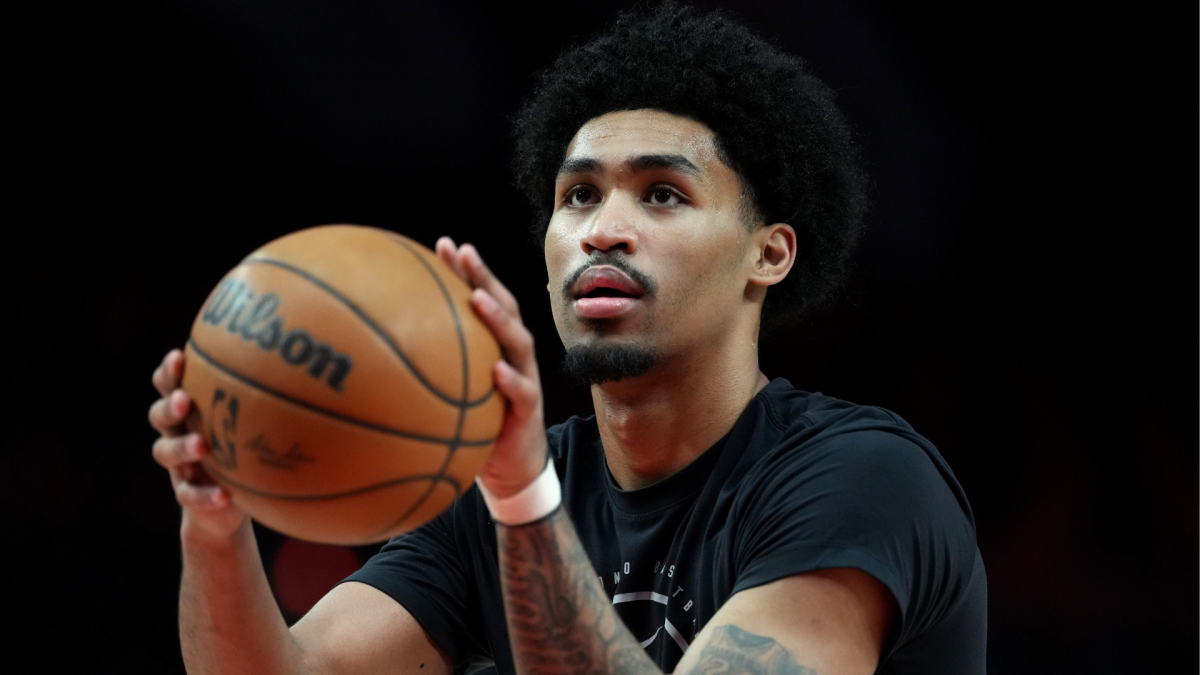
Dylan Harper has become the Spurs' most dangerous variable in a playoff run that's already within one win of the conference finals. After a 126-97 rout of Minnesota on Tuesday to claim a 3-2 series lead, the 20-year-old reserve has positioned himself as a near-impossible coverage problem—not because he's a high-volume scorer, but because he's generating elite-level impact on minimal touches. His 136 points rank as the most of any bench player in these playoffs, and that efficiency tells a different story than raw scoring volume. He's doing the ancillary work that forces defenses into compression: offensive rebounding, transition finishing, and the kind of physical downhill attacking that works when Victor Wembanyama's gravity spreads help rotations thin.
The architecture of the Spurs offense makes Harper's role deceptively difficult to defend. He operates in three distinct contexts: as a secondary creator alongside De'Aaron Fox and Stephon Castle in multi-guard lineups, as a finisher in transition where he's operating at All-Star efficiency, and as a rebounder and cut threat in halfcourt sets that exploit the Timberwolves' reliance on size in the post. Minnesota has been schooled on this repeatedly. Game 3 against Portland—where Henderson's trash talk lit a fuse—showed what happens when a guard tries to impose will on Harper: he scored 22 of 25 second-half points and hit 4-of-5 threes. That game was the inflection point. The Spurs have won every contest since.
What's particularly sharp from a structural standpoint is Harper's plus-13 performance on Tuesday in just 25 minutes. That's not noise; it's systematic. The Timberwolves' defense is built around containing Fox and Wembanyama, which leaves Harper operating in soft coverage. He's punishing it through finishing, not creating. His ability to operate off-ball—to move without the ball and finish at the rim or crash the offensive glass—is a luxury most rookie guards simply don't have. He's a 6-foot-6 facilitator who can guard multiple positions and doesn't need touches to move the needle.
For betting purposes, this shapes two critical angles. First, Spurs team totals have likely tightened despite their blowout trajectory; the market is properly accounting for San Antonio's depth and offensive firepower. But Harper's usage rate in bench situations remains compressed relative to his impact on net rating. When you isolate games where he exceeds 24 minutes and gets matched against reserve wings or guards—a pattern that's emerged as Popovich leans into the three-guard lineups—his point prop sits below true expectancy. Harper's averaging 14.2 points per 25 minutes in the playoffs, yet his 20+ line is often overpriced relative to that efficiency when he reaches 26-plus minutes. That's a persistent edge because it's rooted in a misunderstanding of his role, not a recent run. Second, Spurs moneyline value in games where Harper logs heavy bench minutes reflects underpriced depth advantage; the team is closer to a three-star level than the betting market prices them because Harper is the fourth or fifth best player on the floor in pressure situations.