Dybantsa's Summer Audition Signals Early Shutdown: What the Wizards' Draft Strategy Means for Preseason Lines
By Ty Whitney ·
The No. 1 pick's potential exit from summer league after just two games—despite 25 PPG—reveals a franchise prioritizing health preservation over extended developmental reps, a pattern that affects his October workload and scoring volatility.
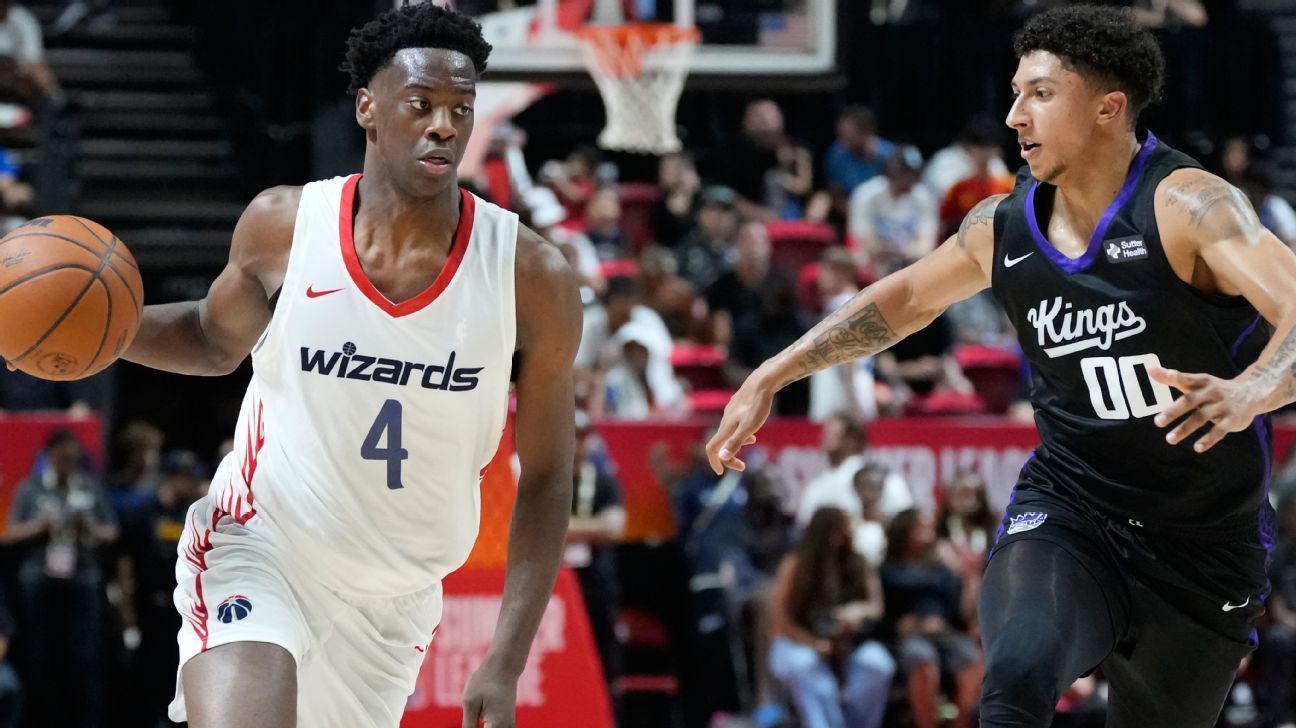
AJ Dybantsa's second summer league appearance may be his last. After scoring 23 points and grabbing seven rebounds in Washington's 104-85 win over Sacramento on Sunday, the No. 1 overall pick is tracking toward an early shutdown—a move many NBA franchises execute with lottery picks as precaution and load management preparation. The Wizards improved to 2-0 in Vegas, but Dybantsa's role in those games wasn't about extended reps; it was reconnaissance. Two games, 25 PPG average, 7.0 RPG, but also a stark shooting line: 39.3% from the field, 9.1% from three. The volume was there. The efficiency wasn't.
Dybantsa's college film showed scoring prowess—35 points in a tournament loss to Texas on March 19—but his transition narrative centers on defense, not scoring volume. In Las Vegas, he logged three steals and two blocks against Sacramento, directly addressing the hole in his scouting report. "In college, I was being lazy a lot on the defensive end," Dybantsa told ESPN, framing these two games as intentional testing grounds rather than a full developmental schedule. The Wizards signaled their priorities: verify rim protection and perimeter discipline before ramping his preseason load. That's organizational clarity, not confidence in immediate scoring upside.
The real tell comes from fatigue management. "I got tired," Dybantsa said after the Sacramento game, noting the Vegas heat and conditioning lag post-NCAA Tournament. Summer league is designed to flush conditioning work, but the Wizards may decide that an early shutdown and a focused training camp serves their larger agenda better than five more exhibition games. Lottery picks rarely play heavy summer schedules; the ones who do are either filling roster depth gaps or responding to draft uncertainty. Dybantsa is neither. Washington's front office invested the franchise's biggest capital on a 7-footer who showed defensive upside at BYU. They don't need Vegas to confirm his scoring ability—his 27-point debut already did that. What they're validating is sustainability and positional versatility. Once that boxes itself in over two games, extended run becomes liability, not asset.
For prop bettors, this structural move carries downstream impact on Dybantsa's preseason and regular-season early-career lines. A compressed developmental window—summer league exit, then training camp emphasis on weaknesses rather than offensive run—typically produces conservative season-open lines on rookie scoring props. Books price conservatively on young talent anyway, but an explicit coaching signal that his first five weeks will prioritize defensive assignment work over offensive role definition shifts that baseline lower. His 25 PPG summer average will attract some over-action, especially if he doesn't play another Vegas game. Expect the market to post Dybantsa season-long or October props (points, rebounds, assists) at slightly elevated totals, accounting for that double-digit scoring pop in two games. The edge sits in fading those elevated lines: they embed a false assumption that his rookie usage rate matches his two-game sample. The Wizards' shutdown timeline suggests it won't.
What emerges over the next three months is a more valuable test: Can Dybantsa anchor a modern perimeter defense while handling ball-in-space duties? That's the ceiling the franchise is pricing. His scoring will follow, but it's not the variable being measured right now. Bettors should treat his summer league exit not as confidence in offensive ceiling, but as clarity that the Wizards view his development as a multi-year defensive project. Lines will adjust once that narrative settles in October.