Draymond's One-Year Gamble: Warriors Bet on Continuity While LeBron Reshapes East
By PropBetEdge Editorial Team ·
Draymond Green re-signed with Golden State on a one-year, $27.7M deal after briefly destabilizing the roster by declining his player option—a move that signals both stability and a compressed timeline for championship contention.
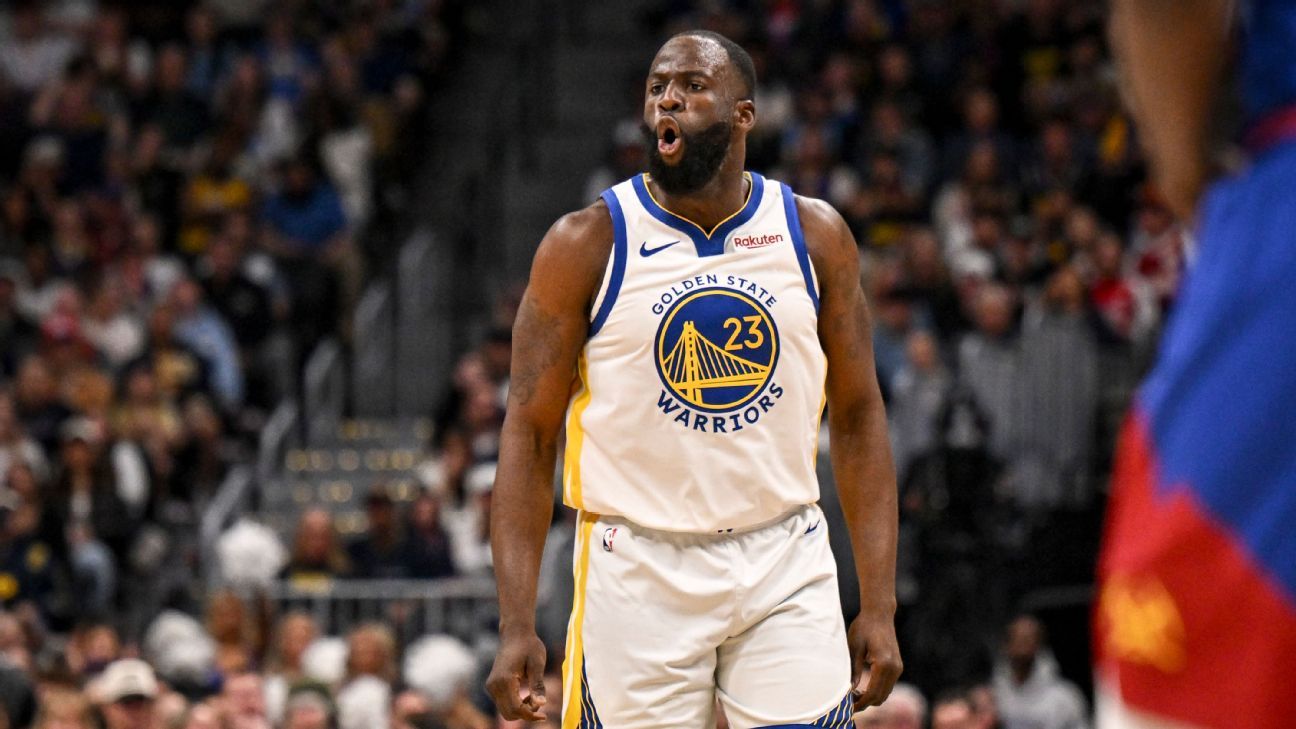
Draymond Green will return to the Warriors on a one-year deal worth $27.7 million, ending weeks of uncertainty that began when he declined his $27.6M player option in early July. The decision to opt out created genuine leverage—Golden State briefly explored moving Green in trade talks for Giannis Antetokounmpo and pursued cap flexibility to chase LeBron James in free agency. Now, with James committed to Philadelphia and the deadline chatter behind them, Green and the Warriors have committed to a reset built on continuity rather than upheaval.
The structure matters. Green's new deal includes no no-trade clause, a technical flag that preserves Golden State's optionality heading into the 2027 offseason—a hint that this marriage, while genuine, carries an expiration date. Green remains a fixture in Steve Kerr's rotation despite averaging 27.5 minutes across 68 games last season, a workload that reflects his shifting role within a core now fully centered on Curry's offensive architecture. Green himself has already signaled willingness to move to the bench if Kerr asks, a posture that suggests he understands the Warriors' trajectory: win now with what you have, not what you might acquire.
From a roster construction lens, this re-signing unblocks Golden State's summer. By keeping Green on an expiring contract, the Warriors preserve mid-season trade flexibility and reset the financial calendar for 2027, when they'll face genuine decisions about aging core pieces and luxury-tax thresholds. The alternative—Green testing free agency or demanding a multi-year extension—would have locked them into a specific championship window. One year buys them optionality.
For bettors tracking Warriors rotation and offensive volume, Green's return means continuity in pick-and-roll defense, screen navigation, and transition outlet passing—areas where his production doesn't always register in traditional box-score lines. His assist volume (4.8 per game last season) and his court-spacing gravity matter more for Curry's playmaking lanes than for Green's individual scoring ceiling. Expect Green's prop lines—points, assists, and combined totals—to be priced around his recent seasonal averages (9.1 PPG, 4.8 APG) rather than accounting for potential bench-role compression. If Kerr does reduce Green to 20-22 minutes per game as the season progresses, under-bets on his combined output could hold value in weeks 5-10, as the market will price him off 68-game averages rather than a declining workload. The edge is modest but persistent: one-year deals with aging veterans often signal decreasing usage, and sportsbooks rarely front-run that shift in October.