Draymond's Opt-Out Clears Cap Space, But Warriors' LeBron-AD Pursuit Faces Structural Reality
By PropBetEdge Editorial Team ·
Golden State creates $27.7 million in salary flexibility by declining Draymond Green's player option, but the math for acquiring LeBron James and Anthony Davis simultaneously doesn't work.
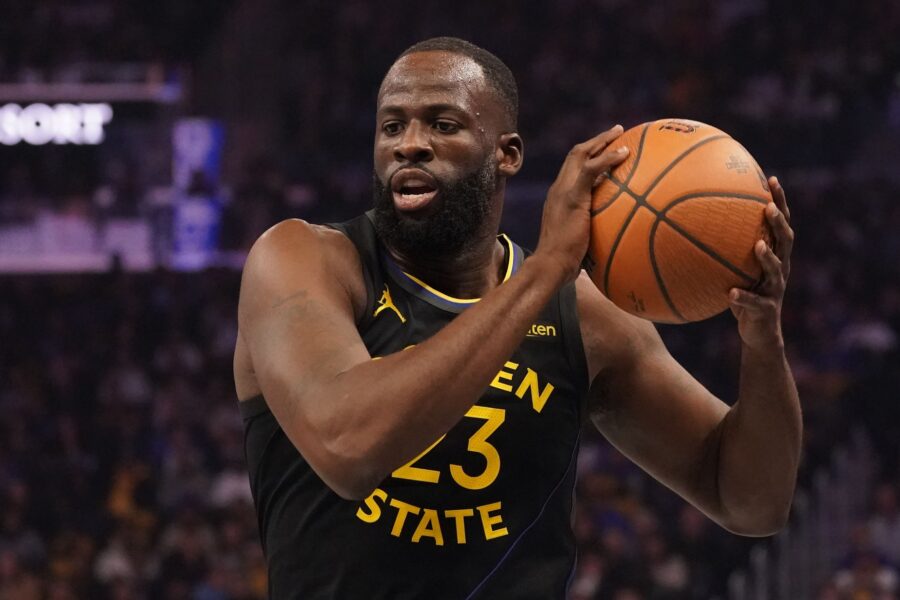
Draymond Green is declining his $27.7 million player option for the 2026-27 season, per ESPN, opening a significant cap channel for the Warriors' front office. The move signals Golden State's intention to pursue unrestricted free agent LeBron James while simultaneously exploring a trade for Wizards center Anthony Davis—a dual-threat offensive rebuild that hinges on sacrificing salary to create negotiating room.
The strategic logic is sound in isolation: removing Green's salary creates flexibility, and James' impending free agency (he will hit the market this offseason) represents a rare window to add a perennial MVP-caliber scorer to a core that still includes Stephen Curry and Klay Thompson. Yet the structural constraint is immediate. Even with Green's $27.7 million off the books, the Warriors don't generate enough additional cap space to sign James to a max contract AND acquire Davis through trade without gutting their supporting cast or surrendering future draft capital that would cripple their long-term position. The Lakers hold James' bird rights and can offer more money than Golden State can match; Wizards ownership has shown no urgency to move Davis at a discount, knowing contenders will line up come July.
What makes this move consequential for prop betting is not whether the Warriors land James (they won't) or Davis (unlikely without overpaying), but how the roster construction pivots if both pursuits fizzle. Green's departure creates a $27.7 million void at power forward—a position where his defensive versatility and passing have been irreplaceable in Curry pick-and-roll actions. If Green tests free agency and doesn't return, Curry's assist volume could contract by 1-1.5 per game based on historical data from 2019-20 (when Green missed 32 games with injury; Curry's assists dropped from 6.1/game to 5.3). Thompson's usage will likely climb in response, but Golden State's half-court execution against switching defenses—the type that generates Curry's highest assist rates—becomes dependent on internal development or mid-tier free-agent fill-ins rather than an All-Defensive anchor.
The betting angle surfaces in October when training camp rosters solidify. If the Warriors enter the 2026-27 season without James, Davis, and Green, Curry's assists line will be aggressively priced based on last season's 6.8/game average, underweighting the mechanical loss of a screening and re-screening partner who forces opposing defenses into rotations that create drive-and-kick opportunities. Similarly, team totals at the projected 115-118 range will embed pre-free-agency optimism about James; market makers will bake in a ceiling-case scenario that evaporates if the Warriors instead pivot to re-signing role players and drafting developmental wings. The early line will misprice the differential between a James-era Warriors offense and a Curry-led unit forced to rely on movement and spacing without elite pick-and-roll gravity beyond the primary handler.
Green's opt-out is a negotiating ploy dressed as flexibility. It works if James or Davis become realistic targets; it's a salary-cap miscalculation if both dominos fail to fall.