Williams' Finals availability reshapes Thunder depth math—but Game 7 loss ends the conversation
By PropBetEdge Editorial Team ·
Jalen Williams passed his first real playoff test since a left hamstring strain, but OKC's elimination at the hands of the Spurs erases the Finals narrative entirely.
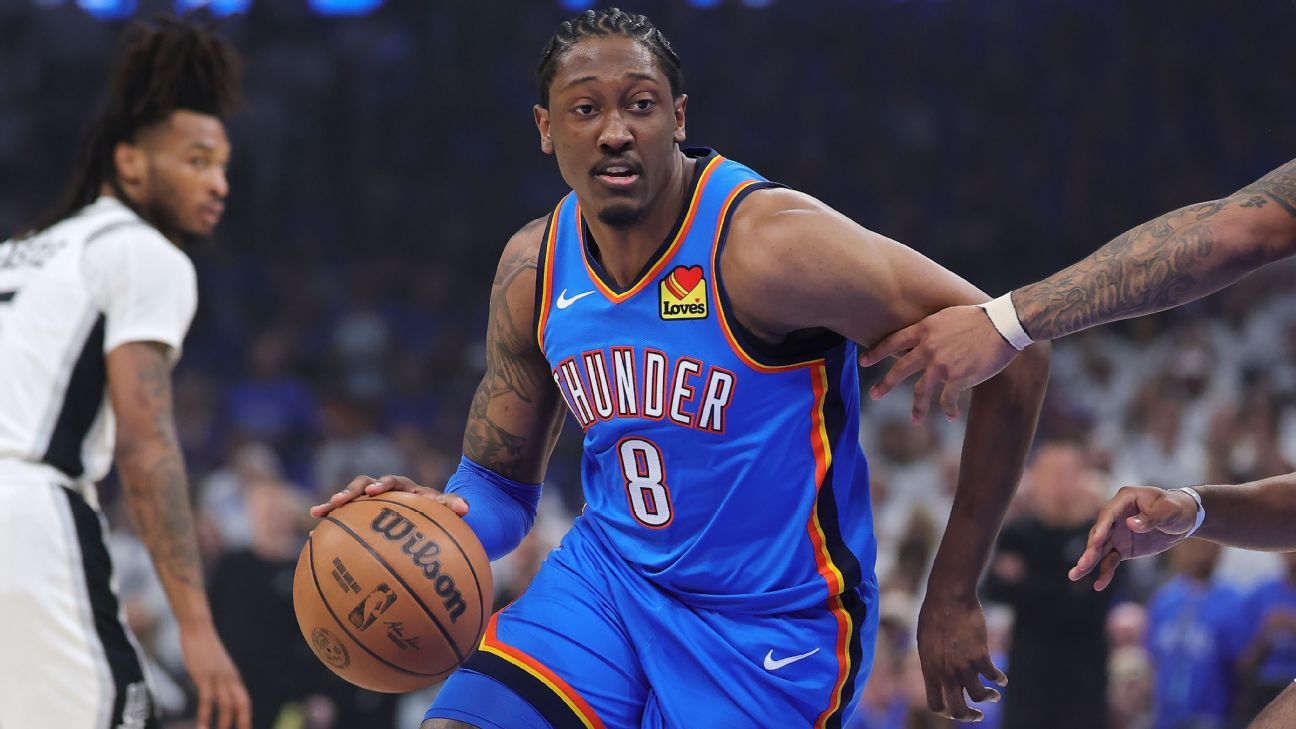
Oklahoma City coach Mark Daigneault confirmed before Game 7 that Jalen Williams emerged from his 10-minute cameo in Game 6 without setback, keeping a Finals return theoretically in play if the Thunder advanced. Williams has been a ghost in this postseason—sidelined by a right wrist procedure pre-season, then a right hamstring strain in the early rounds, then a left hamstring aggravation that kept him off the court for four consecutive games. His brief return in Game 6 was a controlled test of his conditioning after six games out. He looked tentative, largely ineffective, and Daigneault ruled him out for Saturday's decisive Game 7 against San Antonio.
The timing matters because Williams' injury history is becoming a pattern, not an anomaly. He's now missed significant stretches in back-to-back postseasons—last year nursing a torn ligament in his wrist while helping the Thunder win their first championship, this year fragmented across multiple soft-tissue injuries. A player who averaged 18.5 points and 4.3 assists in the regular season has become a unreliable rotation piece when the stakes tighten. The hamstring aggravation in Game 2 of the Spurs series should have been a warning that returning early from the initial six-game absence was premature.
OKC's loss to San Antonio in Game 7 renders the Finals recovery timeline moot. But the injury profile itself is a forward-looking consideration for any prop markets involving Williams' postseason contributions should OKC reach the Finals next year. A player with two consecutive years of major playoff injuries at the same age—now 24—carries elevated re-injury risk on his next return. His per-minute output (5.2 PPG in 10 minutes in Game 6) suggests he hasn't recovered his offensive rhythm even when healthy enough to take the court. The gap between medical clearance and basketball conditioning is real, and Williams' soft landings have repeatedly miscalculated that distance.
For bettors, the immediate lesson is that injury recovery timelines from team medical staff—especially in the playoffs—tend toward optimism. Daigneault's "feeling about the same" assessment before Game 7 preceded a benching, a useful reminder that coaches and betting markets operate on different information sets. Had OKC advanced, Williams' Finals scoring and assist props would have faced significant downside risk not fully reflected in opening odds, since the market would have priced a healthy contributor rather than a player in his first week back from weeks of inactivity. This is the inverse of a regression play—it's a situation where market pricing assumes recovery the body has not yet completed.