Celtics Bet on Harper's G-League Floor: What His Conversion Signals About Boston's Bench
By PropBetEdge Editorial Team ·
Boston doubled down on a prospect-level wing by declining his option and locking him in long-term—a cost-control move that hints at the ceiling they've set for depth scoring.
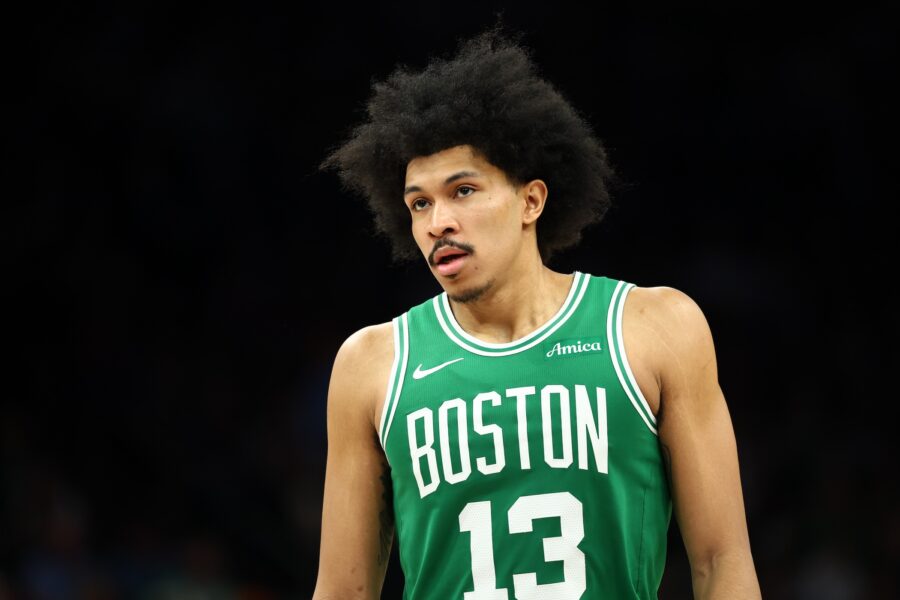
The Celtics declined Ron Harper Jr.'s $2.6 million option on Saturday and re-signed him to a three-year, $9 million deal, per ESPN. The math is straightforward: Boston saves roughly $300,000 against the cap in year one while ensuring Harper stays in the system through the 2028–29 season at a bargain rate. But the contract structure tells a story about how the Celtics value their bench rotation and where they expect to find scoring punch outside their core.
Harper arrived in Boston last September on a non-guaranteed deal and clawed his way into the 2025–26 rotation almost by accident. He appeared in just 29 games, averaging 4.0 points on 41.8% shooting from the field and 35% from three. Those numbers read like a G-League shuttle player, which, in essence, he was—Harper appeared in 18 Maine Celtics games and put up eye-popping volume: 25.4 PPG on 47.4% overall and 38.7% from three, with 10.8 three-point attempts per night. The gulf between his NBA and NBAGL production isn't unusual for a bench player, but the contract commitment suggests Boston sees repeatable skill worth anchoring for the next three seasons.
What's instructive for bettors is the implicit cap ceiling the Celtics have placed on bench-scoring depth. Harper at $9 million over three years ($3 million AAV) is a league minimum-plus investment—useful, but not premium. The team isn't betting he becomes a 12-PPG rotation cog; they're locking in a 4–5 PPG contributor who spaces the floor and fills out deep rotations. That shapes how Boston will likely construct its bench around him: fewer high-volume scorers off the bench, more reliance on role players who shoot and move. For prop purposes, this signals restraint in Celtics bench-scoring projections. When Harper doesn't play or plays fewer than 10 minutes, Boston's fifth and sixth bench units won't have a secondary scorer to lean on.
The bet here isn't on Harper's individual props—his 4.0 PPG average leaves no margin for variance play. Instead, the angle surfaces in Boston's team-total management. If the Celtics are comfortable anchoring bench depth with a sub-5-PPG role player, they're relying heavily on their core five to generate offense. That means games where the starting unit sees extended minutes or where the bench scoring burden falls on already-playing starters, team totals should compress tighter. Conversely, if Boston's starting group faces foul trouble, expect sharper dips in team scoring than models account for, because the bench lacks a legitimate secondary bucket-getter. The contract is a cap-saving handshake—Boston is saying its bench scoring ceiling is self-contained, not scalable.