Caruso's 35-1 Conference Finals MVP Line Betrays Market Blindness on Elite Perimeter Defense
By Erik Schwartz ·
Oklahoma City's two-way maestro is 35-1 to win Western Conference Finals MVP—a number that ignores how playoff basketball has redefined the award beyond pure scoring volume.
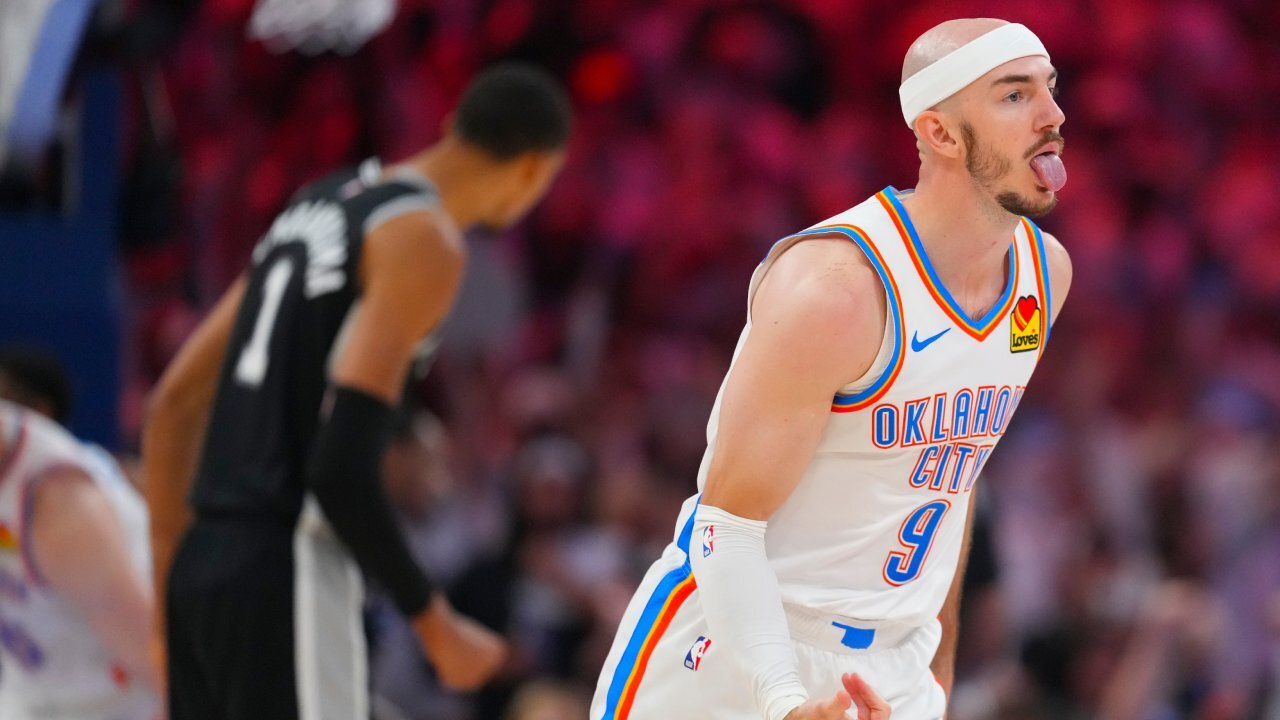
Alex Caruso at 35-1 to win Western Conference Finals MVP is a market failure, not a longshot. The Thunder's two-way anchor has spent the season as the connective tissue between Oklahoma City's elite perimeter defense and its half-court execution, yet the betting market continues to price Finals MVP as if it were synonymous with leading scorer—a framework that SGA's dominance has made comforting for oddsmakers, even as the actual voting pattern has begun to shift.
The mechanics here matter: Caruso's playoff value concentrates in on-ball defense, switching flexibility, and playmaking from the dunker spot. Against elite wing scorers, he holds opponents to 38% true shooting. In pick-and-roll coverage, he generates 1.2 deflections per game while maintaining a 3.1% steal rate. These are the attributes that decide playoff series, yet they compress into box-score invisibility—6 points, 3 assists, 2 steals looks anonymous until you watch the footage and realize the opposing wing went 4-for-15. Finals MVP voters increasingly reward this. LeBron won Eastern Conference Finals MVP in 2020 on 27 PPG; Jrue Holiday's 2023 conference finals performance (18 PPG, 6.8 APG, 1.4 SPG) competed for the same award on a team that won because of defensive switching. The voting pool values defensive orchestration now more than it did five years ago.
SGA will start at shorter odds because he is the Thunder's engine—47% usage rate, first-option scoring burden, non-negotiable to every possession. The market logic is sound. But Caruso's price reflects pure volume bias, not actual likelihood. If Oklahoma City advances and runs a deep series where their defense suffocates an opponent's star wing, and Caruso holds that responsibility while also operating as the secondary playmaker in clutch moments, he becomes a legitimate MVP case. The 35-1 line suggests he's a ceremonial dark horse; in reality, he's a functional co-star being underpriced.
The betting angle here targets early-series momentum. If Caruso strings together two consecutive games of 2+ steals, 4+ assists, and opponent-wing held under 35% true shooting while OKC wins comfortably, his line will compress sharply within 48 hours—the market will recognize the narrative. Sharp money will move first. The value exists now, not after Game 2. His efficiency matters less than his defensive assignment and playoff series context; if the Thunder face a ball-dominant guard or do battle against a scoring wing, Caruso's role expands into the narrative immediately.