Caldwell-Pope's Philadelphia Pivot Sharpens Sixers' Perimeter Defense—But Production Risk Lingers
By Ty Whitney ·
A 33-year-old 3-and-D wing on the downslope of his career joins LeBron James in Philadelphia, solving a depth problem that doesn't move needle on scoring volume.
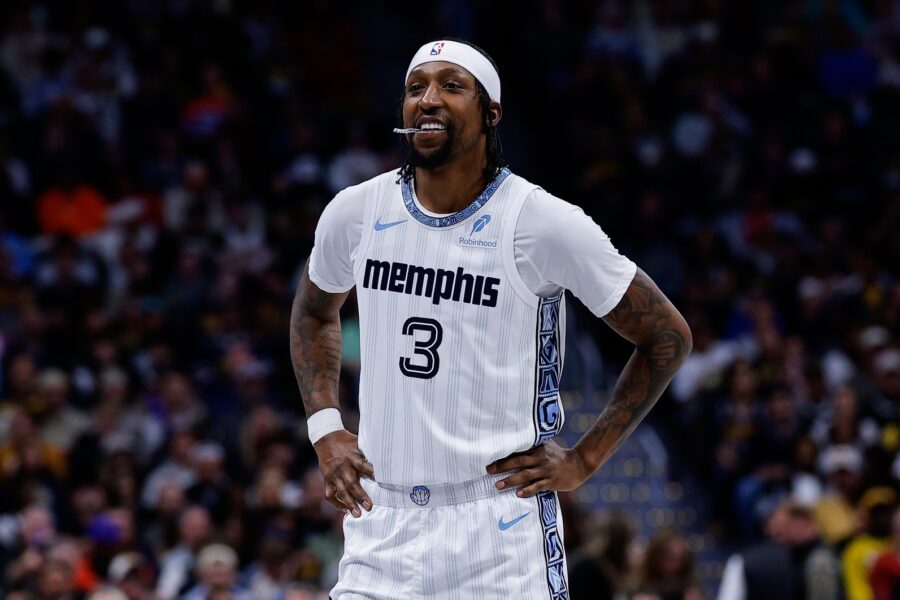
Kentavious Caldwell-Pope is leaving Memphis for the Sixers on a veteran's minimum deal after negotiating a buyout with the Grizzlies, reuniting him with LeBron James in the process. The acquisition plugs Philadelphia's perimeter defense rotation—Caldwell-Pope remains a credible on-ball pest despite aging—but his offensive trajectory over the past two seasons introduces real volume risk on Sixers shot charts.
The mechanics of the deal reveal organizational logic. Memphis traded Morant and Jackson Jr. this offseason and pivoted toward asset accumulation; Caldwell-Pope's $21.62MM expiring contract no longer fit the timeline. Philadelphia, crowded at the cap after signing James, can only offer the veteran's minimum—roughly $3.88MM on a one-year pact with a $2.45MM hit against the hard cap. Caldwell-Pope's representation through Klutch Sports (Rich Paul, also James's agent) facilitated the reunion. The fit is clean on paper: two-time champion, proven corner three-point shooter on a 2020 Lakers title team, fills a defensive need without eating cap space needed for Tyrese Maxey and Justin Edwards.
But the production deterioration is stark and recent. Caldwell-Pope shot 40.3% from three over five seasons before joining Orlando in summer 2024. He collapsed to 34.2% as a Magic starter and averaged just 8.7 PPG. Shipped to Memphis mid-season in the Desmond Bane deal, he managed only 8.4 PPG on 31.6% three-point shooting across 51 games before undergoing pinky surgery in February. This isn't a talent cliff masked by role change—it's a production decline across two organizations in two consecutive seasons. The Sixers are betting Caldwell-Pope's shooting touch returns in a better system and reduced offensive pressure (he'll slot into a wing rotation with James, Maxey, and Edwards handling primary playmaking). That's a contrarian bet against two years of evidence.
For betting purposes, this adds noise to Sixers team totals and player props rather than clarity. Caldwell-Pope's ceiling is a 15-20 minute per game reserve who spaces the floor and switches defensively—valuable, but volume-limited. His floor is a DNP situation if he can't rediscover his stroke. The James reunion may provide psychological or systematic benefit to his shooting, but the market has already watched his threes crater twice. Fade Sixers team total overs built on the assumption that role players suddenly restore 2020-era efficiency; the edge belongs to overs on James and Maxey individual scoring, where the offensive load is clearest. Caldwell-Pope adds depth, not scoring uplift.
The cap crunch Philadelphia faces to finalize both James and Caldwell-Pope deals (Dalen Terry and Jabari Walker are exposed as potential casualties) suggests the Sixers' front office views this as a necessity move—fit the defense, hold the payroll line, hope the veteran reverts to championship form. That's a reasonable roster construction play. It's a worse betting play to assume his scoring volume contributes materially to game totals.