Bulls Add Two Undrafted Wings on Two-Way Deals: What the Org's Bet Says About Their Depth Plans
By Ty Whitney ·
Chicago is banking on late-stage development and rebound instinct in the draft's margins, signaling a shift toward versatile roster construction.
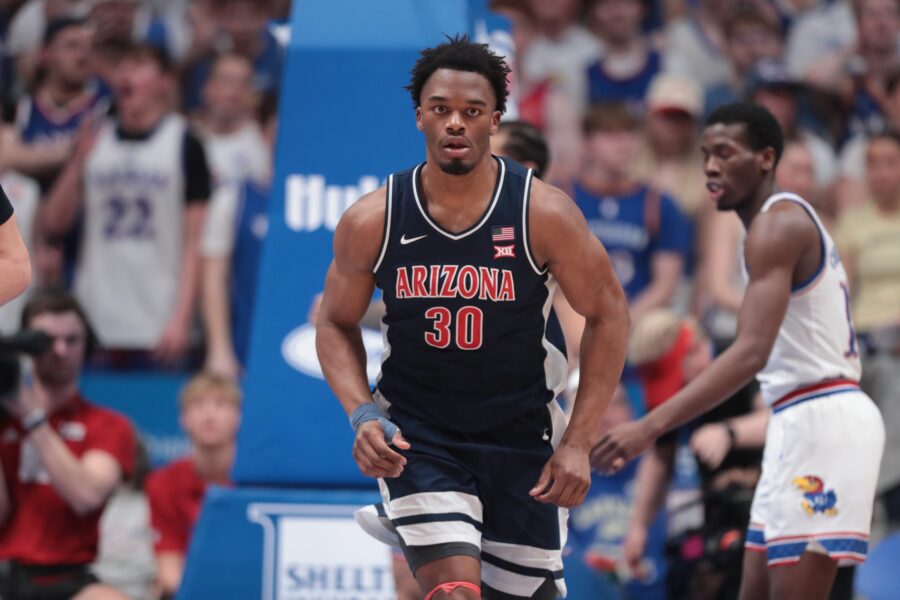
The Chicago Bulls signed forward Tobe Awaka and guard Jaylin Sellers to two-way contracts after both went unselected in the 2026 draft, per reports from ESPN and 247Sports. The moves represent the team's willingness to mine talent outside the lottery and cap-league pipelines — a deliberate strategy that reveals how the organization views the upcoming season's depth requirements.
Awaka's profile is functional but limited. The 6'8" Arizona product averaged 9.3 points and 9.1 rebounds (3.5 offensive) in 20.8 minutes off the bench last season, earning Big 12 Sixth Man of the Year honors. His calling card is effort-based: ranked third in the NCAA in total offensive boards and eighth in total rebounds. The floor is legitimate; the ceiling depends on whether his 5-of-12 three-point attempts this season signal real range expansion or novelty shooting. His 64.7% free throw mark doesn't inspire confidence in shooting mechanics, and his draft board placements (47th at ESPN, 72nd at The Athletic) confirm he's a project. The Bulls are essentially paying minimal salary and roster space to acquire a rebounder and potential rim-runner in transition.
Sellers carries more immediate scoring juice but arrives damaged. A fifth-year Providence guard, he posted 18.3 points on .473 overall/.429 from three this season — respectable volume — yet played only three games due to a severe back injury suffered during preseason. That health flag is not minor. His career 39.2% three-point shooting rate shows offensive competence, but the back problem truncates his availability window and questions his ability to move laterally on defense. His draft boards (97th and 79th) place him firmly as a scoring-first, secondary-skillset guard. Chicago is banking that rest and a fresh environment allow him to contribute, but the injury history makes him a conditional asset.
From a roster construction lens, the two-way infrastructure lets the Bulls evaluate these players without guaranteed money or guaranteed roster spots. If either develops into a bench contributor or G League rotation anchor, the team can escalate. If not, the financial and roster footprint disappears. For prop purposes, this signals nothing immediate for this season's core rotations — neither Awaka nor Sellers figures as a near-term minutes threat against established Bulls lineups. However, the organization's emphasis on rebound chasing (Awaka's core value) and floor spacing (Sellers' upside) suggests the Bulls may shift their bench lineups to emphasize pace and transition. Watch whether Awaka's offensive rebounding rate spikes once he steps into organized practice; if it does, backup center and power forward rotation minutes could open faster than typical. Sellers' return-to-health timeline will determine whether he contests minutes in the backcourt by season's end. For now, both are depth lottery tickets — not props, not main-roster impact plays.