Kam Jones Lands Two-Way Deal in Milwaukee After Bulls Waive Rookie Guard
By PropBetEdge Editorial Team ·
The 2025 draft pick's journey through three organizations in one year underscores how thin the margins are for late-first-round guards learning on the job.
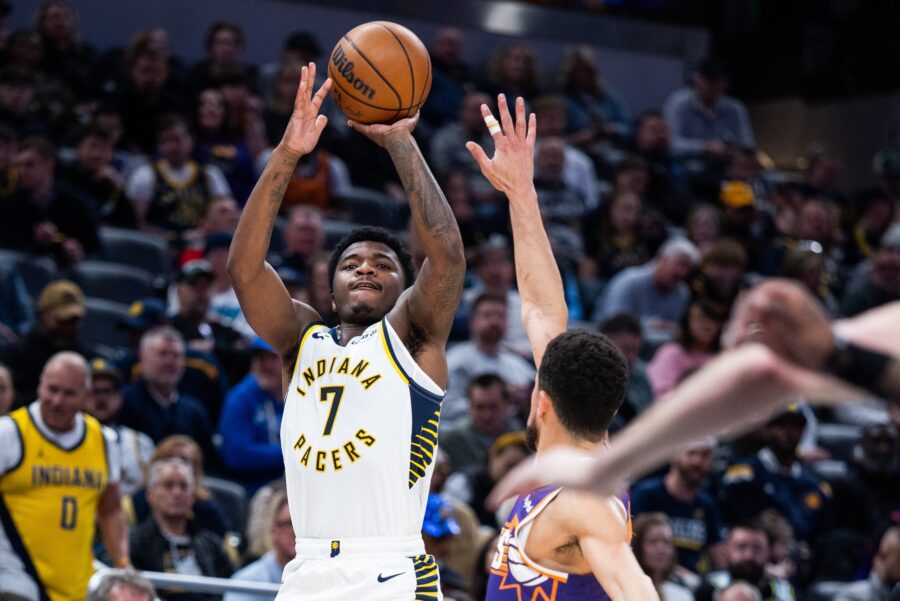
The Milwaukee Bucks signed guard Kam Jones to a two-way contract on Friday, acquiring the 38th pick from the 2025 draft after the Chicago Bulls waived him earlier this week. Per Hoops Hype's Michael Scotto, Jones will split time between Milwaukee and its G League affiliate, part of the Bucks' depth-building strategy heading into the 2026-27 season. For Jones, the move marks the third organization in his first professional year—a tumultuous apprenticeship that has tested his NBA readiness.
Jones spent his rookie season with Indiana after being drafted 38th overall in a draft-night trade that sent the Pacers' pick to Chicago. He appeared in 37 games for a Pacers team navigating injury attrition, averaging 3.2 assists against just 1.0 turnover in 16.6 minutes per game. The underlying numbers were less encouraging: his outside shot misfired consistently, and his overall efficiency lagged expectations for a prospect with his playmaking profile. A back injury delayed his season debut until mid-December, compressing his runway for adjustment and on-court repetition. After the Pacers declined to retain him, the Bulls acquired him in a mid-season maneuver, then waived him before free agency—leaving him on the open market with a partial guarantee of $1,075,459 still on Chicago's books.
Milwaukee's two-way signing represents a calculated gamble. The Bucks are betting that Jones's playmaking instincts (3.2 AST in limited run) can be refined in a lower-pressure environment, with the option to promote him to the active roster if injury or inconsistency in their backcourt creates an opening. His Marquette pedigree adds credibility—four years in a mid-major program teaches decision-making and floor leadership—but his rookie tape offers no guarantee of translation. From a roster construction angle, the Bucks gain cost-controlled optionality on a young ball-handler without long-term commitment, exactly what contenders use two-way slots for during the offseason.
For prop purposes, Jones's arrival does not materially shift Milwaukee's roster equations for the coming season. He is unlikely to log meaningful minutes in games that carry playoff implications, which means any fantasy or player prop involving Jones carries G League variance—high volatility, low predictability. The bet here is NOT on Jones himself, but on what his signing reveals about Milwaukee's depth concerns at guard. If the Bucks felt confident in their ball-handling depth, they would not be cycling through late-pick reclamation projects. Watch whether additional backcourt moves follow over the next 30 days; if they do, it signals front-office anxiety about health or fit at the position. That pattern—not Jones's individual performance—is the prop-relevant signal worth tracking.