Brunson's Clutch Fourth-Quarter Shot Sends Knicks to OT, Reshapes Game 1 Narrative
By PropBetEdge Editorial Team ·
Late-game execution in the Eastern Conference Finals hinges on shot-creation in isolation; Brunson's ability to manufacture buckets in tight windows becomes the series' first crucial tell.
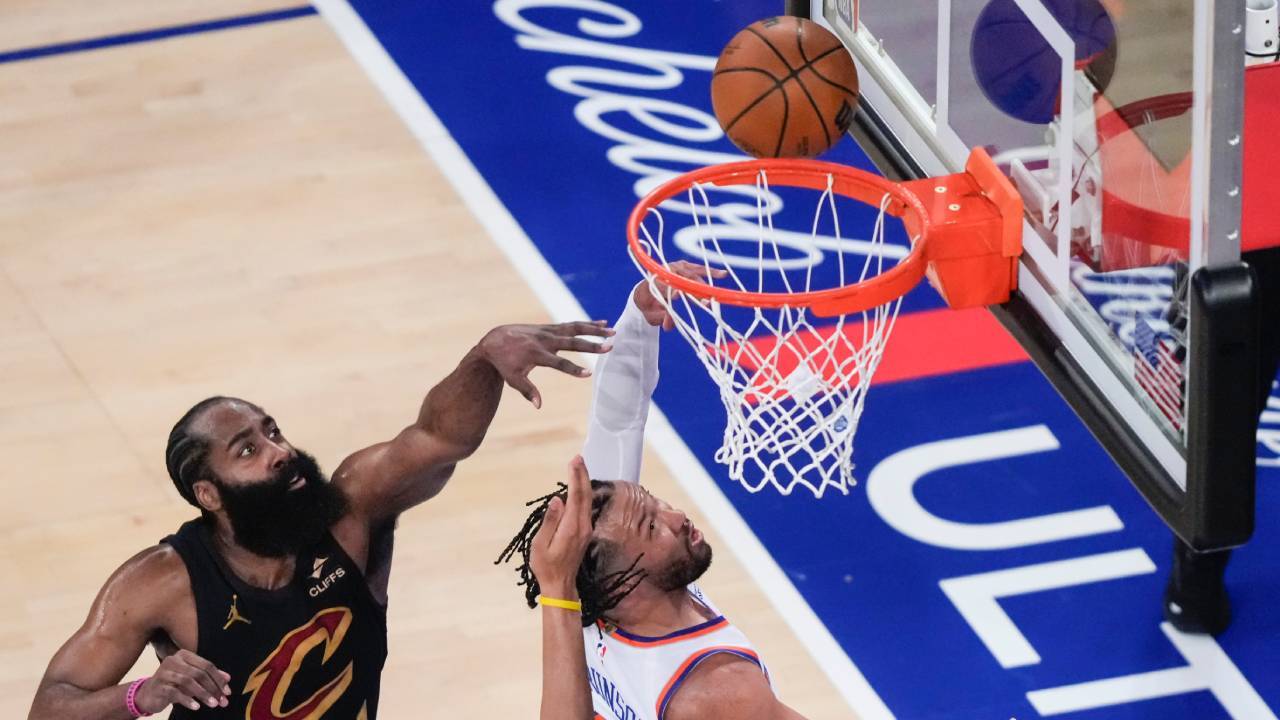
Jalen Brunson tied Game 1 of the Eastern Conference Finals at 101-101 with a go-ahead bucket in the final moments of regulation, forcing overtime after the Cavaliers' last-second attempt missed. The play was pure isolation ball—Brunson operating in the pick-and-roll against Cleveland's defense, reading the switch, and finishing in traffic with the game hanging in balance.
This is the kind of fourth-quarter execution that separates playoff depth. Brunson's clutch gene is well-documented; he has hit game-winners and tie-breakers throughout his career, including critical moments in last year's postseason runs. But what matters for this series is consistency in that specific context: when the spacing tightens, defenses load, and there's nowhere to hide in crunch time. The Cavaliers' defense, ranked third in efficiency during the regular season, had the tools to contain him—length, switching ability, pack-line principles—yet Brunson still found his spot.
The overtime frame matters less than what the regulation fourth quarter reveals: Brunson's isolation scoring, when the Knicks' pace slows and option trees shrink, is a reliable offensive weapon the Cavaliers cannot simply erase with scheme. His ability to create separation on shot-pull-ups and finish at the rim against length is the kind of marginal edge that compounds over seven games. If he maintains that late-game shot diet (pull-ups, floaters, short-roll finishes) throughout the series, his scoring volume in those moments becomes predictable.
For prop bettors, Brunson's clutch-time usage and efficiency in Game 1 establish a baseline. The Cavaliers will adjust their fourth-quarter coverages in Game 2, likely playing him tighter on-ball and forcing more off-ball movement from his teammates. That tightening creates two competing effects: fewer isolation attempts for Brunson personally, but higher assist rates when the defense collapses. The spread between his total points and his assists in overtime—when isolation offense accelerates—is the real story. If the Knicks' entire Game 1 plan in crunch time centers on Brunson's shot-creation, expect his late-game touches to spike in Games 2 and 3 before Cleveland's personnel adjustments take hold.
The overtime itself is secondary context. What matters is that Brunson demonstrated he can score when the Cavaliers' best defensive looks are deployed. That capacity to execute under maximum pressure is not variance—it's part of his skill set. The market will price his Game 2 fourth-quarter scoring props based on volume trends from the entire game, not the specific isolation diet that won him Game 1. That misalignment is the edge.