Cavaliers' Paint Dominance and Transition Pace Expose Pistons' Series Ceiling in Game 7 Collapse
By Erik Schwartz ·
Cleveland's suffocating interior defense and tempo control dismantled Detroit's top-seeded offense when it mattered most, signaling how the Pistons will need to retool their roster construction to survive future playoff tests.
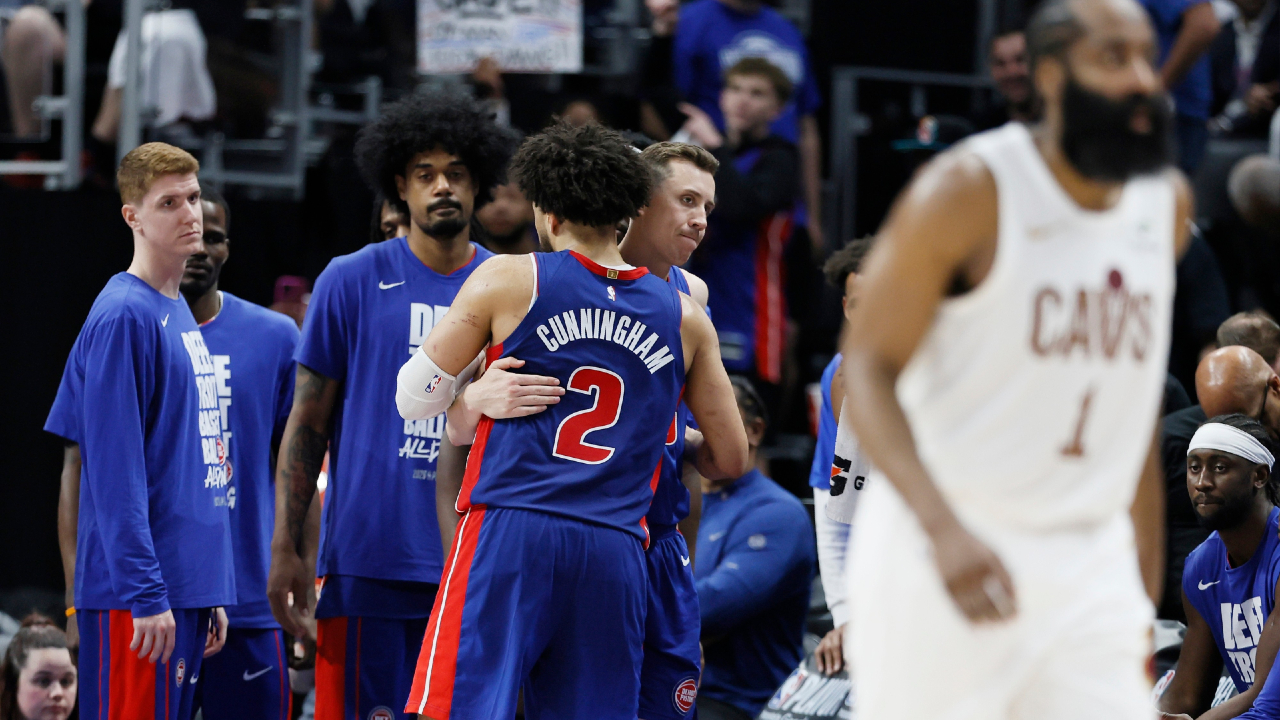
The Detroit Pistons' 60-win turnaround collapsed in a 125-94 Game 7 home loss to Cleveland on Sunday, ending their Eastern Conference semifinal run with a performance so lopsided it exposed fundamental weaknesses that regular-season excellence had masked. The Cavaliers controlled the game's architecture from the opening tip—building a 31-22 first-quarter lead and never trailing—by weaponizing two overlapping advantages: paint dominance (58-34 rebound and scoring margin) and transition tempo that turned Detroit's cold shooting into fast-break opportunities. The Pistons shot 35.3 percent from the floor and trailed by as many as 35 points in the second half, a margin that transcended variance and instead reflected a structural mismatch.
Cleveland's offensive execution was built on role flexibility and shot-creation depth. Donovan Mitchell led with 26 points (15 in the third quarter alone), Evan Mobley posted a 21-point, 12-rebound double-double, and Jarrett Allen contributed 23 points—three scorers capable of operating in isolation, pick-and-roll, and transition simultaneously. This created a cascading problem for Detroit's defense: the Pistons lacked the interior mass to contain Cleveland's paint attacks and the perimeter mobility to stay attached on the perimeter during clock-driven possessions. When a team surrenders 58 paint points at home in an elimination game, it's not a shooting slump or a third-quarter letdown. It's architectural.
For the Pistons, the loss also represents a cautionary tale about roster construction depth. Cade Cunningham and the supporting cast performed admirably throughout the regular season and early playoffs, but when facing an opponent with four functional scoring options and elite defensive switching (a Cavaliers trademark), the gap between a 60-win roster and a championship-caliber one became visible. Coach J.B. Bickerstaff's refusal to characterize the loss as a disappointment speaks to genuine organizational optimism, but the film tells a different story: Detroit will need to add interior reinforcement and create secondary playmaking to avoid repeat exposure in 2027.
From a betting perspective, this game sequence has already reshuffled market expectations for next season's Eastern Conference odds. The Pistons' title probability will contract sharply—sportsbooks were already pricing them as third or fourth favorites to the Celtics and 76ers entering the playoffs—and the organizational narrative shifts from surprise contender to maturing team facing a choice between incremental improvement and aggressive retooling. Cunningham's future scoring volume and assist rates will be watched closely in early-season games; if Detroit adds perimeter creation around him, his usage patterns could expand, which would push his 2026-27 season-long point totals upward. Conversely, if the front office prioritizes defensive depth and interior help, his shot volume may tick down while his efficiency improves. The championship probability for this core has been materially revised downward after this series.