Porter's Extension Limbo Signals Nets Roster Flux; Simons Adds Depth to Sixers Bench
By Erik Schwartz ·
Brooklyn's reluctance to lock down Michael Porter Jr. reveals a franchise caught between veteran production and a youth-first rebuild, while Philadelphia's bench scoring suddenly has real teeth.
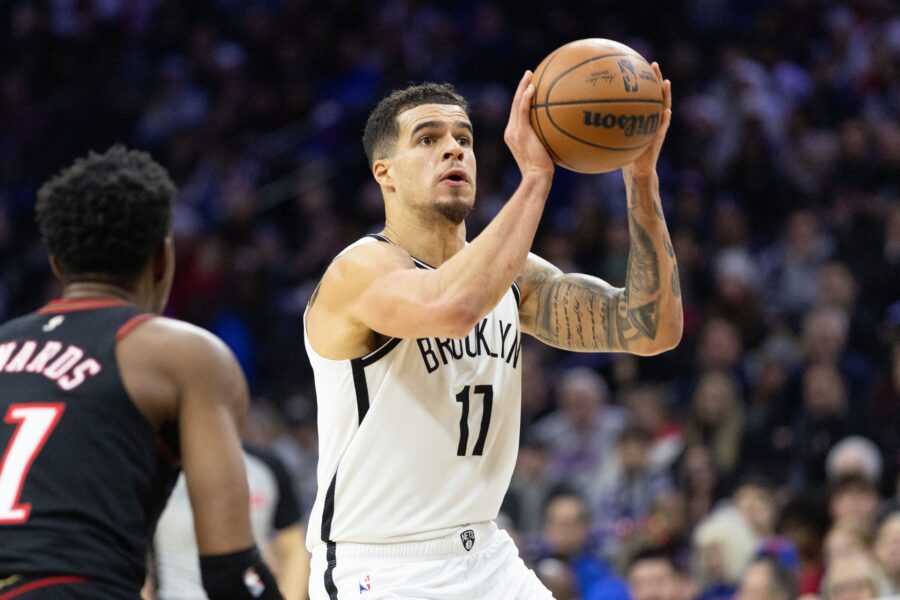
Sean Marks isn't rushing into a Michael Porter Jr. extension, even after the scoring forward delivered a career-best 24.2 points per game during his first Nets season. Per HoopsHyper, the GM sidestepped urgency when discussing Porter's long-term status, offering only that "we've got time" and that there's "no immediate hurry." The statement reads as organizational hedging: Porter posted elite production last year (52 games played, 7.1 rebounds, 3.0 assists), yet the Nets have leaned hard into youth, drafting seven first-round picks over the last two seasons. That structural pull—between a proven 28-year-old scorer and the salary flexibility demanded by a rebuild—is real, and Marks' careful language reflects a front office testing market options rather than cementing its roster.
Porter's injury history compounds the math. He appeared in only 52 of a possible 82 games last season, and the Nets' willingness to rest him for draft positioning suggests they're already pricing durability risk into their long-term planning. An extension locks in salary cap real estate for a player who may not be part of the next competitive window. The delay tactic gives Brooklyn optionality: extend and commit, or let him walk and redirect resources toward younger building blocks.
Philadelphia's bench, meanwhile, just gained meaningful offensive depth. Anfernee Simons joined the Sixers to address their secondary scoring after the Jaylen Brown trade reshaped the roster. Nick Nurse's comments on Simons' role—emphasizing his ability to generate easy looks off the bounce and his fit alongside rookie Labaron Philon—signal that the Sixers aren't treating him as a niche specialist but as a rotation linchpin. On a team built around Tyrese Maxey's two-way evolution alongside Brown and Joel Embiid, Simons gives Nurse flexibility in bench unit construction and shot distribution.
From a prop lens, Maxey's midseason scoring floor has shifted. Nurse's recent emphasis on simplification—encouraging Maxey to embrace his three-level scoring while maintaining offensive organization—and the arrival of a secondary bench scorer in Simons means Maxey's role can contract slightly without offensive regression. Maxey's early-season points lines should reflect reduced volume, not reduced efficiency. If Simons establishes himself as a reliable 10-14 points-per-game option in the second unit, Maxey's usage rate drops, depressing his scoring total despite his individual skill. The market hasn't yet fully adjusted for bench depth that wasn't there in Year One of the Embiid-Brown core.