Simons Fills a Depth Hole, But the Sixers' Guard Rotation Just Got Crowded
By Erik Schwartz ·
Philadelphia adds a scoring punch on a two-year, $12.3MM deal, but backcourt depth now raises questions about usage and playing time.
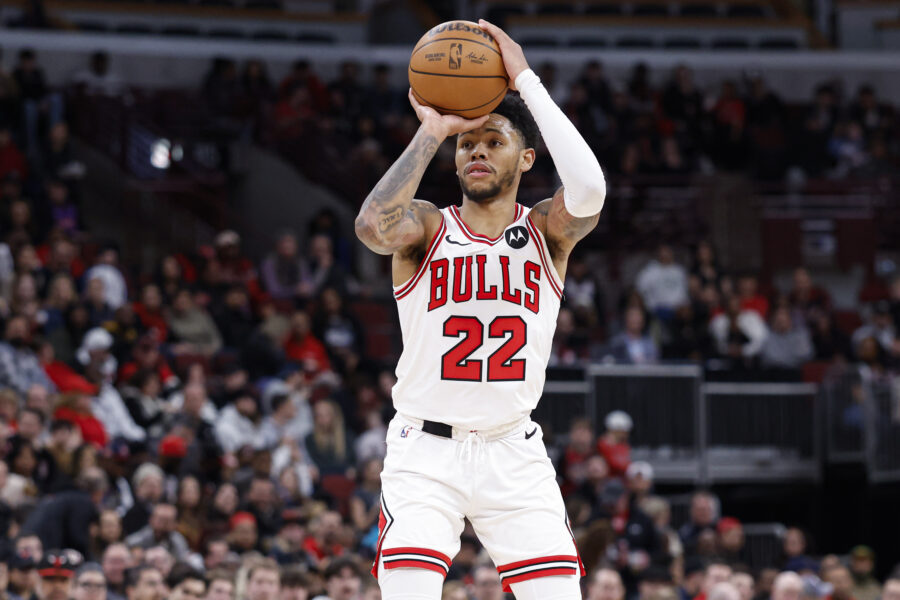
Anfernee Simons is heading to Philadelphia on a two-year, $12.3MM contract with a player option in year two, per ESPN's Shams Charania. The Sixers are banking on the 25-year-old wing to provide perimeter scoring and floor spacing in a rotation that already features Tyrese Maxey and the newly drafted Philon. The fit is functional—Simons carries a 38.6% three-point mark over his last 200-plus games and can play either guard spot—but the architecture of the backcourt now tilts toward redundancy.
The deal's structure matters: at $6.15MM annually on average, Simons lands in the true depth tier, a floor-spacer contract rather than a starter's price. The player option in year two gives Simons control and the Sixers flexibility if his role compresses. That's a signal Philadelphia viewed this as a low-friction, high-upside signing—someone who doesn't demand volume but can punish defenses when given space. His fit alongside Maxey as a secondary creator and gravity source makes sense in transition and spot-up scenarios.
The real question is opportunity cost. Philon, a lottery-caliber prospect, was drafted to develop as a long-term guard prospect. Simons now occupies minutes that could have gone to the young guard, and the Sixers' backcourt depth chart is suddenly four deep (Maxey, Simons, Philon, plus existing rotation players). In a 48-minute game, that compression will limit Simons' runway—he's unlikely to exceed 24-26 minutes per night, which caps his assist and scoring upside.
For prop purposes, Simons' point total should reflect this reality. His season average will skew toward the 10-14 range rather than his career 13.8 PPG, simply because the minutes available have shrunk. A points prop over 13.5 is a fade; the market will eventually price for restricted opportunity, but early-season lines may overshoot based on his three-point skill alone. His three-pointers made line deserves attention only in games where the Sixers are in deep rotation (blowouts, injury absenteeism), when his playing time could tick toward 28-30 minutes. Conversely, his assists prop is a lower-leverage play—he'll rarely be the lead playmaker, making lines in the 1.5–2.5 range safer to fade than chase.