Phillies Turn Nationals Park Into Their Personal Ninth-Inning Stage
By Erik Schwartz ·
Three consecutive go-ahead ninth-inning home runs—a first in MLB history—signals Philadelphia's offense has weaponized late-game leverage in ways the market hasn't yet priced.
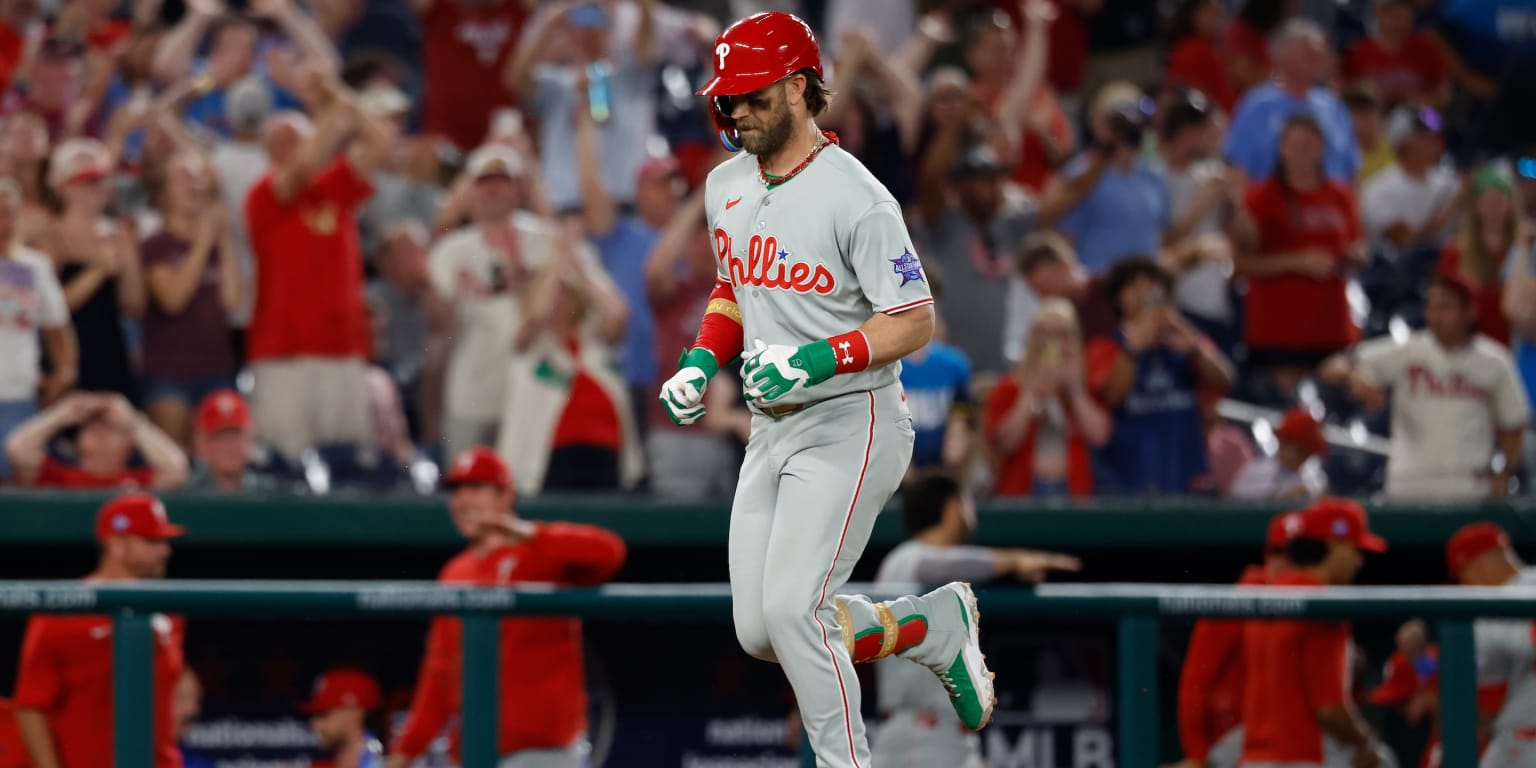
The Phillies just accomplished something no team has done in baseball's 150-year recorded history: hit a go-ahead home run in the ninth inning of three straight games. Thursday night at Nationals Park, Bryce Harper provided the third installment—a two-run opposite-field blast off reliever Gus Varland in the ninth that broke a 5-5 tie and sealed a 10-5 victory. This isn't survivorship bias or one clutch at-bat. The Phillies trailed 5-0 after five innings, watched starter Cristopher Sánchez get shelled in the first, then methodically clawed back through Brandon Marsh's two-run homer in the sixth and three runs on four walks in the seventh before Harper delivered the dagger.
What makes this streak meaningful beyond the record book is the mechanism underneath it. The Nationals walked four batters across two innings (Mitchell Parker and Clayton Beeter combining for those free passes), setting the table for a compressed at-bat environment where Philadelphia's best hitter could feast on mistakes. Marsh, riding a white-hot 9-for-17 (.529) series with three homers, provided the foundation. Harper—18 homers on the year, accustomed to performing under pressure—completed the narrative with a calculated opposite-field swing that showed discipline within chaos. These weren't swing-and-miss comebacks; they were constructed through pitch selection and situation awareness. The Phillies are 45-36 overall but 19-9 since May 25, with a 53-20 record against Washington dating back to July 2021 (a 458-303 run-differential advantage that signals systemic dominance, not noise).
From a betting lens, the implications split in two directions. First, the Nationals' bullpen construction has become a leverage leak. Gus Varland and the mid-tier Washington relievers are allowing the Phillies to stay within striking distance, then falter when the game tightens. A team that trails 5-0 and forces extra innings against quality arms would normally lose 90% of the time; Philadelphia won this one because relief quality failed to close the door. That's not a repeatable edge for the Nationals. Second, the Phillies' clutch hitting in the ninth specifically—three consecutive go-ahead homers in a single series—represents a temporary peak in variance. Interim manager Don Mattingly acknowledged the unlikelihood in real time: "You get down to the ninth and you're like, 'Well, how many times can it happen?'" The answer is not indefinitely. Single-game, high-leverage spikes like these cool within 5-7 games as the sample normalizes. However, the pattern of Philadelphia's ability to manufacture ninth-inning at-bats (via patient approach and team speed) and their historical efficiency against Washington's pitching staff (458 runs scored in 73 games over five years) suggests the Phillies will remain favored in late-inning spots against the Nationals specifically for the remainder of the season.
For bettors, the edge exists not in betting the Phillies to hit another ninth-inning homer—that's overcorrecting from one three-game sequence—but in recognizing that Washington's bullpen will continue to surrender leverage opportunities, and Philadelphia will continue to convert them at a rate higher than the general population. The moneyline on Phillies games against the Nationals should tighten in their favor as the market adjusts to this five-year trend. More tactically, Nationals bullpen overs (specifically on bullpen ERA props or total innings pitched in relief) become vulnerable when the Phillies visit, because Philadelphia forces extra innings through patience rather than early aggression. That's a multi-game pattern, not a single spike.