Dodgers Offense Emerges From Slump With 15-Run Demolition of Angels
By Erik Schwartz ·
A bizarre ground-rule triple sparked Los Angeles's late-inning eruption, signaling the lineup's capacity to generate volume when it matters.
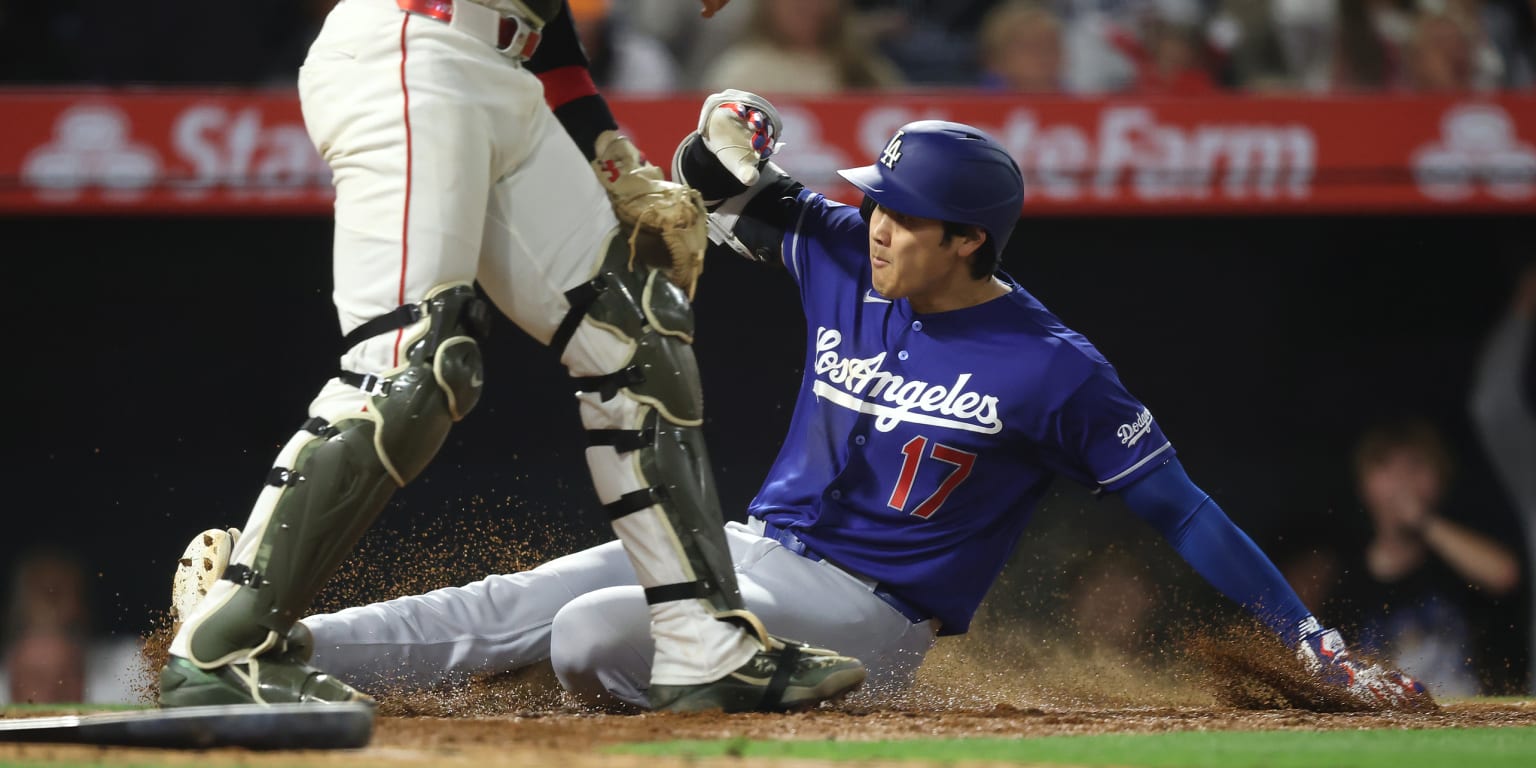
The Dodgers dismantled the Angels 15-2 on Saturday night, but the margin understates how the game actually unfolded. Los Angeles spent six innings scraping together runs on small ball—sacrifice flies, walks, hit batsmen—before the offense finally arrived in the eighth and ninth. Shohei Ohtani's unorthodox triple off Alek Manoah, scored on a ground-rule technicality when the ball struck protective netting in the right-field corner and rebounded into play, catalyzed the collapse. Mookie Betts followed with a conventional long ball, then Ohtani cleared the bases on a double in a five-run ninth that sealed the rout and moved Los Angeles to four consecutive wins.
The underlying pattern matters more than the circus play. The Dodgers have carried a recent offensive stall into this series—early reliance on manufacturing runs rather than hitting production—but Saturday's late-game barrage exposed what the lineup can do when it breaks loose. Will Smith's first-inning sacrifice fly and the six free passes in the sixth kept Los Angeles in the game until the lineup's power actually showed up. That timing is critical context: a team that can generate 15 runs in one night, even one that struggled to do so in recent weeks, hasn't lost its identity. It's dormant, not broken.
For betting purposes, the gap between Dodgers offensive expectation and recent output is the real story. Los Angeles entered Saturday ranked in the top half of baseball in lineup talent and xwOBA, yet recent games had seen the offense treated as fragile. Books priced that pessimism into team totals and run-line numbers. A 15-run eruption, especially one that featured multiple XBH after weeks of low-leverage base hits, reshapes how sharp money will approach Dodgers props going forward. The question isn't whether they can score 15 again—variance and ballpark luck make that a one-off. The question is whether the market had overcorrected downward on their true offensive baseline, and Saturday's evidence suggests it had.
Ohtani's two-hit, three-RBI performance in the final two innings also matters for individual prop recalibration. He enters each game with preset slash assumptions baked into his player totals; Saturday's late surge—particularly the bases-clearing double—won't permanently move those lines, but it will remind the market that even in slump windows, this lineup has two-three hitters (Ohtani, Betts, Smith) capable of sudden offensive violence. Single-game variance shouldn't shift multi-week prop strategy, but it does signal that Dodgers unders on team totals priced for sustained offensive drought carry downside risk if the lineup simply normalizes.