Brandon Young's Splitter Overhaul Opens a Sub-4 ERA Window for Baltimore's Rotation
By Erik Schwartz ·
A mid-May grip adjustment transformed Young's most-used secondary pitch into a strikeout weapon, positioning the 27-year-old right-hander as a reliable innings-eater in a rotation short on depth.
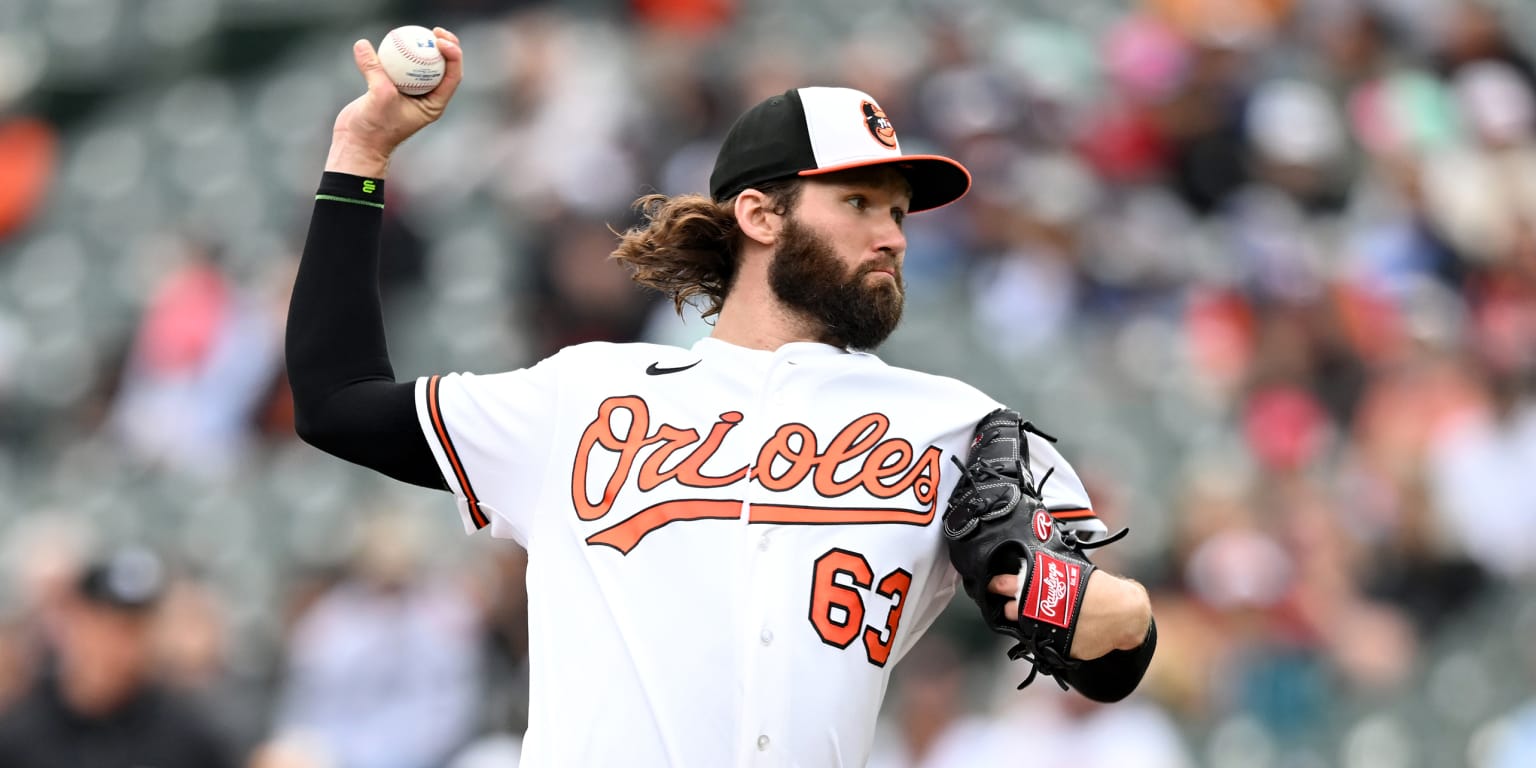
Brandon Young owns a 3.47 ERA across 36 1/3 innings in seven starts for the Orioles—the best mark in Baltimore's rotation among pitchers with at least 30 innings pitched this season. That alone would merit attention. What elevates Young's case into genuine prop territory is the mechanical catalyst behind his success: a splitter grip change implemented between his May 17 start and his dominant performance against Detroit on May 25, when he pitched 6 2/3 innings and allowed just two unearned runs.
The numbers tell a story of deliberate refinement. Young's original splitter averaged 87.7 mph with 1,501 RPM and 30 inches of vertical break over his first six starts. In the Detroit outing, he threw the pitch 5 mph slower (82.8 mph), dropped the spin rate to 1,348 RPM, but gained 8 inches of additional vertical drop, finishing at 38 inches. The horizontal movement also sharpened, moving from 11.8 inches to 7.6 inches—straighter, but devastating from a vertical-break perspective. That's not random variance; it's the product of a coaching intervention. After Young's May 17 start against Washington, the Orioles' pitching staff—Drew French, Mitch Plassmeyer, and Ryan Klimek—identified a problem: Young couldn't command the splitter to consistent locations, and the velocity gap between it and his 94 mph fastball wasn't wide enough to create deception. They proposed replicating Nathan Eovaldi's grip style, using the horseshoe of the laces to generate a slower, higher-break offering that would function as a true out-pitch to left-handed hitters.
The mechanical shift worked immediately. Against Detroit, Young threw 25 splitters with the new grip. The Tigers managed only 1 hit off the pitch in five contact opportunities—a single. The remaining outcomes: six fouls, two fly outs, one ground out, one called strike, and two whiffs, including a 3-2 strikeout against Riley Greene in the sixth inning. Young was getting used to the adjustment (12 of the 25 were balls), yet the pitch already generated swings-and-misses and weak contact. The confidence was genuine: Young threw the new grip in a bullpen session the Thursday before, felt comfortable with it, and deployed all 25 in-game splitters with the revised mechanics.
From a betting standpoint, this edge has two components. First, Young's strikeout rate is primed to climb. His whiff-generating splitter is the second-most-used pitch in his arsenal, and the early-stage contact quality (1-for-5 in one start) suggests he's locking in a reliably-missed offering. Second, his ERA projection should compress further. A 3.47 mark through seven starts is already league-average-to-above, but if the splitter becomes a true swing-and-miss weapon, his walk-and-strikeout profile improves, limiting damage in high-leverage spots. The grip change isn't a single-game outlier; it represents a quantifiable mechanical improvement that addresses a known weakness (fastball-splitter separation, left-handed hitter management). Those inputs are durable across multiple outings.
Markets have likely adjusted Young's strikeout and innings-pitched props downward slightly following the Detroit performance, but the adjustment hasn't priced in the persistence of the splitter improvement. Young isn't a proven commodity—he's a 27-year-old with seven big-league starts. The cautionary edge will remain priced into his props for the next 2-3 weeks. Lean on strikeouts in that window, particularly in home starts where he's more likely to pitch deeper into games. His ERA line also carries value near or above 3.75, as one elite outing can't erase the historical volatility of young starters, but the downside risk has narrowed with a functional third pitch.