Young's Head Injury Clouds Mets First-Base Position; Vientos Slide Reshapes Lineup Construction
By Erik Schwartz ·
A collision at first base leaves the Mets' everyday position vulnerable and forces a defensive reshuffle that ripples through late-inning props and team construction.
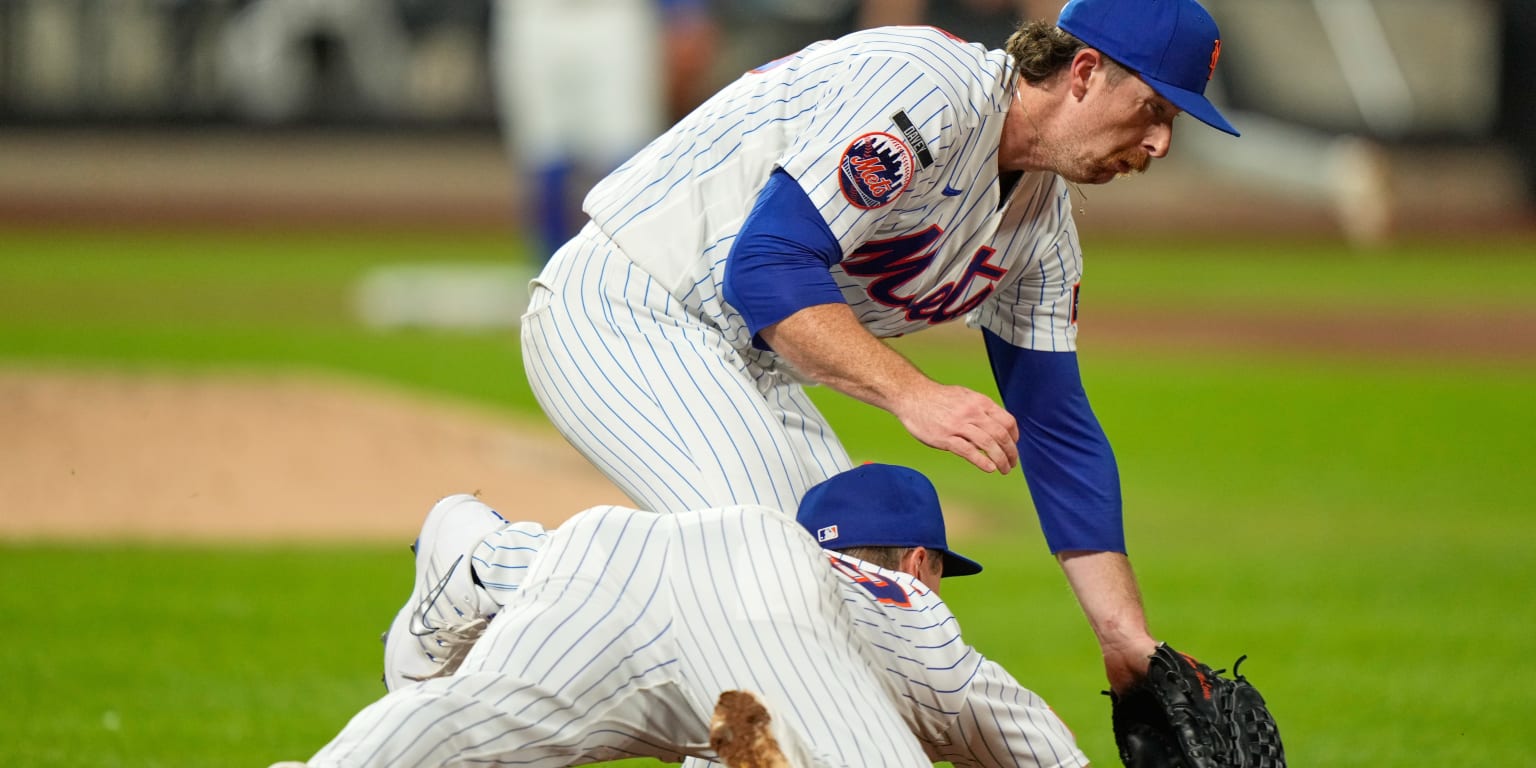
Jared Young was carted off Citi Field on Thursday after absorbing a leg strike to the head from pitcher Nolan McLean during a first-base coverage scramble in the sixth inning. A slow roller up the line created the confusion—McLean broke toward the bag, Young was already there, and the collision left Young motionless until trainers arrived. He showed consciousness (thumbs-up to the crowd) and reported feeling in his extremities, but was transported to a hospital for evaluation. The Mets have not released a timeline for his return or the severity of the head trauma.
Young has been the Mets' most consistent position player this season, hitting .266 with a .759 OPS across 103 games as their primary first baseman. That stability matters: he's handled a workload that kept the position reliable in win-and-loss scenarios. Mark Vientos stepped into the field following Young's exit, completing the transition that was always a possibility if Young went down. Vientos carries different offensive characteristics—more power upside, wider strikeout variance, less consistent plate discipline—which introduces volatility to Mets run production in high-leverage spots.
From a roster depth standpoint, the Mets don't have a proven first-base replacement on the active roster. Any extended absence by Young (measured in weeks rather than games) forces either a trade deadline scramble or a platoon that lowers offensive efficiency. The organization's internal valuation of Young is evident in his everyday usage; losing that production and stability in the final stretch of a competitive season creates both lineup drag and tactical uncertainty. Vientos will see expanded at-bats, which changes run-generation profiles depending on opponent pitching patterns and game script.
For props, the immediate impact lands on team totals and first-baseman-adjacent bets. If Young is unavailable for more than a handful of games, Mets team totals should compress slightly—not because Vientos is a poor hitter, but because Young's consistency at the position carried a lower variance that favored consistent offensive output. Vientos' streakiness (elevated K rates, feast-or-famine power stretches) means the Mets offense becomes more dependent on lineup construction around him. Additionally, any first-base player props—hits, RBIs, runs—will now flow through Vientos' opportunity set, which is less predictable than Young's volume-based consistency. Team totals in the 4.0-4.5 range should lean toward the under in the short term if Young's absence extends past this weekend; the Mets' baseline run rate drops when positional depth narrows.
The thumbs-up and reported extremity feeling are encouraging signs, but head injuries carry variable recovery windows. Team announcements in the coming 24-48 hours will clarify whether this is a precautionary overnight observation or a multi-week absence. Until then, Mets props carry elevated uncertainty, and books will adjust aggressively once the injury status crystallizes.