Yastrzemski's Breakout Hits at the Right Moment—and Why the Braves' Lineup Just Got Deeper
By PropBetEdge Editorial Team ·
After five weeks in a .200/.264/.252 funk, Mike Yastrzemski delivered two hits and three RBIs in Atlanta's home opener, signaling the return of a hitter the organization paid to produce.
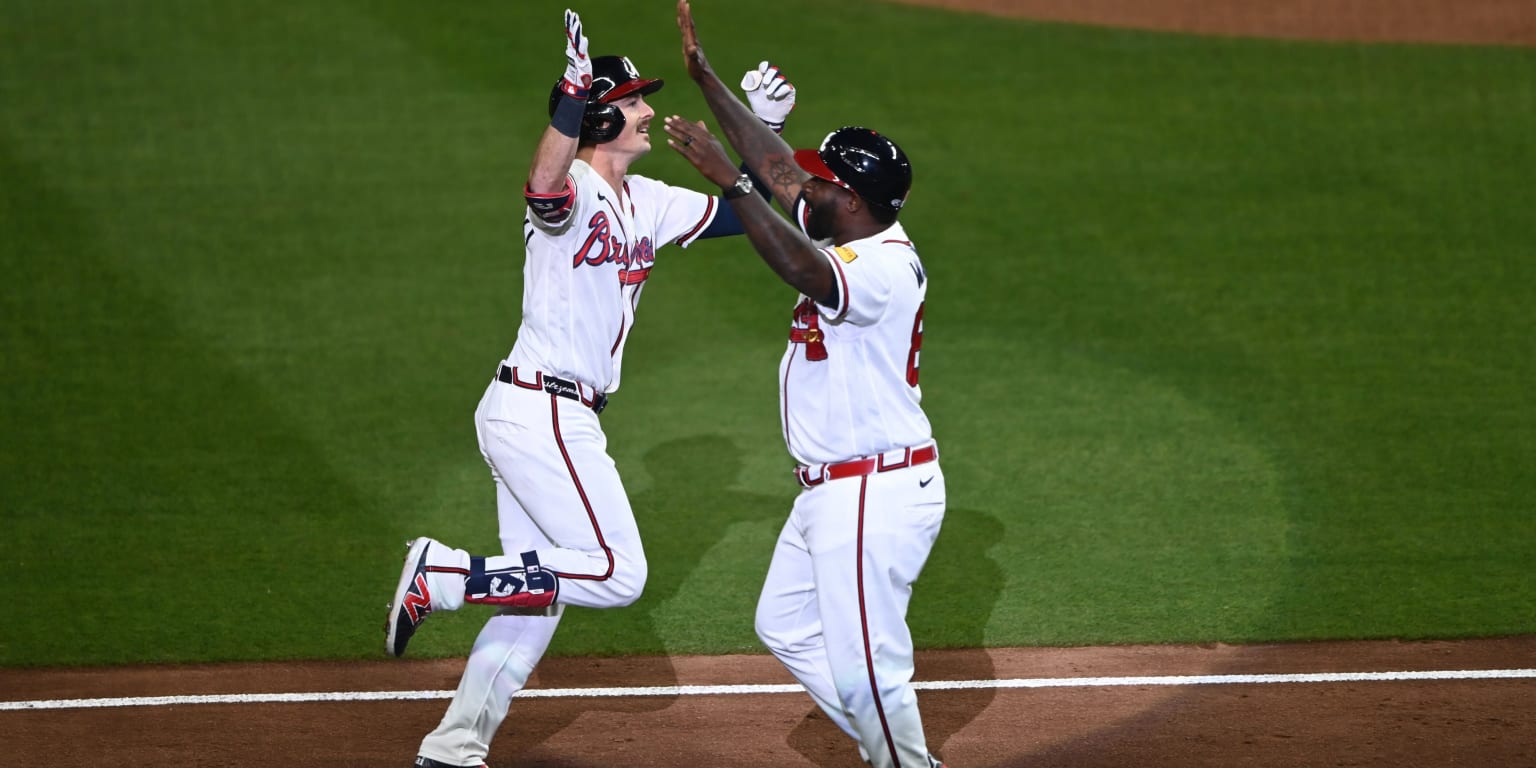
Mike Yastrzemski went 2-for-2 with three RBIs and a home run—his first as a Brave—in Atlanta's 5-2 win over the Cubs on Tuesday night, breaking out of a brutal early-season slump that had confined him to a .252 slugging percentage over 115 at-bats. The timing mattered. The Braves returned to Truist Park for the first time since losing Bobby Cox and Ted Turner last week, and the organization honored both franchise cornerstones with a pregame ceremony that reset the emotional tone for the night. Yastrzemski's two-run blast in the fifth inning highlighted a four-run frame that broke the game open.
What makes Yastrzemski's outburst notable is not just the immediate performance—one game in isolation is noise—but the causal mechanism behind it. Manager Walt Weiss had kept him in the lineup throughout the slump, a deliberate choice signaling internal confidence. Yastrzemski had posted a strong spring training, and Weiss's scouting memory included productive weeks with Kansas City the previous season. The at-bat discipline was there; the results simply hadn't followed. Against Colin Rea, Yastrzemski owns a 5-for-10 career record with three home runs—genuine reverse splits that suggest he has a specific skill match against this arm. That pattern didn't materialize by accident.
The Braves' offense is constructed to absorb individual slumps without breaking stride. With Austin Riley, Matt Olson, and Ronald Acuña Jr. forming a three-headed core, Yastrzemski occupies a fourth-outfield or DH-adjacent role where production is a bonus, not a necessity. When it arrives—as it did Tuesday—it compounds the lineup's depth advantage. Atlanta's pitching staff allowed one hit total, held the Cubs to a season-low offensive output, and Weiss's team is now 3-0 since Cox passed away. The organization has a structural edge: young, established stars at the core, veteran depth in the corners, and pitching that's executing shutdown baseball.
For prop bettors, the read is straightforward. Yastrzemski's 5-week slump was a predictable cooling period for a 35-year-old entering a new organization, not evidence of decline. His career track record and spring training performance suggested mean reversion was likely—and it arrived Tuesday. However, this breakout is NOT a multi-game signal yet; it's a single hot night that confirms what the Braves' front office already believed. The edge, if any, lives in single-game props immediately after a correction like this: Yastrzemski's hit total (1.5 range) and RBI line (0.5-1.5 range) will likely overcorrect higher for his next few starts as sharps react to the narrative of a slump ending. The market will build in mean-reversion momentum. That overreach—pricing him as if he's found a permanent new baseline—is where bettors should fade. Yastrzemski is more likely to settle into 0.7-0.8 RBI per game than sustain the 3-RBI pace. For the Braves as a team, however, the lineup's depth just widened, making team totals and run-line props slightly more durable on home dates where Yastrzemski sits against right-handed specialists. Fade individual Yastrzemski overs in the short term; lean Braves team totals with confidence that the core is simply too deep to be vulnerable.