Yankees Rush Lagrange to Bullpen Path: A Velocity Play in 2026
By PropBetEdge Editorial Team ·
The Yankees are converting their electric young starter into a reliever at Triple-A, signaling an accelerated timeline for impact—but the whiff angle doesn't justify hype until command stabilizes.
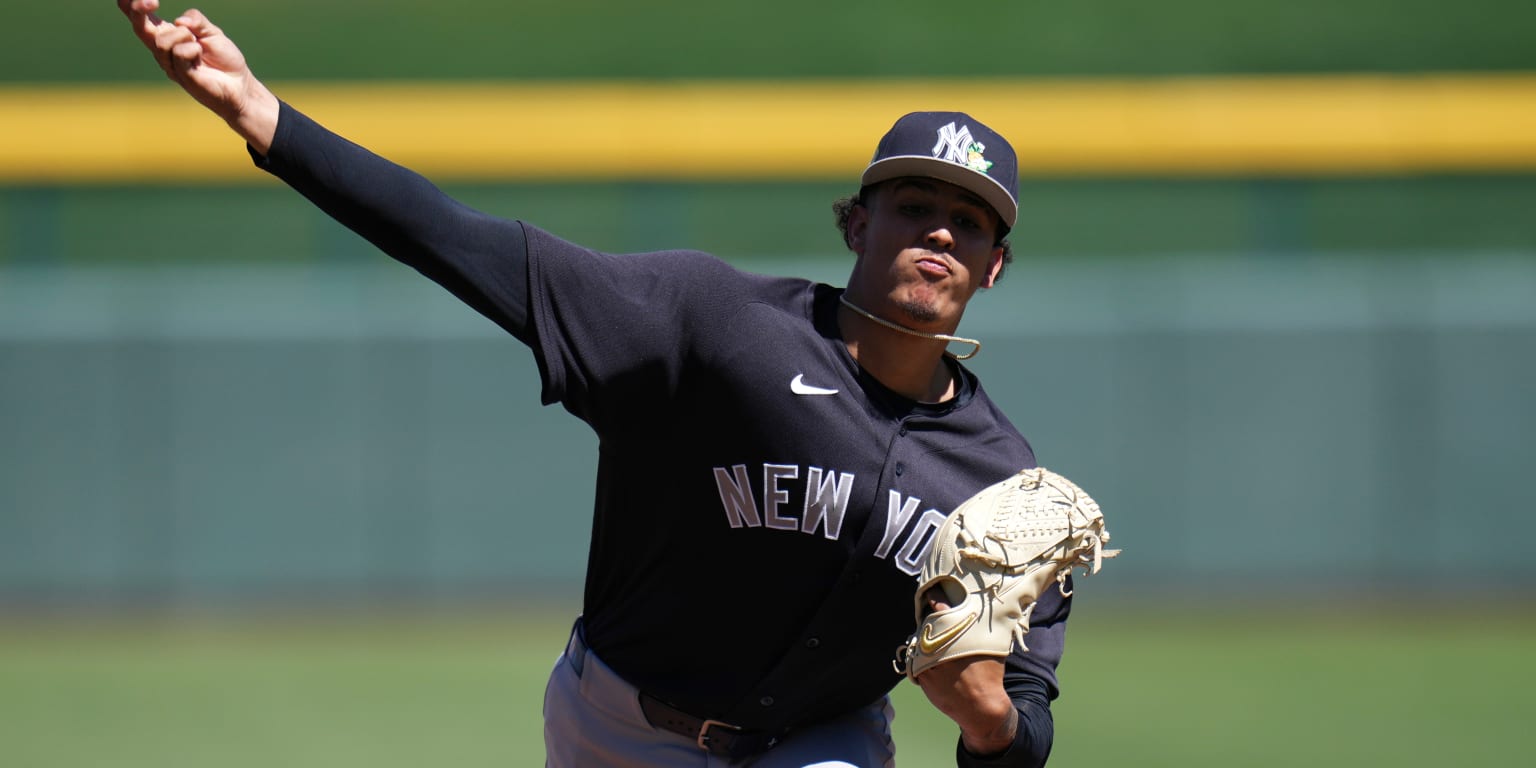
Carlos Lagrange is moving to the bullpen at Triple-A Scranton/Wilkes-Barre, the Yankees announced Tuesday, compressing what could have been a multi-year minor-league arc into a potential 2026 big-league debut. The 23-year-old right-hander left an unmistakable mark during spring training—Gerrit Cole said he had "never seen anything like it"—and catcher Austin Wells declared Lagrange capable of helping now. Manager Aaron Boone confirmed the strategic shift: long-term Lagrange remains a starter, but in the 2026 window, the Yankees see a bullpen pathway that avoids disrupting their rotation while capitalizing on his electric fastball.
Lagrange's calling card is immediate and measurable. He averaged 98.9 mph with his fastball in Triple-A this season and touched 103.0 mph—numbers that rank him among the hardest throwers in minor-league baseball. His 49 Triple-A innings included 63 strikeouts and just a .215 batting average against, proof that velocity translates to swing-and-miss potential even when walk rate (25 in 49 innings) remains a concern. The Yankees' bullpen has ranked 10th in relief ERA (3.59) entering this week but sits tied for 14th in whiff rate (25.8%), a gap that a high-velocity reliever theoretically closes. Boone signaled the conversion will take several weeks—"de-loading and then building in [appearances] every other day"—through most of June, meaning Lagrange won't carry immediate major-league risk.
But here's where the narrative overshoots the math. Lagrange's 0-3 record with a 4.41 ERA as a starter reflects real execution problems layered beneath the velocity ceiling. A 1.53 WHIP and 51% walk rate (walks per total pitches thrown) suggests his command remains fragile enough to undermine his fastball premium when batters don't chase. Moving to relief work—shorter outings, more fastball-heavy sequencing, less time for hitters to lay off pitches outside the zone—should mechanically reduce walk rate and allow his strikeout-to-walk ratio to expand. That's the structural case for the move.
For prop bettors, the near-term signal is muted. Lagrange won't be available in the majors until August at the earliest, and bullpen call-ups carry uncertainty baked into every appearance line. What matters now is why the Yankees are accelerating this timeline: they're explicitly trading developmental patience for a specific bullpen skill—high-velocity, whiff-heavy innings in high-leverage spots during a 2026 pennant race. If Lagrange's walk rate drops below 10% at Triple-A and his fastball whiff rate (likely 30%+ given his velocity band) holds up, Yankees bullpen strikeout totals will tighten, and relief ERA props become more appealing. Watch his minor-league control numbers through June; they're the leading indicator of whether this conversion actually shortens his path or just repositions him as a prospect with higher downside risk.