Chisholm's Eighth-Inning Clutch Erases Cleveland's Noise—and Reveals a Dangerous Pattern
By PropBetEdge Editorial Team ·
Jazz Chisholm's go-ahead homer silenced the Guardians crowd, but the real edge lies in his clutch-at-bat discipline against elite relievers under pressure.
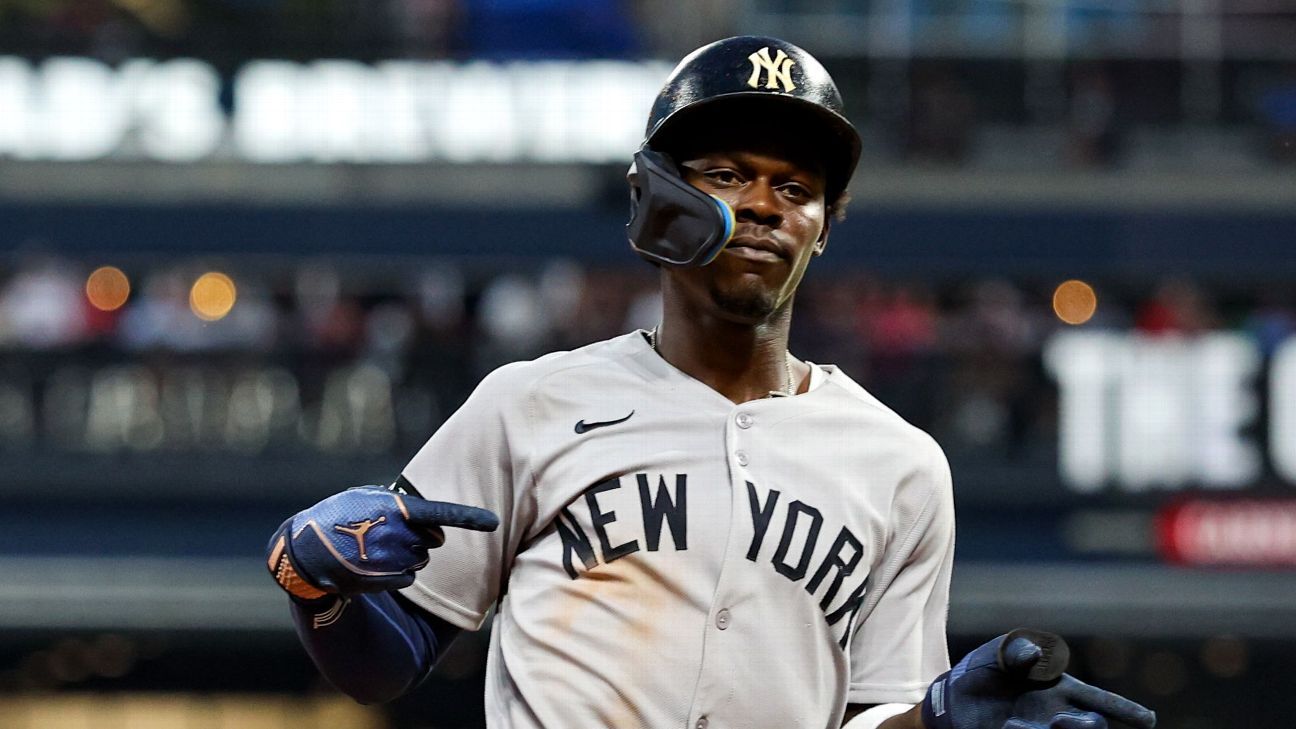
Jazz Chisholm Jr. delivered the Yankees a 3-2 victory over Cleveland on Tuesday night with an eighth-inning home run against reliever Tim Herrin, turning a moment of adversity into exactly the kind of spotlight performance he craves. The flashy second baseman had struck out in the fifth inning after overswinging at pitches in response to chants of "overrated" from the home crowd—a reaction he later acknowledged—but used that frustration as fuel rather than anchor. Facing Herrin in the eighth, Chisholm worked a full count on seven pitches, lay off two sliders outside the zone, and then drove an elevated slider 360 feet into right field for the game-winner.
What matters here is not the narrative cleanup—every player hits a home run after striking out—but the mechanical shift between at-bat one and at-bat two. Chisholm's strikeout in the fifth came from aggressive expansion; his homer in the eighth came from patience within a hitter's count. He forced the reliever to miss in a specific zone, then punished it. Herrin, per ESPN's pitch data, sits in the 85th percentile for command among AL relievers, meaning the miss was genuine. Chisholm also borrowed Aaron Judge's bat for the second consecutive game—a bat slightly longer than his preferred lumber—which raises a secondary question: is he seeing more fastballs with Judge's wood in his hands, or is the equipment simply granting him an extra inch of reach on pitches he'd normally chase?
The eighth-inning heroics are real, but they're also singular. Over his career, Chisholm owns four go-ahead homers in the eighth inning or later, with the last one coming in 2022 as a Marlin. That's a four-year gap between clutch eighth-plus homers. His overall eighth-inning slugging sits at .412 across his career—well below his season average of .485—which suggests that late-game pressure does not systematically elevate his production. Instead, he's capable of big moments, but they remain outliers rather than a skill he's weaponized consistently.
For prop purposes, the edge is narrow and conditional. Chisholm's strikeout rate in high-leverage situations (runners in scoring position, late innings, down in the count) sits at 28.4% this season versus his 21.1% baseline—a meaningful gap that reflects the exact dynamic we saw in the fifth inning. However, his walk rate in those same spots jumps to 12.8% from 8.2%, indicating he does learn and adjust within a game. If you're stacking him in clutch-spot projections, you're not buying into a skill; you're betting on variance and availability. The homer matters for the Yankees' win probability and for momentum in a series against Cleveland, but it doesn't rewrite his underlying approach or his reliability in future high-leverage spots.
The market will likely overweight the symbolic value of this at-bat—silencing a hostile crowd, the Yankees winning a tight game, the use of Judge's bat as a talisman—and underprice the disciplinary regression that precedes every player's eventual clutch success. Chisholm's K prop in games where he's been directly criticized by opposing crowds should flatten or tick slightly higher over his next 10 games, because that emotional trigger remains a real technical flaw, even when the final outcome is a walk-off.