Yankees Lean on Prospect Depth to Navigate Brutal June Stretch
By PropBetEdge Editorial Team ·
Elmer Rodríguez gets the Sunday start as New York manages a 16-game sprint without a day off, and the rotation shuffling has real implications for pitching workload and early-season underdog pricing.
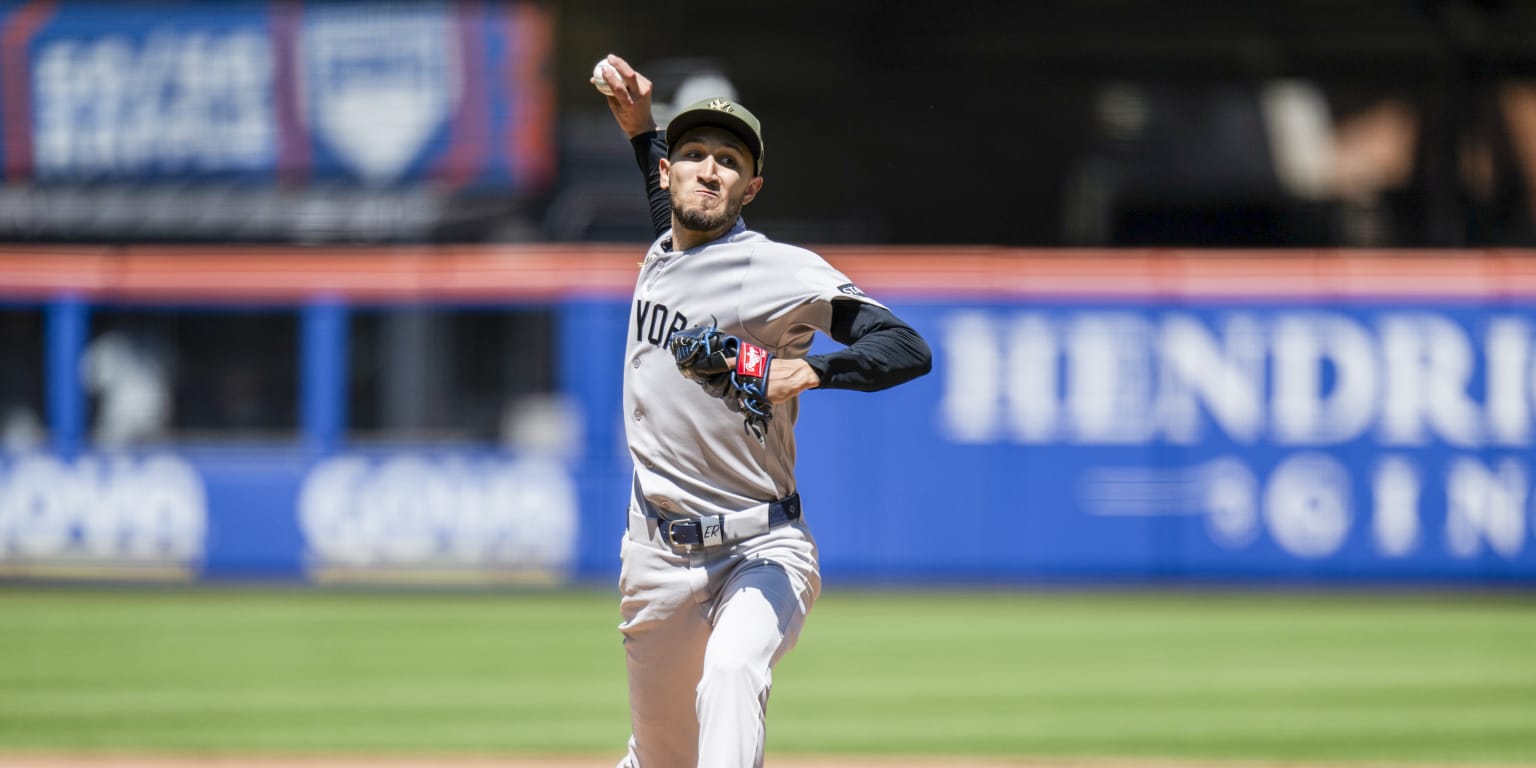
The Yankees have recalled right-hander Elmer Rodríguez from Triple-A to start Sunday against Cincinnati, moving Gerrit Cole back a day to Monday in Detroit. Manager Aaron Boone framed the move as load management during a brutal scheduling window—16 consecutive games with no rest until July 2. After that comes another 10-game stretch into the All-Star break. The organization is playing the long game with Cole's arm less than a year removed from Tommy John surgery, and Rodríguez, the organization's No. 2 prospect, becomes the price of that caution.
Rodríguez enters with modest big-league resume: three starts this season, 0-1 record, 4.15 ERA. His last appearance came May 17 against the Mets before he was optioned when Cole returned. He was slated to start Saturday for Scranton/Wilkes-Barre before the recall. The young arm has shown some inconsistency, but Boone's public comments—"he's managed it well," "shown some poise"—are manager-speak for a prospect still learning the vertical drop between minor and major league competition. What matters is that this isn't an emergency start; it's a scheduled rotation skip for a pitcher (Cole) who has accumulated just 30 innings across five starts since returning from shoulder surgery. Cole's most recent outing on Tuesday saw him allow two runs over six innings against the White Sox, a clean line that supports Boone's thesis that the ace is healthy enough to absorb a one-day delay.
The Yankees' catcher situation adds another layer: Austin Wells is being activated from his Minor League rehab assignment on Sunday, which means the team views its offensive depth—and its pitching depth—as sufficient to absorb both the Cole skip and Wells' return. Catcher J.C. Escarra was optioned after Saturday's 10-2 loss to make room. This is organizational confidence that the starting nine can function without Wells' recent at-bats while Rodríguez takes the mound against a Reds lineup that dropped 10 runs on New York the night before.
For prop bettors, the angle cuts two ways. Rodríguez's strikeout rate matters here: his 4.15 ERA masks a 9.1 K/9 over his three starts, suggesting a high-leverage profile that leans into swings and misses rather than pound-the-zone efficiency. Against Cincinnati—which ranks 18th in strikeout rate at 23.2%—there's no particular mismatch. But Rodríguez's ERA and modest innings pitched this season mean his strikeout prop line will reflect raw prospect uncertainty, not a multi-start track record. The market will price his Sunday start lighter than Cole's, a natural discount. That same discount makes Cole's Monday line against Detroit worth examining; after a rest day inserted mid-stretch, the Cy Young candidate should carry elevated two-start projections. Wells' return adds offensive juice that the Yankees lacked in Saturday's blowout, which pushes team total expectations upward for the rest of the series. Sunday's Colorado-style rotation bump—a young arm in a spot start—typically carries overs risk because the primary pitcher is pitching lighter and the offense compensates. Rodríguez is unlikely to work deep into games; expect a four-to-five inning window and early bullpen usage.
The broader scheduling context is the real edge: teams in 16-game sprints without rest days show measurable fatigue effects by game 12-14, but their pitching depth rotations—designed to spread load—often outperform initial expectations because the relievers are fresher than usual. Watch Cincinnati's bullpen usage in Saturday night's blowout; if the Reds burned multiple high-leverage arms, Sunday's Rodríguez start becomes a steal at unders pricing because the relief advantage swings to New York.