Yamamoto's Bronx Mastery Redefines Dodgers Ace Reliability in Second Half
By Erik Schwartz ·
A complete game against the Yankees showcases Yamamoto's durability and big-stage command at a critical juncture—and opens a durability edge most markets haven't fully repriced.
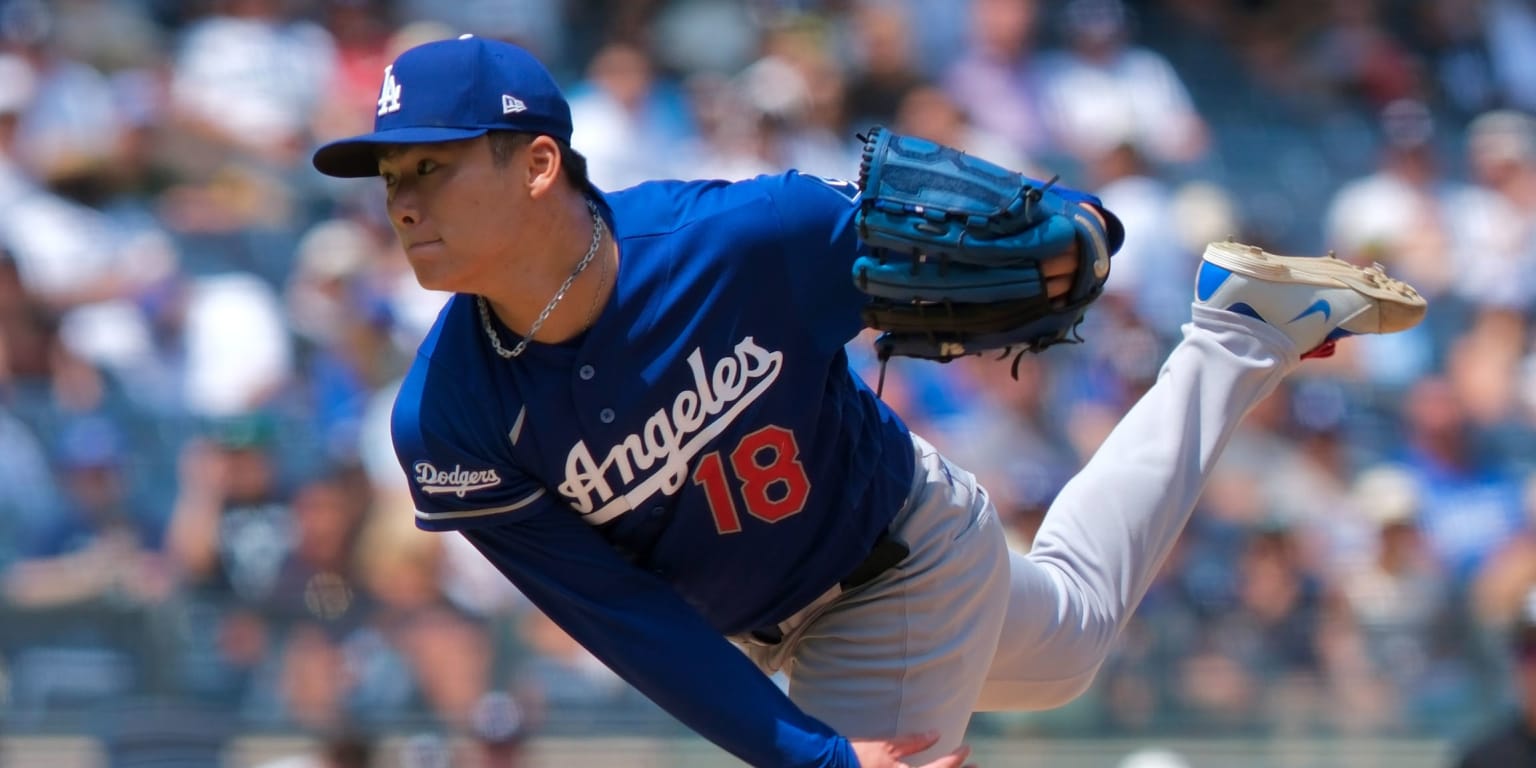
Yoshinobu Yamamoto threw his first regular-season complete game Sunday at Yankee Stadium, shutting down the Yankees across nine innings with seven strikeouts, four hits, and zero walks in the Dodgers' 8-2 victory. The performance arrived in the early contest of a split doubleheader, allowing Los Angeles to rest its entire bullpen for the nightcap—a practical dividend that compounds over a compressed schedule. Yamamoto has now logged 119⅔ innings through 18 starts, the highest total on the Dodgers' staff, and has cleared six innings in all but two of those outings. That workload and consistency matter more than the clean stat line.
The Bronx has become Yamamoto's proving ground. He held the Yankees scoreless through seven innings in his first major-league start at Yankee Stadium on June 7, 2024, then carried that same poise into World Series competition later that season—consecutive postseason complete games that made him only the second pitcher since Josh Beckett to open an MLB career with back-to-back playoff shutdowns. Sunday's outing was less about velocity (he generated only six whiffs across 30 pitches) and more about command: 21 of his first-pitch strikes landed in the zone, creating early counts that allowed him to work shallow into the zone without chasing. Manager Dave Roberts credited Yamamoto's ability to elevate in high-leverage moments—a trait forged over his decorated career in Japan and now weaponized in the majors when opponents are ranked and the stage is brightest.
For bettors, this performance should reset the baseline for Yamamoto's availability and pitch efficiency in the second half. The Dodgers built Sunday's strategy around his known durability—they didn't need to budget relief appearances because Yamamoto had already absorbed nine innings. That's not a one-off. Over his 18 starts, he's maintained innings depth while managing a sub-3.00 ERA through the heart of the season, a rare combination that suggests he's neither overworking nor coasting. The Yankees got only two runs against a pitcher operating at his highest command threshold in a stadium where he has a documented track record of dominance. Cam Schlittler, the Yankees starter, threw harder in the first inning (struck out the side) but couldn't sustain it through 4⅓ innings—a gap that reflects Yamamoto's mental endurance as much as his arsenal.
From a prop lens, Yamamoto's strikeout rate and innings-pitched floor are now anchored to a durable outcome. His seven K's Sunday fit within his recent range, but the nine innings pitched eliminate buydowns on strikeout-per-inning props that might have been priced as if he were a typical five-to-six inning starter. When Yamamoto takes the mound going forward, any line that prices him as a six-inning expectation is undervaluing his documented willingness to extend—and his manager's comfort deploying him that way. The complete-game performance doesn't guarantee another one, but it confirms what the Dodgers already knew: Yamamoto is reliable for length precisely because he doesn't blow velocity or command in the sixth and seventh innings. Markets that tighten strikeout props based on his recent matchup difficulty rather than his innings-pitched trajectory will be vulnerable to overs on his K totals when he gets a favorable opponent matchup, because he'll stay in the game longer and accumulate more strikeouts at a controlled pace.
The postseason pedigree is also worth pricing in. Yamamoto has pitched in multiple World Series games and hasn't flinched; Sunday's calm execution against a vocal home crowd and a starter with elite stuff early suggests he's carrying that experience into the regular-season second half. Any prop that assumes regression or fatigue from his workload is fighting the evidence. The Dodgers want him pitching deep into games, he's proven he can, and the Yankees just got a full look at why.